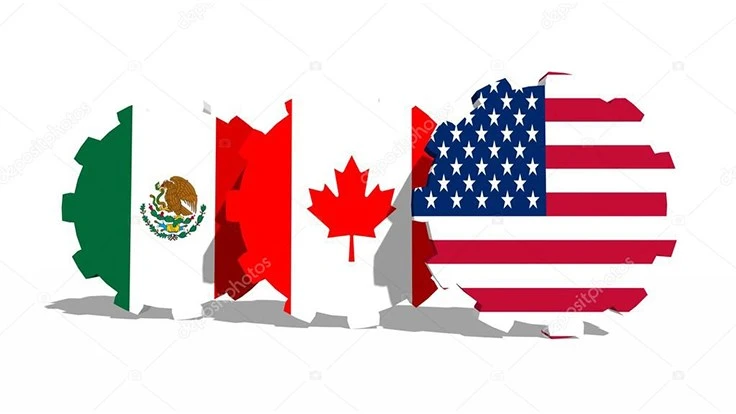
Representatives from the United States, Mexico and Canada are meeting in late February and early March 2018 to discuss proposed changes to the North American Free Trade Agreement (NAFTA). A preview of the proceedings offered by the Reuters news staff proposes that minor issues will be addressed, but larger ones remain on a more distant horizon.
According to that article, negotiators will focus on relatively minor issues, or those closer to agreement in the three nations, in the current round of talks. The goal will be “to clear the path for a breakthrough on the toughest issues before upcoming elections” in Mexico and the U.S.
Many of those tough issues have been raised by the Trump administration, by a president who has been quick to condemn what he calls “bad deals” made by previous administrations.
The previous round of NAFTA renegotiations concluded in late November 2017. At that time, Robert Lighthizer of the Office of the U.S. Trade Representative (USTR), commented, “While we have made progress on some of our efforts to modernize NAFTA, I remain concerned about the lack of headway. Thus far, we have seen no evidence that Canada or Mexico are willing to seriously engage on provisions that will lead to a rebalanced agreement. Absent rebalancing, we will not reach a satisfactory result.”
Lighthizer added, “A rebalanced, updated NAFTA will promote greater prosperity for American workers, farmers, ranchers and businesses and strengthen the North American region as a whole. Our teams will be meeting again next month in Washington. I hope our partners will come to the table in a serious way, so we can see meaningful progress before the end of the year.”
Trade associations representing recyclers or the basic materials producers who consume scrap materials largely have expressed satisfaction with NAFTA and point to potential disruptions that could be caused by a renegotiated pact.
In August 2017, the Washington-based Institute of Scrap Recycling Industries Inc. (ISRI) announced that “In partnership with the Canadian Association for Recycling Industries (CARI) and Mexican association INARE, ISRI finalized a NAFTA negotiation platform that promotes the key targets for the industry in the agreement, including preserving rules of origin for scrap processed in North America to continue receiving preferential treatment, promoting enhanced customs infrastructure and procedures that speed up the process, and promoting the ISRI Specifications Circular as the go-to standard for scrap materials.”
The trade group continued, “ISRI will continue to work with the negotiators to ensure the final agreement benefits the industry.”
In June of 2017, American Iron and Steel Institute (AISI) President and CEO Thomas J. Gibson testified before a U.S. congressional committee, stating, “NAFTA is the steel industry’s most important free trade agreement, as 90 percent of all U.S. steel mill product exports are to Canada and Mexico. He added, “Since NAFTA went into force, U.S. steel exports to Canada and Mexico increased nearly threefold, and the United States moved from a large steel trade deficit with Canada and Mexico to a relatively balanced trade relationship.”
Nonetheless, Gibson did make recommendations to modify NAFTA, including “strengthening rules of origin, more effectively promoting trade enforcement cooperation and coordination, establishing disciplines on the conduct of state-owned enterprises, establishing enforceable currency disciplines, and streamlining customs procedures and upgrading border infrastructure,” according to AISI.
Gibson added, “While the agreement has been beneficial, these approaches would improve it to make the American steel industry stronger, and create jobs in the process.”
Similarly, the Washington-based American Forest & Paper Association (AF&PA) states on its website, “Our industry supported the Congressional approval of NAFTA because it gave us duty-free access to the Canadian and Mexican markets. In 1993, U.S. pulp and paper exports to NAFTA countries were $3.2 billion, or about 36 percent of the industry’s global exports. In 2016, that amount rose to $9.1 billion or 45 percent of our industry’s total pulp and paper exports.”
The group continues, “As policymakers weigh potential changes to NAFTA, we want to ensure that these markets continue to be open to our industry’s exports and recognize the benefits of our interconnected supply chain. Our priorities for NAFTA include maintaining open access for U.S. exports, a level playing field for U.S. companies and transparent and sound science-based regulatory practices.”
A Mexican lobbyist quoted in the February 2018 Reuters article estimates that 90 percent of potential NAFTA modifications could be settled after the sixth round of negotiations in February and March 2018.
Much of the 10 percent remaining, however, are the more contentious issues that will involve sign-off from elected officials in all three nations.
The auto sector remains a pivotal one to the Trump Administration, which is pushing for changes to component rules of origin that are meeting resistance from Canada and Mexico.
The disagreement in that sector and several others has at least one Canadian negotiator warning of future troubles. The Reuters article quotes Canada’s chief negotiator, Steve Verheul, as saying, “There are large gaps between what we’re trying to achieve and what the U.S. is trying to achieve.”
Latest from Recycling Today
- Greenwave raises revenue but loses money in Q2 2025
- Recycled steel prices hold steady
- EY says India’s need for scrap imports will continue
- Coming full circle
- Amcor, DCM introduce fertilizer packaging with 35 percent recycled content
- Comstock Metals gets closer to commissioning commercial-scale solar panel recycling facility
- Washington selects Circular Action Alliance as PRO
- Smurfit Westrock expands in Latin America