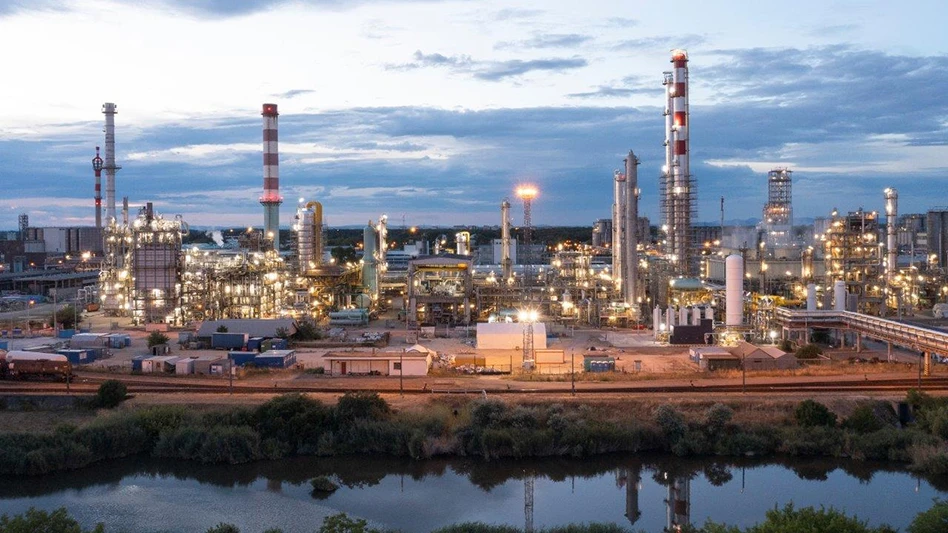
Photo courtesy of MOL Group
The Budapest, Hungary-based MOL Group has completed its first International Sustainability & Carbon (ISCC) Plus-certified production run using recycled-content feedstock at its petrochemical refinery in Tiszaújváros, Hungary.
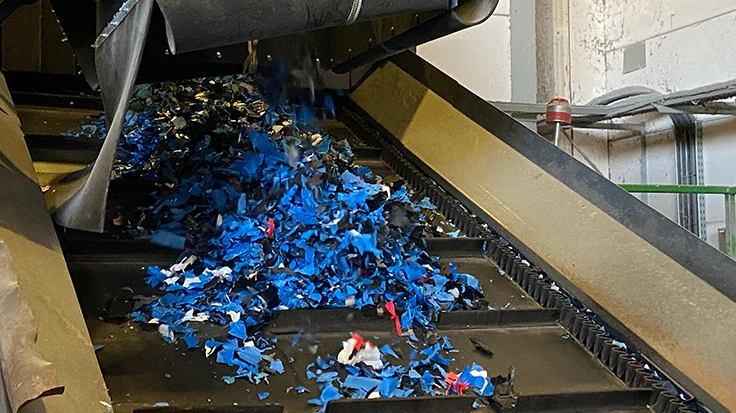
MOL says the pilot test demonstrates its ability to convert circular feedstock, consisting of postconsumer plastic scrap, into marketable polyethylene (PE) and polypropylene (PP).
The effort is part of the company's Shape Tomorrow strategy designed to integrate circular economy principles into the petrochemicals sector in Central and Eastern Europe.
“This successful test shows that MOL Group can now process circular feedstocks according to ISCC Plus certified process, turning plastic waste into new, high-value products,” MOL Senior Vice President Péter Császár says. “It is a significant step towards sustainable petrochemicals and strengthens our position as a leading circular economy player in Central and Eastern Europe."
During the pilot, postconsumer plastic scrap was introduced into MOL’s steam cracker. The resulting process can produce circular-based monomers (the “building blocks” of plastics) and then convert them into polymers.
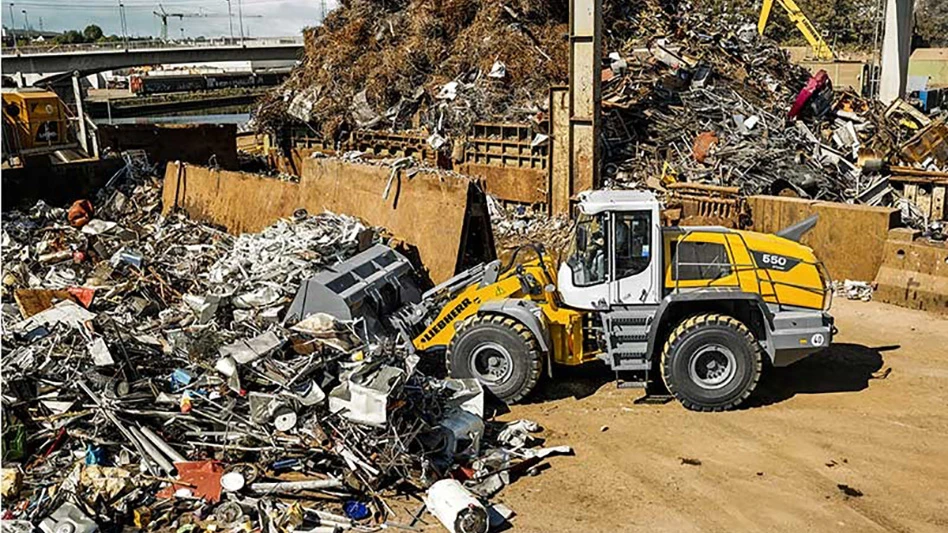
Through the Shape Tomorrow strategy, MOL intends to use up to 1.5 million metric tons of plastic scrap feedstock by 2030. Feedstock procurement will be supported by a the conglomerate’s contract to manage municipal waste in Hungary, according to MOL.
The Hungarian company says it will continue testing additional recycled-content feedstocks to develop new processes to expand the role of scrap as a raw material for plastics production.
Latest from Recycling Today
- Neste chemical recycling plant is ready to scale up
- Indonesia’s nickel pig iron spigot reopens
- Ecore says study backs crumb rubber use on sports surfaces
- Fleetio launches AI capability to accelerate fleet maintenance approvals
- The Metals Agency receives approval for export credit insurance
- Recycle Ann Arbor extends drop-off station operating hours
- Sybilion seeks to help manufacturers confidently address volatility
- Rio Tinto, Prysmian partner on low-carbon aluminum solutions for data centers