Robert West, Sr., of West & Co, Cleveland, reminded attendees of the Paper Recycling Conference & Trade Show that estate planning involves giving your estate away on your terms before the government takes it away on its terms.
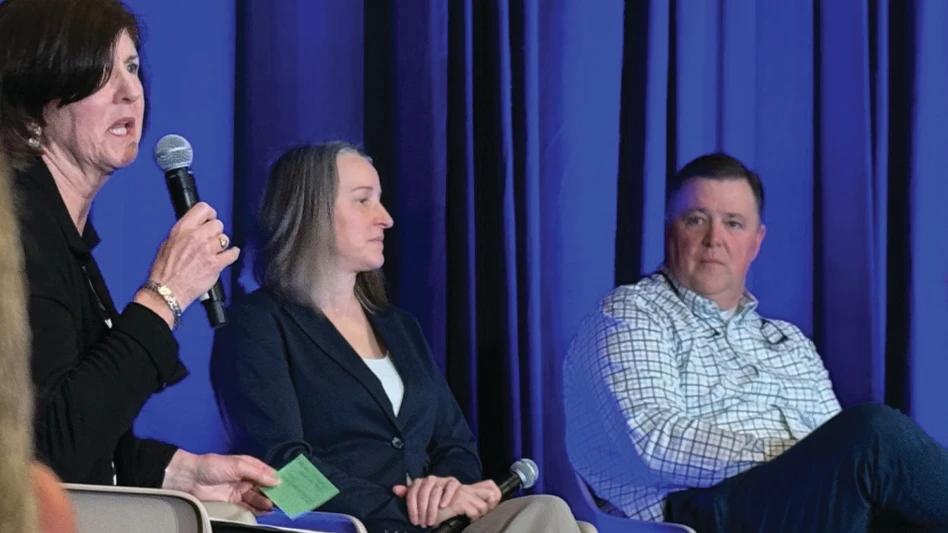
West’s company provides accounting, tax and financial consulting services to small businesses and individuals throughout Ohio. His workshop on financial management was part of the pre-conference workshop series at the Paper Recycling Conference & Trade Show, which took place in late June in New Orleans.
West told attendees that the biggest obstacle in estate planning is the idea that one must give away his or her wealth in order to avoid excessive estate taxes at the time of his or her death, though he presented ideas for retaining access to the funds that one has gifted.
He encouraged small business owners to plan to take a marital deduction, which allows a decedent to leave everything to his or her spouse, as no estate taxes are levied on the value of the assets despite the value. He also suggested taking advantage of the $1 million exclusion, or unified transfer credit, by leaving assets to one’s children as well. The tool that allows married couple to do so, West said, is a credit shelter trust, which he added should be part of every well-written will.
Small business owners also can make gifts of up to $11,000 annually to any one recipient, or $22,000 if the gift is shared with a spouse. West also mentioned Section 529 plans, a college savings vehicle, which allow the small business owner to keep financial control of the gift and even allows he or she to take the gift back in the future. Donors can authorize all expenditures from the plan as well as roll the portfolio over to other family members without incurring a penalty, West explained. Money earned on these investments may be entirely exempt from federal income taxes, West said, and state tax credits may be available to the donor as well.
If withdrawals from a 529 plan are used to cover the expenses of higher education, West said they are free of all federal income taxes. However, if the donor takes back any of the 529 plan earning, West said, he or she must pay income tax on the earnings in addition to a 10 percent penalty.
“One of the most significant opportunities for reducing one’s potential estate is to transfer the ownership of your life insurance policies into an irrevocable life insurance trust,” West said.
West also encouraged attendees to look into establishing a family limited partnership, which helps by shifting income to lower bracket taxpayers, such as dependents, and reducing the value of assets in the donor’s estate, though the donor remains in control of the assets transferred. West said that under this partnership, children can have 99 percent of the assets and still have no controlling interest in the company.
Latest from Recycling Today
- Vecoplan to present modular solutions at IFAT 2026
- Terex Ecotec appoints Bradley Equipment as Texas distributor
- Greenwave raises revenue but loses money in Q2 2025
- Recycled steel prices hold steady
- EY says India’s need for scrap imports will continue
- Coming full circle
- Amcor, DCM introduce fertilizer packaging with 35 percent recycled content
- Comstock Metals gets closer to commissioning commercial-scale solar panel recycling facility