During the recently concluded NAID show, a trio of paper recycling executives called for improved quality of the shredded material.
Many information destruction companies point out that the cornerstone of their business is providing a confidential shredding service. Ensuring that paper documents are shredded is, far and away, the most important issue for their company’s operations.
While recycling of the shredded document can provide for a revenue stream for document destruction firms, it is far more important to focus the greatest amount of attention to the front end.
While that is important for the industry, three paper industry executives, including two mill representatives and a paper recycler pointed out the importance of maintaining quality with the shredded material.
John Ashley, with International Paper; David Knight, SCA; and Joe Jurden, Cook Paper Recycling, laid out the case that while ensuring secure shredding was important, information destruction firms should also focus on the quality of the material they are delivering to paper mills.
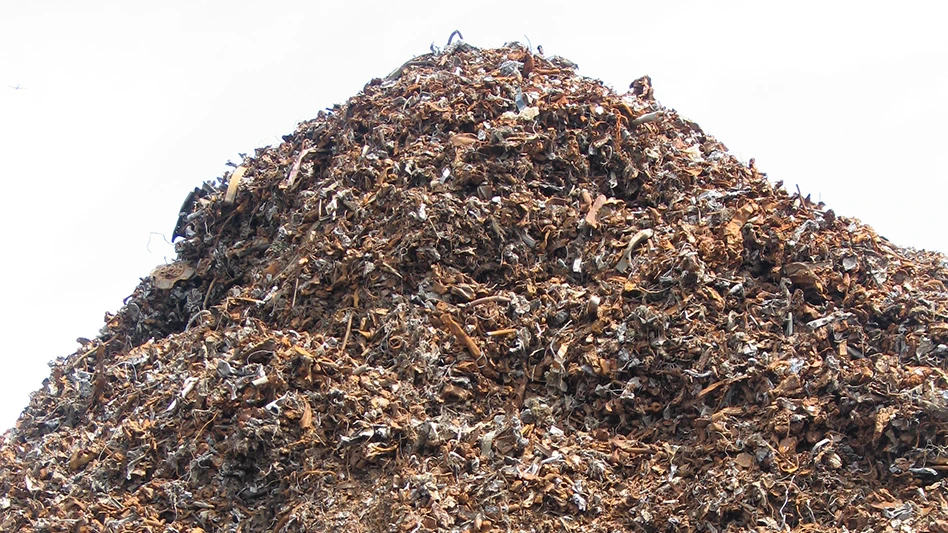
A number of photographs of material that was shipped to several IP mills showed the high level of outthrows and rejections that end up being shipped to paper mills.
What makes this a growing issue is that as shredding becomes more common place in office environments, mills that are seeking the “office pack” grade are ending up using a greater amount of the shredded material.
Knight estimates that SCA’s newest tissue mill uses about 40 percent shredded paper for its raw material intake. Ashley estimated that between 25-40 percent of the office paper IP uses comes from shredded fiber sources.
While a large percentage of the stream, both mill officials say that the percent is growing at a fairly healthy clip.
Another issue confronting the paper mills is what to classify the shredded material as. While Jurden noted that more mills are becoming better equipment to handle the contaminants that end up in the shredded paper, the two mill officials say their mills may classify the shredded material is office pack, mixed paper, or a lesser grade of fiber.
While there are classification issues, far and away the biggest challenges for mills is ensuring that the material meets the mill’s specifications. “The biggest challenges to mills in regard to shredded paper is quality,” Ashley noted. “At IP, we do a lot of site inspections. The biggest challenge is looking at the bale, including when the mill receives the material.”
To improve the quality of the material Ashley also says the company is constantly working on educating everyone on what IP’s mills can and can’t take.
Knight says that a challenge is working with a wide range of material types. “Truckloads are always different,” Knight points out.
To improve the quality of the material that is shipped to SCA Knight says the company works with alliances to improve the consistency of the material. The challenge is even more daunting as SCA consumes around one million tons of recovered fiber a year, most of it white grades of paper.
While working with suppliers is an ever-evolving issue, all three speakers ticked off some of the biggest problem materials for paper mills. Items such as latex adhesives, beater dyes, unbleached fiber, plastics, and other types of labels are some of the widely processed materials that often end up in a bale.
As for the material that is high in contaminants, Jurden says that while the company will turn back large loads of poor quality material, they often develop a continuing dialog with the supplier to ensure that the quality meets the mills’ needs.
For SCA, the company has some leeway with the material they take in. A big advantage is that the company can shift its products, from bright napkins to industrial tissue products that do not require a high brightness level.
For SCA, its tolerance is as varied as the different types of shredded materials.
For International Paper, the issue of claims is handled on a case by case basis.
Finally, in summing up some of the key issues for paper mills, some of the issues that came out were the following: don’t’ take quality too lightly; educate the customer to get a better material; and be concerned with pulverized material as a raw material for paper mills.
Latest from Recycling Today
- Waste Pro files brief supporting pause of FMCSA CDL eligibility rule
- Kuraray America receives APR design recognition for EVOH barrier resin
- Tire Industry Project publishes end-of-life tire management guide
- Des Moines project utilizes recycled wind turbine blades
- Charter Next Generation joins US Flexible Film Initiative
- Vecoplan to present modular solutions at IFAT 2026
- Terex Ecotec appoints Bradley Equipment as Texas distributor
- Greenwave raises revenue but loses money in Q2 2025