Metals producers, including steelmakers in South Korea and copper producers in China, have coped with a volatile commodities market in the past few years, but the volatility has not softened their demand for scrap metal.
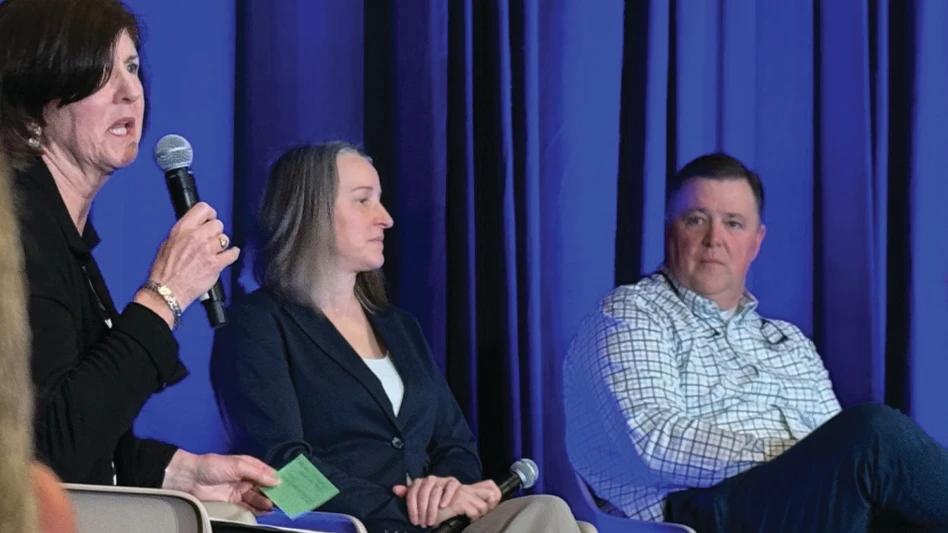
In two separate presentations at the 4th China International Metal Recycling Conference, delegates heard about changes taking place in those two markets, as well as updates on recent and expected levels of demand.
The Korean perspective came from Il-Hwan Oh, executive vice chairman of the Korea Iron & Steel Association. Oh noted that recent investments by Hyundai Steel have created competition within the basic oxygen furnace (BOF) steelmaking sector in South Korea and has added capacity to the electric arc furnace (EAF) segment.
As of 2010, South Korea’s crude steelmaking capacity stands at 76 million metric tons, of which nearly 45 million metric tons (59 percent) is BOF capacity and 31 million metric tons (41 percent) is EAF capacity
In 2010, more than 21 million metric tons of ferrous scrap was collected in South Korea to help supply these steel mills, while around 8.1 million metric tons of scrap was imported. “South Korea’s EAF steelmakers target stable [inventories] of scrap,” said Oh, “thus, imports will continue to rise.”
“It is not expected that self-sufficiency will be realized within 10 years, despite an increase in the volume of accumulated steel in Korea,” said Oh. Japan’s proximity gives it an edge into South Korea’s import market, while the United States is also a significant supplier. Russia has become less prominent as a supplier, with much of its scrap staying home in part because of export restrictions.
Speaking at the same event, Robin Cai, general manager of the Alter Metal Recycling Ltd. Hong Kong office of United States-based Alter Trading, urged China’s metals producers to be vigilant in support of free trade and to be wary of export laws.
“China’s copper industry relies heavily on imported scrap,” she noted. “Throughout the world there are thousands of suppliers, and China has leverage when purchasing when there is free trade.”
Cai noted that in the early 2000s, United States copper and brass producers “tried to halt high-grade copper scrap exports.” She credited the U.S. scrap industry with having lobbied to help prevent export restrictions from being enacted then.
Although the North American scrap industry is relatively fragmented, Cai remarked that “in the past decade, we’ve experienced a lot of consolidation in the [scrap] industry. An industry formerly predominated by family businesses is now reshaped and less fragmented, often operating with standardized management systems.” Alter now has about 39 locations, all of which have obtained ISO certification, she indicated.
China’s recycling industry and its metals production industry has changed as well, she noted, in some cases because of the fallout from the 2008 financial crisis. “It was a heavy blow to this industry, and I witnessed the effects in China,” said Cai. “Those companies that toughed it out and were able to invest in upgrading their operations have now become very resilient.”
The 4th China International Metal Recycling Conference, organized by the Metallurgical Council of the China Council for the Promotion of International Trade (MC-CCPIT), was held May 13-14, 2011, in Guangzhou, China.
Latest from Recycling Today
- Vecoplan to present modular solutions at IFAT 2026
- Terex Ecotec appoints Bradley Equipment as Texas distributor
- Greenwave raises revenue but loses money in Q2 2025
- Recycled steel prices hold steady
- EY says India’s need for scrap imports will continue
- Coming full circle
- Amcor, DCM introduce fertilizer packaging with 35 percent recycled content
- Comstock Metals gets closer to commissioning commercial-scale solar panel recycling facility