The 4th China International Metal Recycling Conference opened on May 13 with a series of presentations from Chinese government officials from several departments and agencies.
The event, organized by the Metallurgical Council of the China Council for the Promotion of International Trade (MC-CCPIT), was held May 13-14, 2011, in Guangzhou, China. Its first four speakers represented Chinese central government agencies.
Li Jing of the Department of Resource Conservation and Environment Protection said recycling is a natural fit with Beijing’s Circular Economy initiative. She indicated that departments such as hers are preparing to make “technical improvements in recycling technology” easier for recyclers. She also said national agencies such as hers are becoming mindful of adopting policies that are “more in line with regional and local considerations,” rather than expecting recyclers to operate uniformly in all parts of the country.
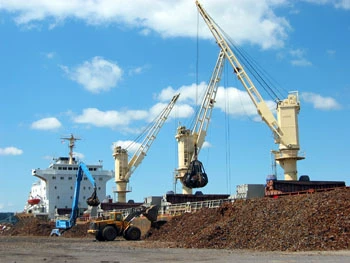
Yang Tiesheng of the Department of Energy Conservation and Resources Utilization noted that steel as a material has a long life cycle, but that making it contributes to carbon emissions. He praised scrap as “an environmental resource” and said China’s government could do more for steel producers to “incentivize” the use of scrap.
Speaker Li Xinmin of the Ministry of Environment Protection said there are 29 secondary commodities or types of scrap allowed to enter China, but the country’s inspectors still find some non-recyclables arriving. “Some foreign companies are still not clear on China’s standards—they can be different,” said Xinmin.
Huang Yi from the General Administration of Customs bureau noted that scrap import volumes have climbed, but so have some accompanying problems. He said importers will declare incoming containers as containing low-value material when instead hiding inside more valuable commodities or manufactured goods inside—in some cases even luxury cars.
Shipments are no longer legally allowed to contain blends of materials or products, and in the case of scrap the materials should be packaged similarly, noted Huang.
Inspections have become more thorough, said Huang, including more weighing of loads. The Customs bureau has been more active in several ports, including Guangzhou, and has secured “more cooperation . . . to crack down” from the Hong Kong Special Administrative Region, Huang commented.
Recyclable materials are increasingly being steered toward designated recycling zones, added Huang, saying these zones or recycling parks are receiving support from all levels of government. “We are going to favor these law-abiding corporate citizens,” he remarked.
Latest from Recycling Today
- Tire Industry Project publishes end-of-life tire management guide
- Des Moines project utilizes recycled wind turbine blades
- Charter Next Generation joins US Flexible Film Initiative
- Vecoplan to present modular solutions at IFAT 2026
- Terex Ecotec appoints Bradley Equipment as Texas distributor
- Greenwave raises revenue but loses money in Q2 2025
- Recycled steel prices hold steady
- EY says India’s need for scrap imports will continue