Massachusetts Governor Mitt Romney is looking to expand the state's "bottle bill" by requiring deposits on all beverages sold in glass or plastic containers, including water, juice, sports drinks, wine and hard liquor.
Previously, the deposit was only required on carbonated beverages such as Coke and Pepsi. The expansion is expected to increase recycling while raising about $12 million for the cash-strapped commonwealth, said a spokeswoman for the Romney administration.
The deposit would be 5 cents for the non-alcoholic beverages and 15 cents for wine and liquor bottles larger than a pint.
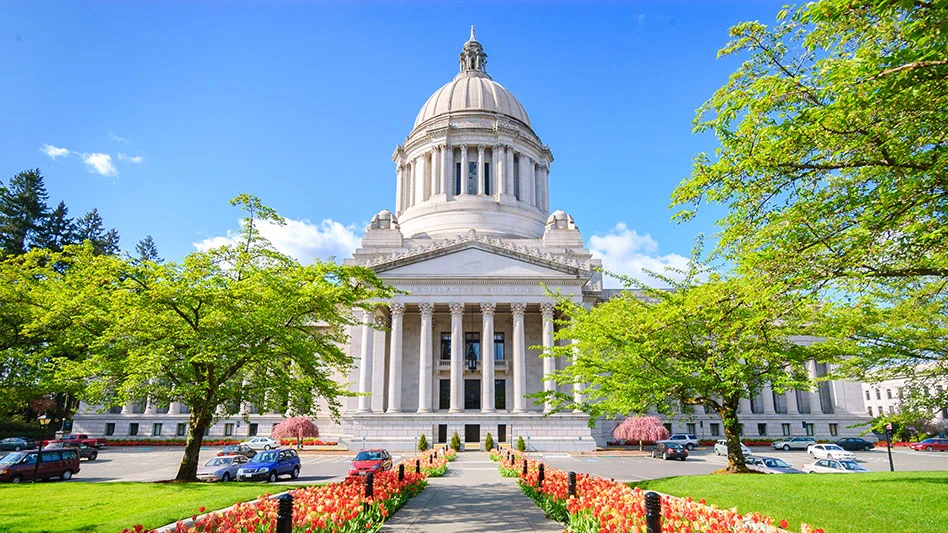
The plan is included in Romney's budget proposal, which needs legislative approval. Some lawmakers who represent border communities are concerned about the impact on local businesses. They are worried that the new charge will drive even more customers across the border to New Hampshire, where there is no sales tax.
"On the surface it looks like a good clean-environment proposal, but I represent border communities, and this will be a very serious problem for my local stores,'' said Sen. Susan Tucker, D-Andover. "I really have to look at the economic impact and I think this is another reason to go to New Hampshire.''
Katie Cahill, a spokeswoman for the Executive Office of Environmental Affairs, said the administration did consider the economic impact on the border communities and does not think the expanded bottle bill will harm businesses.
Cahill said the administration proposed closing some loopholes in the bottle bill to increase recycling, but also to raise money for the state.
Cahill said it only makes sense to add other beverages to the bottle bill. She said they weren't included in the original bill 20 years ago because bottled water, sports drinks and juices weren't as popular.
"People weren't drinking bottled water and Snapple 20 years ago,'' she said. "The 1980s was more the era of juice boxes. The proliferation of juice in a bottle has really been in the last 20 years.''
Beyond hoping to encourage more recycling, Cahill admitted that there is a financial reason for the change.
"Clearly, why we're looking at doing this now is because of the budget crisis,'' she said.
The state is expected to make $12 million from consumers who initially pay the deposit but don't return the bottle to reclaim the money.
In return, the state is also marginally increasing the handling fee for redemption centers, Cahill said.
That is welcome news to center operators, who have had trouble making money and staying afloat.
Environmentalists are also applauding the expansion of the bill.
John McNabb, director of research and policy for Clean Water Action, said it's a win-win proposal for the state.
"It's a terrific idea,'' he said. "It will help encourage recycle and it will help the state budget,'' he said. "The bottle bill has also shown to be a success from day one to help reduce litter.'' Fitchburg (Mass.) SentinelLatest from Recycling Today
- Des Moines project utilizes recycled wind turbine blades
- Charter Next Generation joins US Flexible Film Initiative
- Vecoplan to present modular solutions at IFAT 2026
- Terex Ecotec appoints Bradley Equipment as Texas distributor
- Greenwave raises revenue but loses money in Q2 2025
- Recycled steel prices hold steady
- EY says India’s need for scrap imports will continue
- Coming full circle