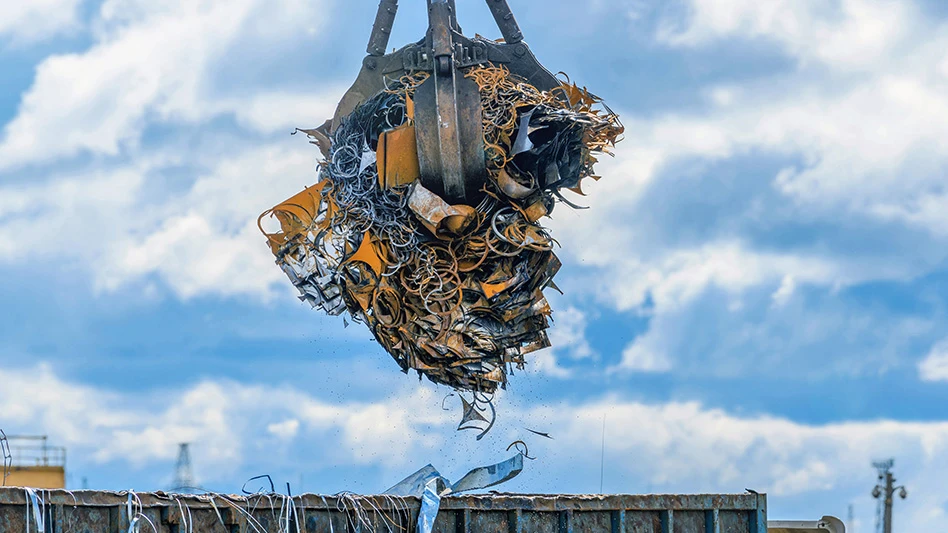
Photo courtesy of Lindemann Metal Recycling
Alexander Zinn, director global sales and marketing at Germany-based Lindemann Metal Recycling, says the equipment provider has identified an opportunity “not just to sell machines, but to help customers unlock lasting value from them.”
Zinn says the approach could involve a change to the firm’s business model.
“At Lindemann we are developing a subscription-based service, one that bundles wear parts, maintenance, analytics and technology upgrades into a single monthly fee," he says. "The aim is to provide peace of mind and predictable costs for customers, while at the same time ensuring machines always operate at peak efficiency.”
The maker of shredding and baling equipment, which has North American operations based in San Antonio, identifies data tied to operational casts as a driver leading it to the new business model.
“Today we are an equipment supplier, but we want to become a performance partner to our customers—focusing on reducing their real operational costs, especially cost per ton,” Zinn says in a July news release. “Instead of selling a machine and walking away, the company is committing to a long-term, data-driven partnership that helps customers squeeze more value out of every ton of scrap they process."
He lists energy, labor, downtime, maintenance and throughput all as factors affecting cost per ton.
“Not every customer knows their exact cost per ton, so we’ve developed a comprehensive tool that helps map all the relevant factors,” Zinn says. “That gives us a baseline from which to build a business case for improvements.”
Establishing that figure, Zinn says, can allow Lindemann and the customer to identify the most cost-effective upgrades that can slash that figure and thereby boost customer profitability.
Equipment may be part of the solution, he adds, pointing to a preshredder that could reduce wear and tear on an existing shredder, a frequency inverter to cut energy consumption or a Lindemann Shredder Drive Assistant Zinn says can increase throughput.
Via a subscription service, Zinn says Lindemann can collect data and its staff members can “sit down regularly with our customers, study the data together and build strategies to help them improve.”
“We don’t charge for this consultancy, as we should both benefit," he says. "The customer becomes more competitive and we build a stronger, longer-term relationship.”
Zinn acknowledges that a shift to performance partnerships requires a mindset change from customers, “particularly in a traditionally conservative industry like metal recycling.”
He says, though, that the performance partner approach can be applied to new and existing customers and to shears and balers as well as shredders.
“In every case, the strategy is the same: use data, insight and technical expertise to help customers get more from less,” he concludes.
Latest from Recycling Today
- SDI, SGH submit revised final offer to acquire BlueScope Steel Ltd.
- Republic Services spends big on acquisitions, reports growth for 2025
- 2026 Circular Steel Summit: The view from Nucor
- Minespider launches digital marketplace for circular batteries
- SWANA, Fire Rover develop fire incident reporting tool
- Recycle BC launches flexible plastics recycling carts in Vancouver
- Shapiro continues leadership appointments
- Iron Crest forms waste equipment manufacturing platform