Lee & Man Paper, Dongguan, China, has reported its financial results for the first half of 2019, recording decreases in sales volume and profits.
For the six months ended June 30, the company recorded total revenue of HK$12,947 million (roughly $1.7 billion), which decreased by 20.9 percent compared with the first half of 2018. At HK$1,680 million (roughly $214.2 million), net profit decreased by 43.6 percent in the first quarter of 2019 relative to the same period in 2018. The company’s earnings per share for the period was HK38.35 cents (roughly 5 cents) compared with HK66.52 cents (about 8 cents) in the first quarter of 2018.
The board of directors determined an interim dividend of HK13 cents (about 2 cents) per share compared with HK20 cents, roughly 3 cents, in 2018. For the six months ended June 30, Lee & Man’s aggregate sales totaled 2.81 million tons, while its net profit per ton was HK$597, or $76.
Lee & Man points to ongoing pressure on the Chinese paper manufacturing industry, including continued U.S.-China trade friction in the first half of 2019, which resulted in a substantial increase in the cost of paper production. The company says it has proactively responded to the changes in the market by developing a vertical business model covering pulp manufacturing and paper recycling through consolidation of its upstream resources to ensure raw material supply. “In the meantime, by expanding scale, controlling costs and strengthening production capacity on basis of the existing business foundation, the group will have more opportunities for business development,” Raymond Lee, chairman and co-founder of Lee & Man, states in comments accompanying the company’s financial statement.
He says Lee & Man supports China’s “Belt & Road” initiatives, which are projects designed to increase trade along routes reminiscent of the ancient Silk Road. The company is targeting Southeast Asia for international development and new production capacity and will continue to seek business opportunities in countries and cities along the Belt & Road.
Lee says the company is emphasizing its consumer tissue business by improving the quality of its consumer tissue and increasing production. “The tissue business has maintained a steady growth as a whole and has become the growth driver of the group in the medium and long term,” he states.
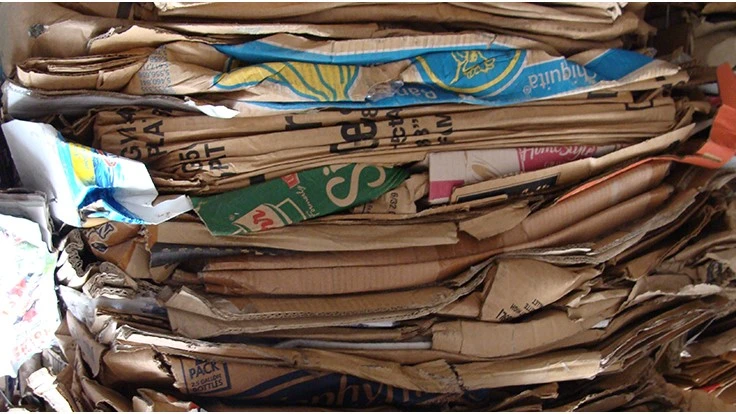
Regarding Lee & Man’s core business of packaging paper, Lee says mainland China’s paper packaging business has shrunk with the onset of the U.S.-China trade war. In addition, the country’s import restrictions on recovered paper started in 2017, restricting the supply of raw materials. This has affected China’s domestic paper manufacturing industry and Lee & Man’s recycling efforts, causing the company to seek alternative import methods, he explains.
Lee says China’s paper manufacturing industry offers room for growth and the company will seize opportunities to expand its market coverage and maintain its competitiveness.
Latest from Recycling Today
- Danieli to supply shredder to Australian company
- Equipment from the former Alton Steel to be auctioned
- Novelis resumes operations in Greensboro, Georgia
- Interchange 360 to operate alternative collection program under Washington’s RRA
- Waste Pro files brief supporting pause of FMCSA CDL eligibility rule
- Kuraray America receives APR design recognition for EVOH barrier resin
- Tire Industry Project publishes end-of-life tire management guide
- Des Moines project utilizes recycled wind turbine blades