Image courtesy of Kreyenborg
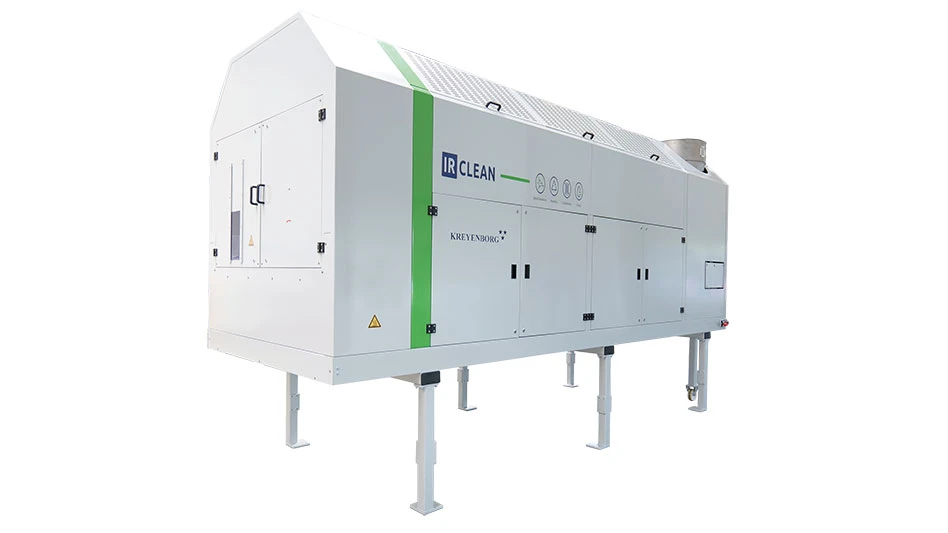
The European Food Safety Authority (EFSA) has issued a positive "Scientific Opinion" to Germany-based Kreyenborg under EU 2022/1616 for its infrared technology, IR-Clean, that decontaminates recycled polyethylene terephthalate (PET) flakes so they can be used to produce food packaging.
With EFSA’s approval of its process, Kreyenborg's IR-Clean system will be assigned a unique recycling authorization number (RAN) and listed in a public register, the company says.
According to Kreyenborg, several IR-Clean processes have been rated positively by customers in accordance with the old regulation EC 282/2008. The company adds that the approval procedure will be streamlined and simplified under the new regulation EU 2022/1616 for Kreyenborg and its customers in the packaging industry.
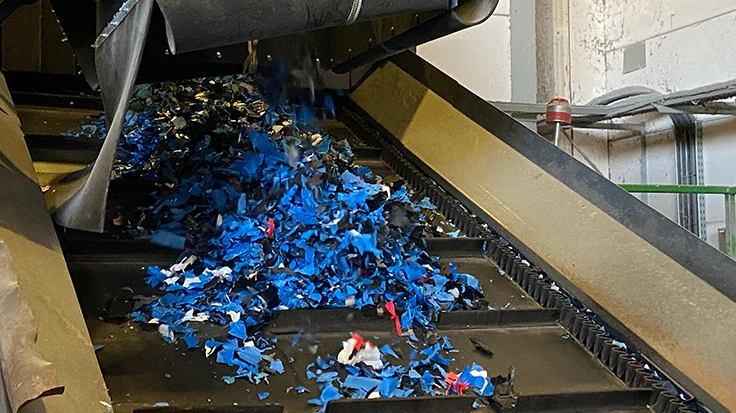
After evaluating data from a challenge test, the EFSA panel concluded the recycled PET obtained from the IR-Clean process poses no safety concerns and, therefore, can be reused for packaging with direct food contact at up to 100 percent in materials and items that come into contact with all types of food and are stored at room temperature or below. The starting material must consist of washed and dried postconsumer PET flakes originating from packaging produced in accordance with EU legislation concerning food contact materials and consisting of no more than 5 percent PET from nonfood consumer applications as long as the process operates under the same strict process conditions as the "challenge test" for decontamination assessed by EFSA.
In the process at Kreyenborg that EFSA assessed, two main steps were evaluated: the decontamination of PET flakes in an infrared dryer (IRD) and the subsequent treatment in a finisher unit.
"These two steps were crucial for the efficiency of decontamination at our plant," says Marcus Vogt, technical sales manager for the plastics sector, summarizing the complex measurements carried out over a long time as part of various challenge tests that preceded EFSA's assessment. Vogt helped initiate the petition and accompanied the approval process for more than six years, which entails various approvals according to U.S. Food and Drug Administration regulations in addition to the EU standards.
Latest from Recycling Today
- Nth Cycle signs offtake agreement with Trafigura
- WeSort.AI recovers critical raw materials from recycling plants
- ReMA provides economic impact report, industry update
- Collective Waste Solutions acquires Alcop Resource Recycling transfer station
- Volatility continues in nonferrous metals
- Neste chemical recycling plant is ready to scale up
- Indonesia’s nickel pig iron spigot reopens
- Ecore says study backs crumb rubber use on sports surfaces