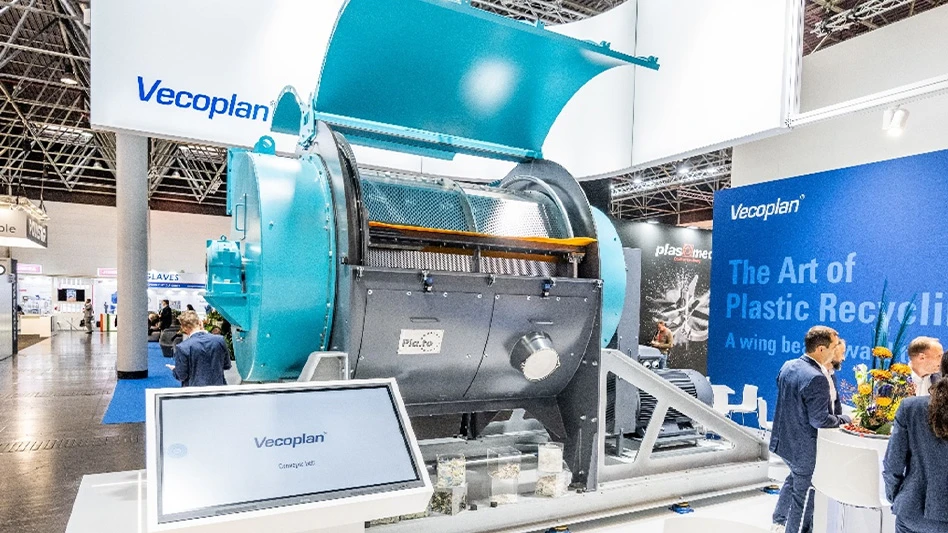
The new Jest Waste Recycler, from Buffalo, New York-based Jest, is built with a two-deck, heavy-duty feeder screen to separate oversized material and dry fines from the selection process. The new units are especially design for the American market, the company says. The new two-deck screen can be used with a picking station after separation of oversize material or can eliminate the need for such a station, as it separates material up to 15 inches in size using its 7.5-cubic-feet or 12-cubic feet-feeder screens.
After the oversize material and dry fines are removed from the process, the debris is ready to be treated by the new windshifter that now has three settings. After separating plastics, papers and light material, the floatation system can be set to separate and clean wood, rock, glass, compost or metals from unwanted material.
The Jest system separates, cleans and classifies by type material resulting from construction and demolition debris or solid waste. Automatically regulated, the machine separates and cleans material by density. The company says it is the only machine on the market that removes contaminates from materials by means of screening, air and floatation.
The machine is built on skids and has a separate electric panel and is easy to carry through its hook, the company says, for easy installation. The Jest Waste Recycler can be used in mobile or stationary installations following a conveyor belt, screen, trommel, impact crusher, jaw crusher or a hopper. The patent is held under the name of Torsan and is protected by U.S. patent rights and other foreign patent rights.
More information is available at www.jestrecycler.com.
Latest from Recycling Today
- Equipment from the former Alton Steel to be auctioned
- Novelis resumes operations in Greensboro, Georgia
- Interchange 360 to operate alternative collection program under Washington’s RRA
- Waste Pro files brief supporting pause of FMCSA CDL eligibility rule
- Kuraray America receives APR design recognition for EVOH barrier resin
- Tire Industry Project publishes end-of-life tire management guide
- Des Moines project utilizes recycled wind turbine blades
- Charter Next Generation joins US Flexible Film Initiative