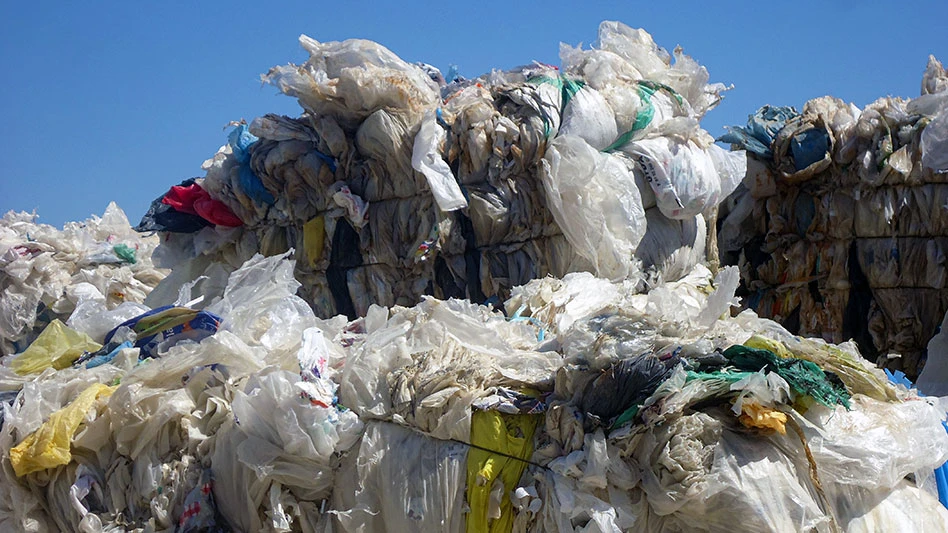
In a large room of a warehouse, countless cardboard boxes sit on the floor and along the walls, overflowing with televisions, computer monitors, wire, and various computer components. An adjoining room has bales of compressed pieces of plastic stacked three and four bundles high that look as if they’re ready for the junkyard.
These are a few of the things inside the Waste Commission of Scott County’s new Electronic Demanufacturing Facility, part of a government program that is going to provide residents and businesses with a new way to dispose of their unwanted electronic equipment.
There are some private companies in Iowa that deal with electronic waste , said Kathy Morris, the county’s Waste Commission Director. “The difference between their facilities and ours is that we are owned by a government agency, not a private business,” she said.
The Waste Commission built the EDF in an effort to divert and reclaim as much e-waste and toxic material from the landfill as possible.
“Right now, there aren’t any laws that say it is illegal for residents to put e-waste in the landfill,” said Morris, who oversees the Scott County landfill. But “if we do see an electronic item in a load of waste at the scale or at the tipping face [where the garbage is actually dumped], we pull it out and get it in the proper place for demanufacturing.”
It is currently illegal for businesses to dispose of electronic waste in landfills. The EDF allows businesses to save money, Morris said, because the current market rate for businesses to demanufacture a computer is approximately $25, and that doesn’t include shipping costs.
According to Keith Krambeck, special waste coordinator for Waste Commission of Scott County, the new facility will process approximately 500 tons of electronic waste each year. “This will not only save space, but also reduce the toxicity in the landfills,” he said.
The total cost to build and purchase the equipment for the EDF was $1.9 million. The Iowa Department of Natural Resources gave the commission a $75,000 grant and a $420,000 zero-interest loan. The rest was raised through existing tipping or user fees from the commission’s Area Recycling Center and Household Hazardous Material programs.
Officials expect that operational costs – roughly $143,000 annually – will be covered by user fees and the sales of the facility’s recovered or recycled items. Those are expected to generate $151,000 a year. “Whenever you sell commodities like circuit boards,” Morris said, “the markets are so fluctuating that you want to make sure you have enough money to cover your costs.”
Items at the EDF are sorted and put into specific piles to be demanufactured or taken apart piece-by-piece, until all that’s left are components that can be recycled, which are placed into their respective boxes – wiring, circuit boards, batteries, plastic, etc.
Bigger components that need further processing are put into a grinder. After that, the pieces of lead-filled glass from the screen pass under a magnet, which pulls out the metal that will be recycled.
Morris said computer hard drives are also put through the grinder for security purposes. “The hard drives are shredded so that there’s no way anyone can retrieve someone’s personal data from them,” she stressed.
Once the demanufacturing process is complete, the components are sorted, packed in boxes, or baled together so they can be shipped out to various places in the U.S.
Some of the materials left over after the demanufacturing process cannot be sold, such as chunks of lead-filled glass from television and computer screens after they have been through the grinder and the metal has been taken out them.
As a result, the glass has to be sent to a smelting company in St. Louis, where the glass is melted down to the point where lead can be reclaimed for reuse. “We have to pay them to take it off our hands because we don’t have the equipment to process it, but at least it doesn’t go into the landfill,” Morris said.
There is also a very fine metal dust produced during the grinding process that is sucked through air shafts into containers. If it’s toxic, it will go the commission’s Household Hazardous Materials program. Otherwise, it will be disposed of in the landfill.
Workers have to be on a lookout for products that might contain hazardous chemicals, such as old television consoles that sometimes have PCB-containing capacitors in them.
“If there are PCBs present, they have to be sent to our Household Hazardous Materials program to be incinerated, because that’s the only safe way to get rid of them,” Morris said. Among other hazardous materials, batteries found on circuit boards are sent to the commission’s battery-recycling program for safe disposal, and small fluorescent tubes sometimes found in copiers are sent to a mercury reclaimer.
“Most people are genuinely concerned about the environment,” said Morris. “The main reason for improper disposal is lack of knowledge regarding the risks.” River Cities (Iowa) Reader
Latest from Recycling Today
- Nashville Waste Services launches new digital route system
- Arconic expands in Iowa
- Cascades invests $6.9M in recycled boxboard plant
- Ocean freight interruptions poised to continue
- Danieli to supply shredder to Australian company
- Equipment from the former Alton Steel to be auctioned
- Novelis resumes operations in Greensboro, Georgia
- Interchange 360 to operate alternative collection program under Washington’s RRA