charnsitr | stock.adobe.com
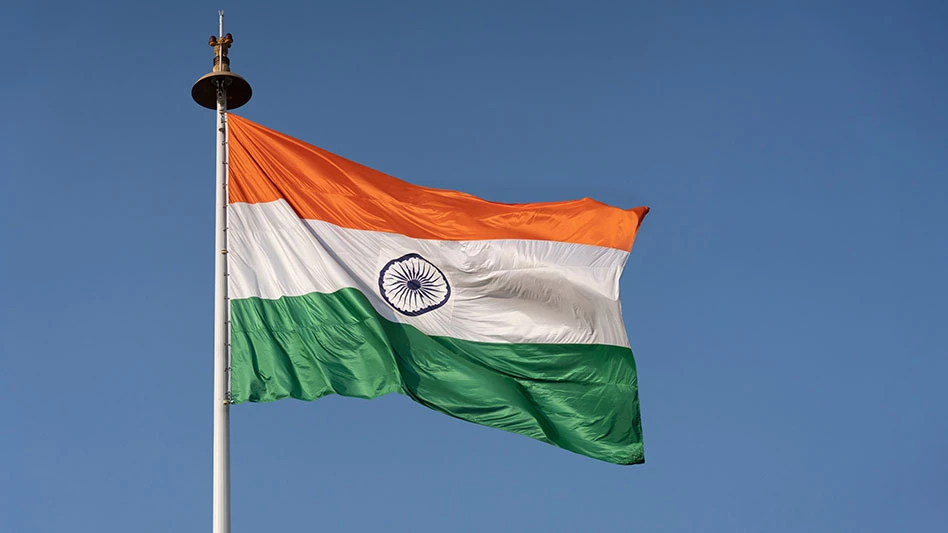
As it has for the past several years, India continues to produce and consume more steel on a monthly and annual basis, according to figures presented by commodities information firm Kallanish in an early September webinar.
Aditi Tiwari and Suhita Poddar, staff members of London-based Kallanish, offered overviews of India’s steel production, consumption and raw materials use so far in 2025 at the Sept. 3 India Steel Markets webinar.
The state of India’s economy and steel industry is of direct interest to metals recyclers and traders in the United States and Europe, who have been supplying India’s steel mills with increasing amounts of ferrous scrap for the past 10 years or more.
India’s steel industry currently consists of 43 percent blast furnace/basic oxygen furnace (BOF) technology, 35 percent induction furnace (IF) configurations and 22 percent electric arc furnace (EAF) melt shops, according to Tiwari.
The overall sector in India continues to grow, Tiwari added, with an average steel consumption rate of 105 kilograms (231 pounds) per person estimated this year, representing an increase from 72 kilograms (159 pounds) in 2020. The government forecasts the per capita figure will reach 160 kilograms (353 pounds) in 2030.
While the BOF producers rely largely on iron ore as a metallic feedstock, the IF and EAF operators tend to consume ferrous scrap (some of it imported) and direct-reduced iron (DRI).
In the first seven months of this year, iron ore consumption in India rose by about 10 percent, DRI use increased by 8 percent and scrap use at Indian mills was up by 15 percent compared with the same time frame in 2024. Tiwari pegged India’s scrap usage at 23 percent, well below the nearly 70 percent in the U.S. or levels in between those two rates in Europe or Japan.
Some of that scrap continues to be brought in from the U.S., Europe and other regions.
“We still have to rely on imports to meet 25 percent of our scrap requirements,” Tiwari said.
From January through July this year, the 5.3 million metric tons (mmt) of ferrous scrap imported represents a 12.7 percent increase from the 4.7 mmt brought in during the first seven months of last year. Kallanish estimates India’s domestic scrap generation has risen by 16.5 percent this year.
Both Tiwari and Poddar characterized the Indian steel sector as growing in 2025, though Poddar referred to a construction sector pace of growth that has slowed, pinching demand and pricing for steel rebar.
Poddar said it has been an exceptionally challenging year for rebar makers in India, with construction activities having stalled for almost three months now, which has put pressure on rebar prices.
A late May report from the Times of India, while portraying a slowdown in heavy equipment sales this year in India, refers to restrictions on the announcement of new projects due to election rules, as well as a slowdown in ongoing central and state infrastructure projects as leading to a slowdown in equipment sales that also could be applied to rebar.
According to Poddar, the situation has caused a significant gap between the average per-ton price of rebar and that for hot-rolled coil, which goes into the manufacturing of vehicles, appliances and other manufactured goods.
“Prices likely have bottomed out,” Poddar predicted for rebar producers, adding that the end of monsoon season in India later this year should provide a boost to construction activity and rebar demand there.
Steel mills in India also have active export markets, with the United Arab Emirates, Belgium and Italy among the larger volume buyers of Indian steel.
Makers of HRC in India have been gearing up to demonstrate they can comply with Carbon Border Adjustment Measure rules in Europe, according to Poddar, to keep those export channels open.
Latest from Recycling Today
- Collective Waste Solutions acquires Alcop Resource Recycling transfer station
- Volatility continues in nonferrous metals
- Neste chemical recycling plant is ready to scale up
- Indonesia’s nickel pig iron spigot reopens
- Ecore says study backs crumb rubber use on sports surfaces
- Fleetio launches AI capability to accelerate fleet maintenance approvals
- The Metals Agency receives approval for export credit insurance
- Recycle Ann Arbor extends drop-off station operating hours