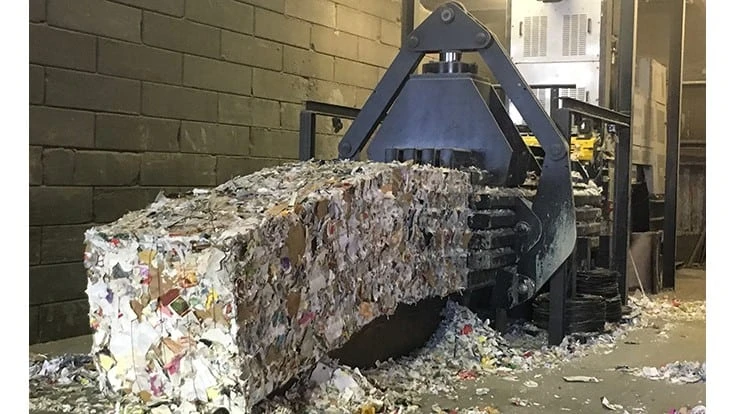
The National Waste and Recycling Association (NWRA), Arlington, Virginia, has released an update on how the waste and recycling industry can respond to India’s recent decision to set tighter limits on allowable contamination levels in incoming recyclables. These limits from India, which were announced toward the end of 2019, come two years after China banned the importation of mixed paper in 2018.
According to NWRA’s report, “Approximately 38.3 percent of all paper recovered in North America was exported in 2018. For the past two years, more than 40 percent of mixed paper exports went to India. However, India is set to reduce the allowable contamination for mixed paper to only 1 percent with random inspections of five bales of mixed paper for each container, which is causing some disruptions in the export market. As a result, all mixed paper exports to India have halted until there is certainty in India’s requirements. The domestic impacts of this disruption vary regionally. The most significant impacts are being felt on the Eastern Seaboard, except Atlanta which has sufficient domestic capacity. Barring any further changes from the export markets, these disruptions are anticipated to be temporary, lasting 30 to 60 days. This is a fluid, dynamic situation that is subject to change.”
In the report, NWRA says India’s policy change could result in the disappearance of outlets, the short-term need to dispose of mixed paper bales, higher costs and lower revenue, stockpiling issues, regional variations in demand and the potential development of new outlets.
To help recyclers combat these issues, NWRA urged industry participants to work to ensure high-quality recyclables, collaborate with city and state officials and regulators to develop solutions, strive for improved communication with recycling partners to stress the need for cleaning up contamination and review existing contracts and amend where necessary through force majeure provisions.
“The waste and recycling industry is resilient and continues to adapt to evolving market conditions as international markets change and domestic markets grow. The report from NWRA is a snapshot. This is a dynamic situation that is subject to change,” NWRA President and CEO Darrell Smith says.
The full report can be found online.
Latest from Recycling Today
- Vecoplan to present modular solutions at IFAT 2026
- Terex Ecotec appoints Bradley Equipment as Texas distributor
- Greenwave raises revenue but loses money in Q2 2025
- Recycled steel prices hold steady
- EY says India’s need for scrap imports will continue
- Coming full circle
- Amcor, DCM introduce fertilizer packaging with 35 percent recycled content
- Comstock Metals gets closer to commissioning commercial-scale solar panel recycling facility