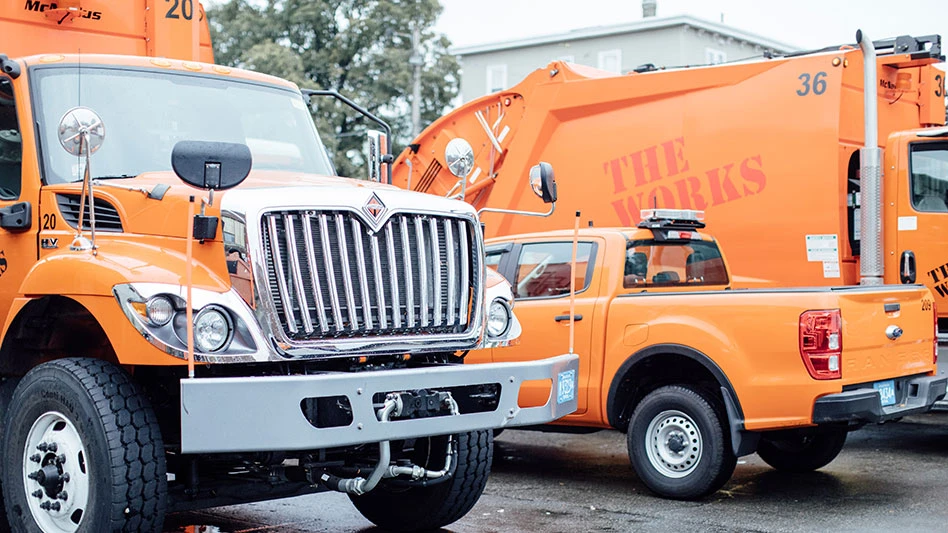
Photo courtesy of Fleetio
Managing a waste or recycling fleet is challenging under the best circumstances. Add multiple hauling yards, transfer stations and regional depots to the mix, and the complexity increases. Different routes, asset types, regulatory requirements and local operating habits quickly can create blind spots, especially when maintenance processes aren’t aligned across locations.
For multisite waste fleets, the biggest obstacles typically come down to visibility and standardization. Without a clear, centralized view of assets and consistent maintenance practices, downtime increases and compliance becomes harder to manage. With the right strategy and tools, however, these challenges can be addressed head-on.
Why visibility matters for waste fleets
Asset visibility goes beyond knowing location. Fleets need to understand asset health, service history, utilization, inspection results, fuel consumption, cost per mile and total cost of ownership (TCO) often across hundreds or thousands of vehicles and pieces of equipment.
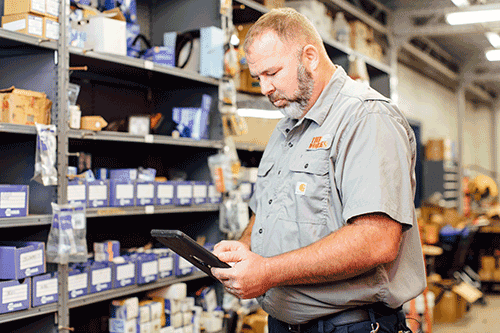
When each site relies on its own spreadsheets, inspection forms or local processes, that visibility breaks down. Information becomes siloed, making it difficult to compare performance between locations or spot issues before they escalate.
This was the reality for many large, decentralized fleets, including Creative MultiCare, which operates more than 560 assets across Georgia and Florida. As it added new locations, each with its own existing processes and tools, the fleet team was spending too much time reconciling systems instead of managing assets.
“Every day, receipts were lost. We’d wait for paper from field offices, and sometimes it just never showed up, says David Bernier, the company’s fleet manager. “We had no accurate way to track spend or detect fraud until it was too late.”
This is why asset visibility is so important.
Extending visibility beyond the asset
For waste fleets operating across multiple locations, visibility also must extend to people, processes and communication. When maintenance teams, managers and drivers all work from the same real-time data, decisions improve and delays decrease. This is especially critical for maintenance and repairs. Real-time visibility into inspection results, preventive maintenance (PM) schedules, open work orders and asset status helps reduce unexpected breakdowns and minimizes missed pickups that can impact customer satisfaction.
Bernier says that the digital solution Creative MultiCare uses to manage its fleet gave the company clarity. “Everyone from the tech to the accountant sees the same data in real time.”
Maintenance best practices across service models
Waste fleets often use a mix of maintenance approaches depending on location, asset type and workload. Regardless of the model used, visibility is the foundation for achieving standardization and improving uptime.
In-house maintenance operations
Fleets that perform most maintenance internally need insight into shop capacity and technician workloads across all sites. Without it, some shops become overloaded while others are underused.
Consistently tracking work orders, technician hours, parts use and turnaround times across locations allows fleets to balance workloads between shops, improve scheduling accuracy, identify training or staffing gaps and measure true versus estimated service times.
Fleets can use this data to improve productivity without sacrificing safety or quality. “With [our digital fleet solution], having it all in one system, a technician's able to start a job, log into a job, scan the barcodes on the parts that he's using for the job and for those to automatically be taken out of inventory,” Bernier says.
Third-party maintenance providers
Many waste fleets rely on third-party shops for specialized repairs, body work or overflow maintenance. While this approach offers flexibility, it also can introduce cost variability and inconsistent service quality if not carefully managed.
Maintaining a centralized list of approved vendors and tracking labor rates, repair outcomes and turnaround times helps ensure consistency across locations. Digital fleet solutions with integrated third-party shop features can streamline approvals and scheduling, eliminating phone calls and paperwork while keeping managers informed in real time.
Mixed maintenance models
A hybrid approach—handling some work in-house while outsourcing the rest—is common in the waste industry. In these cases, visibility is even more important. Centralized systems that combine internal and external service records give fleets a complete maintenance history for every asset, regardless of where the work was performed. This reduces duplicate data entry, supports PM compliance and enables meaningful comparisons across service types and locations.
From visibility to standardization
Once waste fleets gain clear visibility into assets and maintenance activity, the next step is standardization. Without consistent practices, even the best data won’t drive meaningful improvement.
Standardizing PM by asset type
Waste fleets operate a wide range of assets and, while each asset type has unique requirements, PM schedules should be standardized within each category. Standard PM intervals make it easier to:
- track compliance;
- reduce unplanned downtime;
- extend asset life; and
- control long-term maintenance costs.
Automated reminders based on mileage, engine hours or time intervals help ensure consistency across all locations, even when operating conditions vary.
Standardizing inspections for safety and compliance
Inspections play a critical role in waste fleet safety and regulatory compliance. Standardized inspection checklists ensure that every driver and technician evaluates assets using the same criteria, regardless of location. When using digital inspections in a fleet solution, you can gain such added benefits as:
- real-time alerts for failed items;
- faster prioritization of critical repairs;
- improved audit readiness; and
- early detection of recurring issues.
For large, distributed fleets, mobile inspections allow drivers to complete pre- and posttrip checks quickly, with results instantly visible to maintenance and management teams across the organization. In a recent survey, fleets reported using a digital fleet solution helped them improve inspections, maintenance and asset visibility across 10-plus locations while increasing on-time compliance rates to between 75 percent and 90 percent, thanks to automated reminders and streamlined record keeping.
Measuring consistency and performance
With visibility and standardization in place, waste fleets can begin measuring what truly matters. Benchmarking key metrics like PM compliance rates, average repair time, scheduled versus unscheduled maintenance and cost per mile helps fleets identify best-performing locations, address problem areas and make data-driven decisions that improve uptime and control costs.
“When you’re talking about managing hundreds of assets spread out across a state or region, benchmarking becomes a very important tool,” says Megan Green, senior manager, customer success at Fleetio, headquartered in Birmingham, Alabama. “Quarterly or biannual benchmarking allows you to see the health of your fleet operations, but it also enables you to measure the success or shortcomings of any operational change you might make.”
Building a more resilient waste fleet
For multisite waste and recycling operations, managing fleet maintenance doesn’t have to feel fragmented or reactive. If you focus on prioritizing visibility, aligning maintenance practices and standardizing processes across locations, you can reduce downtime, improve safety and, ultimately, operate more efficiently.
When drivers, technicians, managers and leadership all have access to the same accurate, real-time data, maintenance becomes less about putting out fires and more about supporting reliable service for the communities you serve.
Rachael Plant is a senior content marketing specialist for Fleetio, a fleet maintenance and optimization platform that helps organizations run, repair, and optimize their fleet operations.
Latest from Recycling Today
- Unilever criticized for plastics approach
- USTR to study additional steel, aluminum tariffs
- Electrified Materials adds processing capacity
- ERI files suit alleging theft of trade secrets
- Stretch film recycling program launches in California
- Baltimore trash collection expected to slow as WTE facility closes for maintenance
- FCC Environmental Services awarded collection contract in Florida
- Qatalum opts to scale down production