Dreamstime
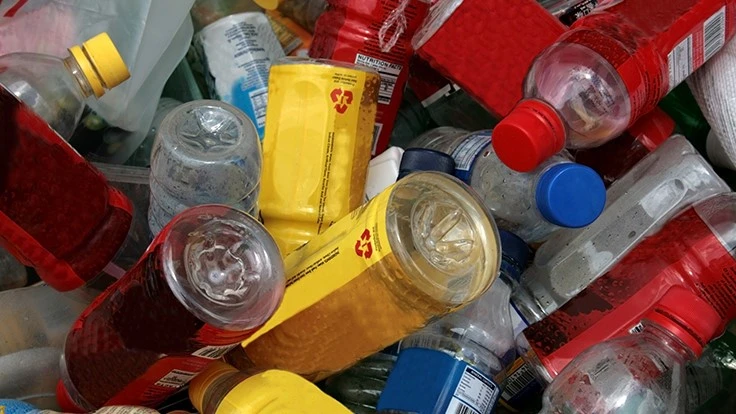
ICIS, a petrochemicals market information provider based in London, has released “West Europe Recycled PET Industry 2018,” a study that analyzes polyethylene terephthalate (PET) recycling rates in the region. The survey was conducted across 28 countries in Western Europe from May to July 2019. The study looked at the supply chain, recycling and end-use markets for PET. The report is a collaborative effort that includes national authorities, compliance agencies, deposit-return schemes and recyclers, ICIS says.
According to a news release from ICIS, the study found evidence that bottle-deposit schemes are working better as an incentive than market prices for recycled materials. The study’s conclusion is that PET bottle collection rates in Western Europe have risen from 58 percent in 2016 to 63 percent in 2018 and are projected to reach 65 percent in 2019.
However, according to ICIS, the European recycling industry could miss its 2025 target for PET bottle recycling unless there is “a reversal of the slowing growth rate in recycling.” In March, the European Parliament adopted the commission-proposed Single-Use Plastic (SUP) Directive to increase PET recycling. The development was supported by a range of international brands through their own recycling pledges.
Under the SUP Directive, the industry is required to reach recovery rates of 77 percent by 2025 and 90 percent by 2029, but the collection volume growth rate is currently falling, according to the study. ICIS estimates that the volume of collected material will need to increase by 7 percent per year if the 2029 target is to be met.
“The rise in demand for rPET (recycled PET) began early on in 2018 as supply issues for virgin PET resin carried over from the end of 2017; this pushed up demand from sectors that could easily use either feedstock,” says Helen McGeough, ICIS senior analyst. “This, in turn, pushed up prices as supply was constrained since collection activity did not increase in line with demand. The drive for food-grade rPET came later in 2018, once the SUP Directive was passed. Despite the boost in demand for rPET, collection failed to match those growth rates, reaching 2.1 million [metric tons] in 2018, just 2.4 percent growth on 2017 volumes. Tight supply saw PET bale prices rise 20 percent in 2018, compounded by the growth in reclamation capacity during the year that expanded to meet the downstream demand for RPET products.
“The reclamation industry increased production of rPET products by 17 percent to 1.4 million [metric tons] and packaging applications absorbed two-thirds of that total,” McGeough continues. “The capacity of food-grade rPET barely had time to build prior to the rush of supply enquires following the signing of the SUP Directive. As a result of the directive, there was an increase of 13 percent in food-grade rPET prices, which were generally accepted as these prices sat only 7 percent higher (on average) than virgin PET prices. However, this has changed considerably in 2019 with premiums of over 30 percent on average, peaking at near 50 percent so far this year.”
Looking ahead, collection volumes are projected to grow by less than 4 percent for 2019 to 2020, ICIS says. If this growth rate is sustained in the longer term, the SUP Directive recovery targets will not be met.
The top seven highest collection rates in 2018 were found in Western European countries with a deposit-return scheme (DRS) in place for PET bottle collection, perhaps evidence that such systems are what is needed to produce the outcomes required in terms of quantity and quality improvements, ICIS says.
Latest from Recycling Today
- Equipment from the former Alton Steel to be auctioned
- Novelis resumes operations in Greensboro, Georgia
- Interchange 360 to operate alternative collection program under Washington’s RRA
- Waste Pro files brief supporting pause of FMCSA CDL eligibility rule
- Kuraray America receives APR design recognition for EVOH barrier resin
- Tire Industry Project publishes end-of-life tire management guide
- Des Moines project utilizes recycled wind turbine blades
- Charter Next Generation joins US Flexible Film Initiative