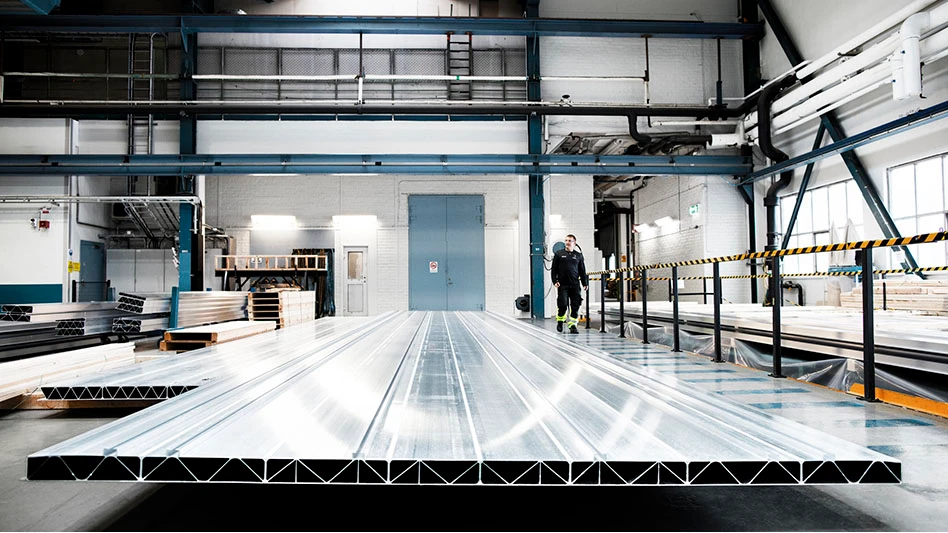
Photo courtesy of Norsk Hydro ASA
Aluminum producer Norsk Hydro ASA, headquartered in Oslo, Norway, has announced its financial results for the fourth quarter of 2025, posting a reduction in adjusted earnings before interest, taxes, depreciation and amortization (EBITDA) year over year, which it attributes to lower realized alumina prices and stronger Norwegian currency.
Hydro’s adjusted EBITDA for the fourth quarter of 2025 was 5,587 million Norwegian kroner ($588.2 million), down from 7,701 million Norwegian kroner ($810.8 million) in the same quarter last year.
"Strong aluminum metal prices continued to provide tailwinds in the fourth quarter, driving near-record earnings in our primary aluminum business and offsetting weak downstream markets,” Eivind Kallevik, Hydro president and CEO, says. “This highlights the robustness of Hydro’s financial position and diversified portfolio.”
Kallevik adds, “Hydro’s relentless focus on operational excellence, cost competitiveness and adaptability has been key to sustaining strong performance in a challenging macro environment.”
The company says its operational performance in its upstream segments was strong in the fourth quarter, with alumina production at its Brazilian smelter Alunorte exceeding nameplate capacity given improved refinery flow and high equipment availability. In Aluminum Metal, the ramp-up of previously curtailed capacity at its Norwegian smelters continues, with quarterly production increasing by 2.5 percent year on year.
Reliable access to renewable energy remains key to Hydro’s low-carbon aluminum strategy and competitiveness, the company says, noting that it signed two long-term power sourcing agreements for the period of 2031 to 2040 with Norway’s Hafslund in the fourth quarter and include renewable energy. The agreements pertain to the company’s Sunndal and Høyanger smelters. Hydro says it can produce aluminum in Norway with a carbon footprint about 75 percent less than the global average as a result.
Hydroalso is investing 1.2 billion Norwegian kroner ($126.3 million) in its hydropower portfolio through the Illvatn pumped storage plant project in Norway.
Hydro announced in November of last year that it had decided to consolidate its Extrusions operations in Europe, proposing the closure of five of its European plants. It has confirmed the closure of two plants in the United Kingdom in late 2026 in Bedwas and Cheltenham. In the fourth quarter, the five plants were impaired by a total of 398 million Norwegian kroner ($41.9 million), and a provision of 1,226 million Norwegian kroner ($129.1 million) was taken for the closure and redundancy cost, the company notes. Both of these items are excluded from adjusted EBITDA, though an environmental provision of 72 million Norwegian kroner ($7.6 million) affected fourth-quarter adjusted EBITDA.
The strategic workforce reduction the company announced in August 2025 was completed in the fourth quarter, with 850 people having left or who are leaving the company in the first half of this year. The total redundancy cost taken in the third and fourth quarters was 401 million Norwegian kroner ($4.2 million) with no further cost expected in 2026, Hyrdo says.
Results and market development per select business area
Adjusted EBITDA for Hydro’s Bauxite & Alumina business segment decreased compared with the fourth quarter of last year to 1,392 million Norwegian kroner ($146.6 million) from 4,969 million Norwegian kroner ($523.2 million), mainly driven by lower alumina sales prices and stronger Brazilian currency relative to the U.S. dollar. This was partly offset by increased sales volumes and positive effects from replacing heavy fuel oil with natural gas in the alumina production, the company says.
The Platts Aluminum Index (PAX) traded down to $306 per metric at the end of the fourth quarter from $321 at the end of the third quarter, driven by a falling Chinese alumina price and a loosening global alumina balance as alumina production at new refineries in Indonesia continued ramping up. China's alumina market was oversupplied, driving domestic prices down to marginal cash cost of production, however, no significant curtailments have been observed so far, Hydro says. Monthly Chinese bauxite imports from Guinea trended up seasonally in the fourth quarter, driving bauxite prices lower.
The company’s adjusted EBITDA for its Aluminum Metal segment increased year over year in the fourth quarter of 2025 to 3,707 million Norwegian kroner ($390.3 million) from 1,949 million Norwegian kroner ($205.2 million) mainly because of higher all-in metal prices and lower alumina cost, partly offset by relatively weaker U.S. currency to Norwegian currency. Global primary aluminum consumption was higher in the quarter compared with the fourth quarter of 2024, Hydro says, driven by a 1.2 percent increase in world ex. China. The three-month aluminum price increased throughout the fourth quarter, starting at $2,688 per metric ton and ending at $2,995.
Adjusted EBITDA for Metal Markets decreased in the fourth quarter of 2025 compared with the same period last year, to negative 56 million Norwegian kroner ($5.9 million) from 319 million Norwegian kroner ($33.6 million), resulting from lower sourcing and trading activities, and negative inventory valuation and currency effects, partly offset by increased results from recyclers, the company says.
Adjusted EBITDA for Extrusions decreased year over year in the quarter to a loss of 62 million Norwegian kroner ($6.5 million) from 371 million Norwegian kroner ($39 million), driven by what Hydro says was weaker sales margins in combination with somewhat lower volumes. The increasing U.S. Midwest Premium compensated for pressured sales margins, the company adds.
Hydro estimates European extrusion demand to have been flat in the fourth quarter of 2025 compared with the same quarter last year, though it increased by 3 percent from the third quarter. Demand for building and construction and industrial segments has stabilized at historically low levels with some improvements in order bookings. Automotive demand has been negatively affected by lower European light vehicle production, partly offset by increased production of electric vehicles, the company adds.
North American extrusion demand also is estimated to have been flat year over year in the fourth quarter of 2025 and to have decreased 8 percent compared with the third quarter, which Hydro says was driven partially by seasonality. Extrusion demand has continued to be very weak in the commercial transport segment driven by low trailer builds. Automotive demand also has been weak. On the other hand, demand has been positive in the building and construction and industrial segments, though Hydro adds that demand across segments is being subdued by higher product prices on the back of higher tariffs and duties on aluminum in the U.S.
Looking ahead
According to Hydro’s fourth-quarter earnings presentation, the company is expecting higher results from sourcing and trading activities , stable recycling results and continued volatile trading and currency effects in the first quarter of 2026 in its Metals Market segment. Its guidance for 2026 commercial adjusted EBITDA excluding currency and inventory is 200-400 million Norwegian kroner ($2.1-$4.2 million).
For Aluminum Metal, the company is forecasting higher fixed costs, higher raw material and higher sales volumes.
In its Bauxite & Alumina segment, Hydro sees the alumina price being lower in the first quarter of this year, with seasonally lower production and lower sales volumes. The company anticipates stable fixed and raw material costs.
For its Extrusions business, Hydro sees volume pressure for the quarter underway and a flat metal effect.
Latest from Recycling Today
- Mardi Gras sustainability initiative collects 14K pounds of recyclables
- Reju selects site for French textile recycling facility
- Republic Services appoints Ian Craig to board of directors
- Phoenix Public Works Department proposes solid waste rate increases
- REalloys adds general to executive ranks
- LME takes sustainability premium step
- Smurfit Westrock remains focused on portfolio optimization
- 2026 unlocked: The strategic framework for profitable, efficient and circular operations