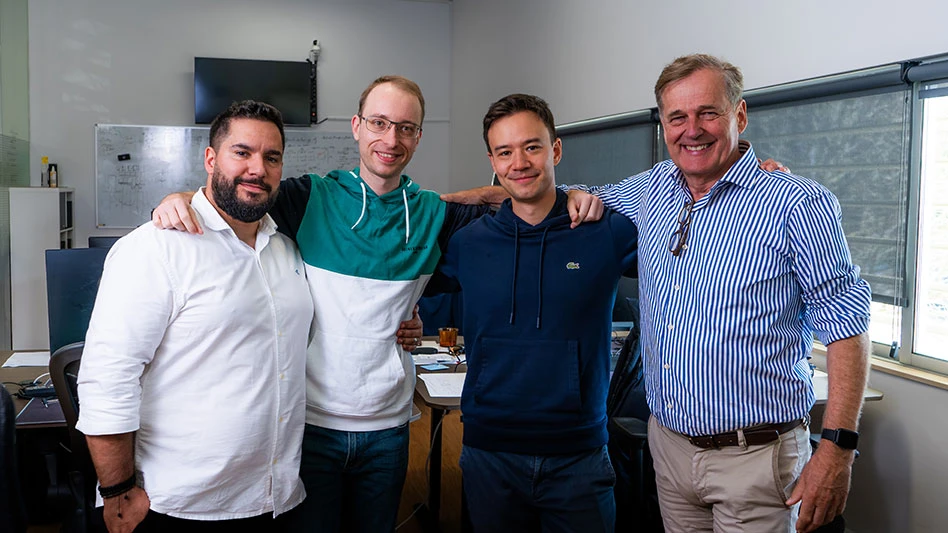
Project Alpakka, a new collaboration between Norway-based Hydro, Metallco, Infinitum, Norsk Metallgjenvinning and Kavli, along with Norwegian University of Science and Technology (NTNU) and Norway’s Foundation for Scientific and Industrial Research (SINTEF), will save Norway more than 1.5 kilowatts per hour of energy and several hundred thousand metric tons of CO2 each year by increasing the recyclability of food packaging.
According to a Hydro news release, recycling of food packaging can save several hundred thousand metric tons of CO2 a year. Aluminum is widely used in food packaging, from squeezable tubes to yogurt tubs, mackerel tins and juice cartons, where it offers a unique ability to extend shelf life and reduce food waste. Hydro reports that the challenge is to ensure that the packaging is delivered for recycling and returns into circulation. This requires close cooperation with experts along the value chain and better communication with consumers.
“For us as an aluminum company, it’s important to take industrial responsibility and ensure that the metal we produce returns into circulation and can become new products,” says Hans Erik Vatne, Hydro’s head of technology. “We believe aluminum is the metal of the future, as it can be recycled again and again, but we must work together to develop even better solutions and raise awareness among consumers. Technology, innovation and collaboration are crucial here, so we’re pleased to gather experts from all relevant fields in this project.”
Project Alpakka, with Hydro at the forefront, includes those responsible for collection and recycling, Norsk Metallgjenvinning, Metallco and Infinitum, the food producer Kavli, as well as the NTNU and the SINTEF that are providing research support. The project will receive 15 million Norwegian krones (or about $1.7 million) in support from the Research Council of Norway over three and a half years.
According to Bergen, Norway-based Kavli, which also owns Q-Meieriene, four out of five of their food product tubes are thrown into the trash rather than recycled, and this is something they want to change.
“From a sustainability perspective, aluminum is fantastic for extending shelf life and reducing food waste. But today too much is thrown in the bin–our goal is that all the tubes we sell are returned to recycling. To achieve this, it's important for us to communicate effectively with our customers and mark the packaging so that there is no doubt about what to do with the packaging after use,” says Annette Waage Jung, innovation and product development manager at Kavli.
In addition, Kavli will work with its suppliers to improve the design of the tubes in order to ensure 100 percent recyclability by 2025. According to Infinitum, the company behind Norway’s deposit and collection system and a supplier of aluminum cans for recycling to Hydro in Holmestrand, Norway, there is also great potential for recovering more aluminum in food packaging.
“While there’s a lot of aluminum in buildings and cars that takes a long time to return for recycling, packaging—like drink cans—has a very short service life before it can get back into the loop,” says Kjell Olav A. Maldum, CEO of Infinitum. “Together with Norsk Metallgjenvinning, we will therefore measure how much is returned to recycling today and work together to develop new solutions and incentives to increase the amount of packaging that is returned from consumers. To achieve this, we believe crucial elements from Infinitum’s successful bottle collection model can be utilized do develop other collection systems, such as for food packaging.”
According to a Hydro news release, NTNU and SINTEF will support the project through research, including a doctoral position.
Latest from Recycling Today
- ReMA provides economic impact report, industry update
- Collective Waste Solutions acquires Alcop Resource Recycling transfer station
- Volatility continues in nonferrous metals
- Neste chemical recycling plant is ready to scale up
- Indonesia’s nickel pig iron spigot reopens
- Ecore says study backs crumb rubber use on sports surfaces
- Fleetio launches AI capability to accelerate fleet maintenance approvals
- The Metals Agency receives approval for export credit insurance