Image courtesy of Huber+Suhner
Huber+Suhner, a Switzerland-based manufacturer of components and system solutions for electrical and optical connectivity, says it has strengthened its ongoing sustainability initiatives across its fiber optic product offering thanks to smarter resource use and process optimization.
The company, which primarily serves the industrial, communication and transportation markets, says its process includes the removal of more than 743,000 single-use plastic bags, replacing 1.5 million twist cable ties and converting 35,500 blister packages to 100 percent-recycled polyethylene terephthalate (rPET).
Having extended its sustainable packaging initiative across 11 key product families, the company says the results demonstrate measurable carbon footprint improvements that bolster a wider effort that has achieved waste and logistical efficiencies across the data center fiber connectivity market.
“2025 was a step in the right direction,” says Lana Ollier, head of global sustainability at Huber+Suhner. “Removing single-use plastic items and moving more product families to recyclable and sustainable materials show what’s possible when sustainability is designed in, not added on. We’ve proven that better product packaging not only cuts emissions but protects performance and simplifies logistics.”
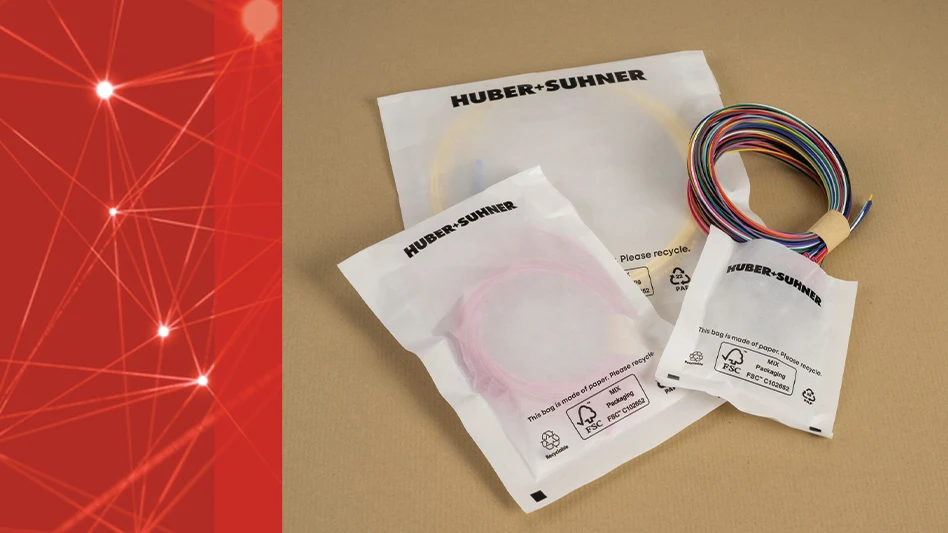
The company says its sustainable packaging measures include Forest Stewardship Council- (FSC-) certified, 100 percent-recyclable paper for connector and cable assemblies and 100 percent-recycled PET for its Lisa, Sylfa HD and Ianos fiber modules. Huber+Suhner claims these changes deliver greater product durability and dust protection while ensuring a lighter transport weight for a reduction in emissions and operational costs.
As a result, the company says customers benefit from a reduction in installation waste while on-site handling of Huber+Suhner products is improved through quick-open, dust-free paper products and stackable blister designs. Additionally, the company says verified life cycle calculations indicate that packaging CO2 emissions—when compared to traditional packaging materials—are reduced by about 50 percent for selected blister modules.
The company now plans to extend its packaging initiative to cover a total of 17 fiber optic product families.
Latest from Recycling Today
- 2026 Plastics Recycling Conference: Diving into SB 54
- Commentary: Plastic recycling isn’t working; what are we going to do about that?
- Environmental groups urge Indonesia to return e-scrap shipments
- Foodservice Packaging Institute opens applications for 2026 foam recycling grant program
- Worn Again Technologies unveils Accelerator plant to advance polycotton recycling
- Nashville Waste Services launches new digital route system
- Arconic expands in Iowa
- Cascades invests $6.9M in recycled boxboard plant