venusangel | stock.adobe.com
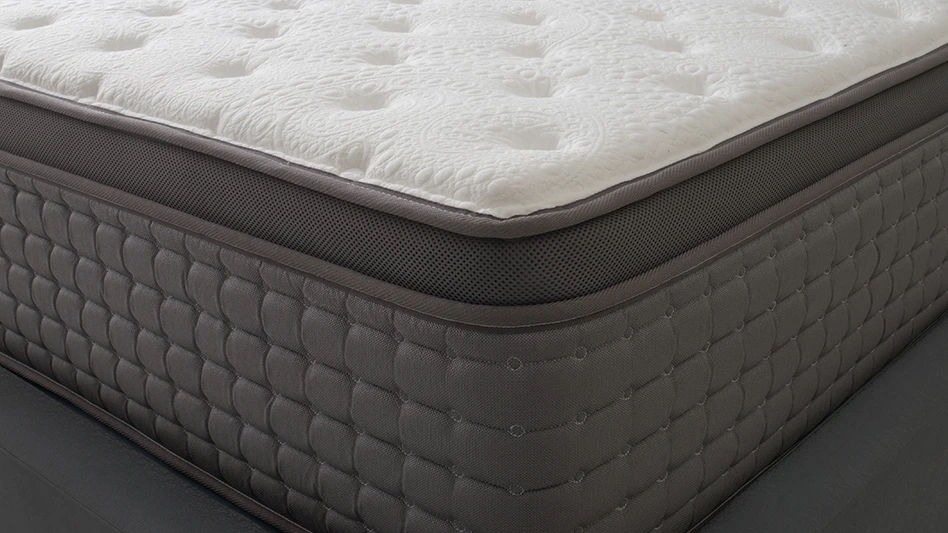
Mattress abandonment is a serious problem for local governments and their landfill operations.
The numbers are staggering. In the United States alone, more than 50,000 mattresses are dumped illegally every day, resulting in 15-20 million mattresses discarded each year. Besides being a pollution problem, these mattresses place an enormous strain on waste systems. Mattresses are bulky and difficult to break down, each one taking up as much as 40 cubic feet of valuable landfill air space.
Multiply the number of discarded mattresses each year by the amount of space they take, and the impact can reach hundreds of millions of cubic yards.
Fortunately, nonprofit organizations like the Alexandria, Virginia-based Mattress Recycling Council (MRC) have developed programs in states that have enacted mattress recycling laws. These initiatives have improved the nationwide recycling rate by approximately 19 percent as of May 2025. In states such as California, Connecticut and Rhode Island that have activated MRC programs, the recycling rate has climbed to more than 80 percent.
Treating mattresses as resources
Above all, the MRC program works to address two key drivers that landfill and recycling leaders face: protecting scarce landfill airspace and generating dependable revenue streams.
Few programs deliver on both drivers like mattress recycling. Treated as trash, mattresses jam equipment and consume airspace. Treated as resources, they yield high-value commodities such as steel, wood frames, foams and fabrics while helping protect the environment.
Foams and fibers are shredded and recycled into insulation and carpet padding, steel coils are melted down to create new steel products like building material and car parts, while the wood frames can be repurposed into shipping pallets, fuel pellets and mulch. The industry always is identifying new and innovative reuse applications such as repurposing modified mattress foam for oil spill cleanup.
For an example of local impact, OC Waste & Recycling (OCWR) in Southern California has built mattress recycling into its daily operations through a partnership with the MRC’s Bye Bye Mattress program. The program runs at all three Orange County landfills–Frank R. Bowerman, Olinda Alpha and Prima Deshecha. Each mattress could contain up to 75 percent recyclable materials, as noted above.
To date, OCWR has recycled more than 145,000 mattresses. Laid end to end, they would stretch from San Diego to Napa Valley. This effort has preserved nearly 240,000 cubic yards of airspace, which equates to approximately 3,000 tons of waste and a full day’s worth of trash delivered to Orange County landfills. That preserved airspace helps extend the life of our landfills and defer costly facility expansions or building new facilities. And it’s not just space saved; the program has generated more than $432,000 in new revenue.
Focus on education
A core component of OCWR’s efforts to grow mattress recycling has been educating and training staff.
Initially, they were hesitant to participate due to concerns about bed bugs and the handling of contaminated mattresses. Thanks to close collaboration with the MRC and Bye Bye Mattress, we were able to mitigate concerns, provide proper personal protective equipment and establish processes that ensured employees feel comfortable handling mattresses in any condition. By involving staff so closely in the development of the program, they have felt a real sense of ownership over the program that has been critical to its success.
I’ve seen firsthand how OCWR has transformed from leading with a traditional “push, pack and bury” approach to a recovery-first operation prioritizing the reuse of mattresses, metals, green and wood waste, organics and more. With solid waste disposal at Olinda Alpha Landfill phasing down, this focus is imperative, as every ton recovered preserves airspace and extends the life of the landfill, while we manage a landfill near capacity.
To promote mattress recycling, teams moved collection bins to high-traffic areas where customers already unload, established staging areas for mattresses to streamline consolidation, and reinforced recycling at every touchpoint through clear signage, digital campaigns and hands-on coaching and training for attendants and equipment operators.
The culture shift is tangible. Crews now measure success not just in tons buried, but in materials preserved. Put simply, reuse must be embedded end-to-end and championed on every level–from leadership to landfill operators.
A sustainable practice
Beyond the economic and operational gains, mattress recycling delivers clear environmental benefits. By keeping bulky mattresses out of landfills, recycling reduces greenhouse gas emissions, conserves energy, reduces illegal dumping and saves water. In short, it advances a sustainable, circular economy that keeps materials in use longer while shrinking the overall environmental footprint.
Our efforts are complemented by California’s state-mandated Retailer Take-Back Program. When a new mattress is delivered to a residence, the retailer must offer to remove the old one at no additional cost. Although somewhat underpublicized, this requirement feeds our recycling stream by routing units directly into proper channels to reach our landfills. As part of the program, retailers have up to 30 days to haul a mattress away.
Public-private partnerships such as MRC and regional recyclers reduce costs while expanding service offerings for landfill operators. A mattress recycling program uniquely combines landfill efficiency, regulatory compliance and community service under one framework. Strategically placed collection trailers, streamlined sorting and no-cost public access make the model scalable and replicable, demonstrating that environmental sustainability and fiscal stewardship can go hand in hand.
So, why aren’t more landfills recycling mattresses? In many cases, it’s an information gap. When we share practical industry guidance such as environmental benefits, airspace savings and proven revenue models, we equip operators with playbooks and case studies to launch programs of their own. With the right expertise, mattress recycling can transition from an idea to a standard practice.
As landfill airspace tightens and compliance expectations rise, OCWR’s mattress recycling program and others like it offer a proven, repeatable operating model that protects airspace, reduces illegal dumping and converts a bulky liability into measurable value. In partnership with MRC, OCWR is doubling down on this initiative by continuing to look for ways to grow the program and urges public agencies and site operators nationwide to join us.
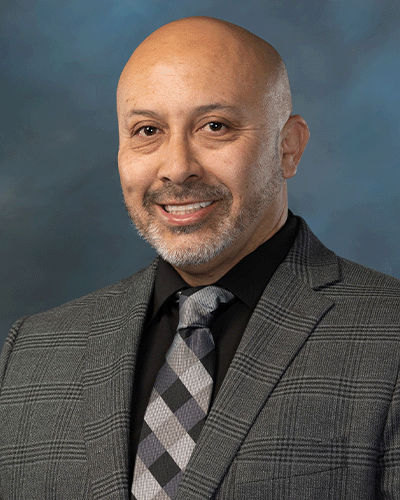
Jorge Hernandez is the deputy director for OC Waste & Recycling’s North Region, overseeing landfill and organics operations at the Olinda Alpha Landfill and Valencia Greenery in Brea, California. With more than 30 years of industry experience, Jorge leads landfill operations and resource recovery efforts, including mattress and metal recycling programs that help extend the life of Orange County’s landfills. He also serves as the safety ambassador for SWANA’s Southern California chapter.
Latest from Recycling Today
- McNeilus introduces AI material contamination detection technology
- Closed Loop report identifies opportunities to increase prescription pill bottle recycling
- Organics Recycling Conference 2026: Q&A with keynote speaker Andy McNeill
- CMRA selects Vietnam for 2026 event
- Steel Dynamics foresees profitable Q1
- AF&PA joins NAW lawsuit in Oregon
- California’s ‘Truth in Labeling’ law faces federal suit
- Fayetteville, Arkansas, adopts new cart-based recycling program