© Mircea Bezergheanu | Dreamstime.com
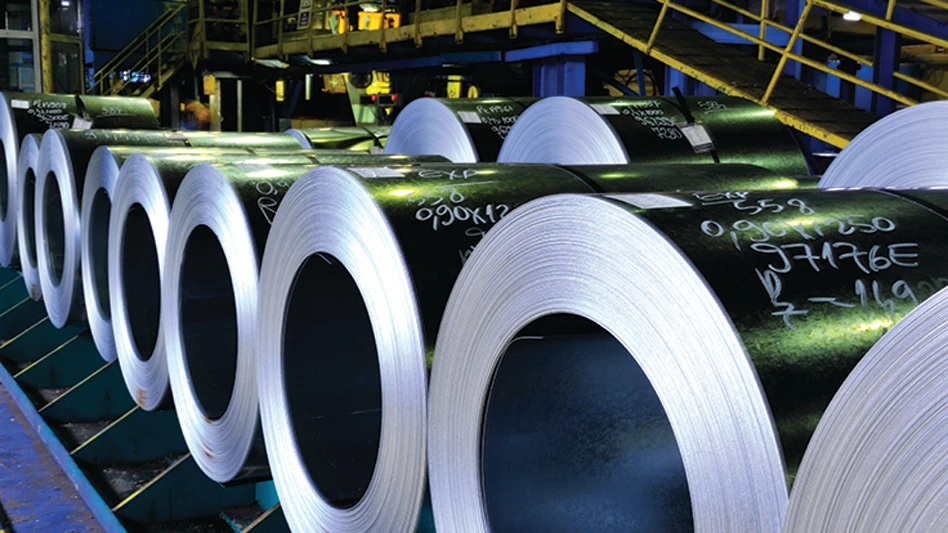
The Global Steel Climate Council (GSCC), a nonprofit organization focused on reducing steel carbon emissions, has released a draft of a global standard to measure and report steel carbon emissions. GSCC’s The Steel Climate Standard focuses on reducing greenhouse gas (GHG) emissions from the global steel industry.
According to a news release from GSCC, the standard offers a single, technology-agnostic protocol that would apply to all steel producers equally on a global basis and would enable steel customers to know and compare the actual carbon emissions associated with steel products.
Several organizations co-founded GSCC, including Celsa Group, Commercial Metals Co., the Institute of Scrap Recycling Industries, Nucor Corp., Steel Dynamics Inc. and the Steel Manufacturers Association. More than two dozen other organizations from around the world support GSCC and its initiatives.
“Steel companies and associations from around the world have come together to develop a standard that will enable our industry to reduce carbon emissions and encourage investments in lower-emission technology as part of the global effort to decarbonize,” says Greg Murphy, executive vice president at Charlotte, North Carolina-based Nucor Corp. and chair of GSCC.
Nucor President and CEO Leon Topalian adds, “Using a single standard that is ambitious, auditable, inclusive and transparent is needed to accelerate further greenhouse gas emission reductions in our industry and to drive investment in lower-emission technology.”
GSCC reports that it is one of several groups and companies advocating for this type of global standard. According to the GSCC, some groups in the United States and Europe are promoting a standard that features a “ferrous scrap usage sliding scale,” with one standard for steel made from traditional production processes and another for steel made from circular processes. However, Phil Bell, president of the Washington-based Steel Manufacturers Association, says creating a dual standard such as this would allow companies to prioritize high-carbon emissions steel over lower-carbon emissions steel. He says, “This is a form of greenwashing and serves to discourage innovation and allows high-carbon steelmakers to postpone making changes in their production process.”
GSCC says The Steel Climate Standard proposal features two main components, including:
- product certification criteria that allow customers to know if the steel they are buying is on the glidepath to achieve the goals of the Paris Climate Agreement; and
- a corporate-wide, science-based, target-setting framework based on a 1.5-degrees glidepath.
Additionally, GSCC’s standard would measure all GHG emissions pollutants from Scope 1, 2 and 3 emissions. Producers would have to report independent verification of their emissions and reduction targets. The GSCC standard’s product intensity goals for the steel industry are based on the International Energy Agency’s carbon budget for the iron and steel sector, which is aligned with the 1.5 C scenario for net-zero emissions by 2050.
“Steel is integral to the functioning of global economies, including clean energy infrastructure,” says Jeff Hansen, vice president of environmental sustainability at Fort Wayne, Indiana-based Steel Dynamics Inc. and a GSCC board member. “The Steel Climate Standard is a simple and understandable benchmark for reducing our industry greenhouse gas emissions and provides a transparent means for decision-makers to make informed decisions.”

Sponsored Content
Monterrey Metal Recycling Solutions trusts SENNEBOGEN reliability
Monterrey Metal Recycling Solutions of San Antonio has roots that trace back more than 100 years—and a recognition of efficient metal recycling, trading and processing techniques that traces back just as far.
The fourth-generation family business, formerly known as Monterrey Iron & Metal, operates an auto shredding plant, a stationary shear-baler and other equipment at its sizable campus in San Antonio.
Sponsored Content
Monterrey Metal Recycling Solutions trusts SENNEBOGEN reliability
Monterrey Metal Recycling Solutions of San Antonio has roots that trace back more than 100 years—and a recognition of efficient metal recycling, trading and processing techniques that traces back just as far.
The fourth-generation family business, formerly known as Monterrey Iron & Metal, operates an auto shredding plant, a stationary shear-baler and other equipment at its sizable campus in San Antonio.
Sponsored Content
Monterrey Metal Recycling Solutions trusts SENNEBOGEN reliability
Monterrey Metal Recycling Solutions of San Antonio has roots that trace back more than 100 years—and a recognition of efficient metal recycling, trading and processing techniques that traces back just as far.
The fourth-generation family business, formerly known as Monterrey Iron & Metal, operates an auto shredding plant, a stationary shear-baler and other equipment at its sizable campus in San Antonio.
Sponsored Content
Monterrey Metal Recycling Solutions trusts SENNEBOGEN reliability
Monterrey Metal Recycling Solutions of San Antonio has roots that trace back more than 100 years—and a recognition of efficient metal recycling, trading and processing techniques that traces back just as far.
The fourth-generation family business, formerly known as Monterrey Iron & Metal, operates an auto shredding plant, a stationary shear-baler and other equipment at its sizable campus in San Antonio.
Sponsored Content
Monterrey Metal Recycling Solutions trusts SENNEBOGEN reliability
Monterrey Metal Recycling Solutions of San Antonio has roots that trace back more than 100 years—and a recognition of efficient metal recycling, trading and processing techniques that traces back just as far.
The fourth-generation family business, formerly known as Monterrey Iron & Metal, operates an auto shredding plant, a stationary shear-baler and other equipment at its sizable campus in San Antonio.
Sponsored Content
Monterrey Metal Recycling Solutions trusts SENNEBOGEN reliability
Monterrey Metal Recycling Solutions of San Antonio has roots that trace back more than 100 years—and a recognition of efficient metal recycling, trading and processing techniques that traces back just as far.
The fourth-generation family business, formerly known as Monterrey Iron & Metal, operates an auto shredding plant, a stationary shear-baler and other equipment at its sizable campus in San Antonio.
GSCC is inviting interested organizations to review The Steel Climate Standard and submit comments, which are due May 17.
Get curated news on YOUR industry.
Enter your email to receive our newsletters.
Latest from Recycling Today
- SPG invests in closed-loop recycling, material innovation
- National Stewardship Action Council, Stewardship Action Foundation launch National Textile Circularity Working Group
- Senate passes STEWARD Act
- Circular Colorado to establish innovation hub for product development
- Aduro, ECOCE collaborate to advance flexible plastic packaging in Mexcio
- UBQ composite material consisting of MSW residue used in cart manufacturing
- Colorado recycling company transitions to electric mobile equipment
- UK steel producers, recyclers collaborate on policy report