nordroden | stock.adobe.com
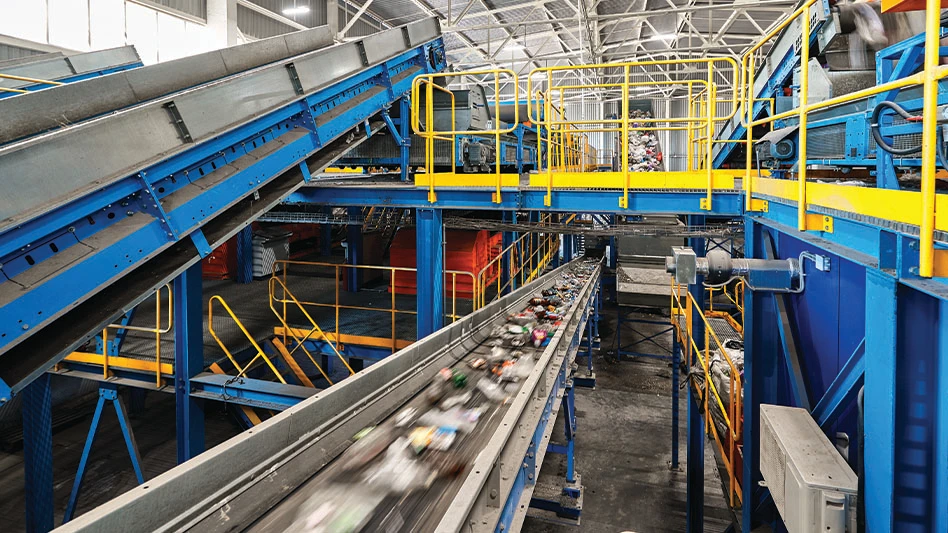
Greyparrot, a London-based artificial intelligence technology developer for the waste and recycling sector, has released its 2025 Recycling Trend Report, using data gathered by its Analyzer units. The units are deployed inside recycling facilities to inspect material streams as they pass through systems on conveyor belts.
Greyparrot Analyzers are in use at 65 facilities across more than 20 countries in North America, Europe and Asia, and the company says its global network of equipment made more than 477 billion bounding box detections and analyzed 52 billion items this year. It adds that of the 1.24 million metric tons of recyclable material analyzed this year, just 103,000 tons were lost on residue lines.
“Preventing this material from being landfilled or incinerated avoids hundreds of thousands of tons of CO2 emissions, reinforcing recycling’s critical role in circularity and emissions reduction,” the company says.
Of materials detected over the course of the year, Greyparrot says around 8.3 billion polyethylene terephthalate (PET) bottles entered recycling facilities—2 billion more bottles than the Analyzers detected in 2024, largely because of the company’s increased global coverage.
Despite higher volumes, Greyparrot says less recyclable plastic ended up in residue lines, with average recoverable plastic per Analyzer on residue lines dropping from 3,000 tons in 2024 to 2,500 tons this year, leading the company to conclude that sorting facilities are adapting to process growing plastic volumes more efficiently than before.
However, the report claims that while recyclers captured a large volume of PET and high-density polyethylene (HDPE) bottles this year, performance “fluctuated wildly,” even within those categories. For example, the report claims one facility recovered 95 percent of the clear PET containers it processed, but just 15 percent of some colored PET containers.
“Regulators will need to ensure fees are scheduled according to real-world recovery for EPR [extended producer responsibility] to make its intended impact,” Greyparrot says. “Thankfully, Oregon’s current EPR program plan has specific categories for clear and pigmented plastics, which will hopefully be carried forward to the finalized fee structure.”
The company adds that to make a meaningful impact on circularity in 2026, EPR regulation will need to “get more granular and reflect the realities of plastic recovery,” not just the intent behind packaging designs.
Additional materials
The report claims glass residue remained slightly more than 1 percent of residue material this year. By contrast, the company says the amount of metal as a proportion of residue streams rose from 2.5 percent to 4.3 percent in a single year.
Greyparrot says that result partly could be due to the growth of the electronic scrap stream. “With the number of battery fires reaching record-highs in 2025, it presents a serious argument for investment in waste electrical and electronic equipment waste collection, recycling and responsible management.”
Fiber, including materials such as paper, corrugated cardboard and greyboard, remains the most common recyclable material on global residue lines, according to Greyparrot’s report, but that proportion fell by 3.5 percent this year. The report suggests that change could reflect the growing presence of materials like metal and plastics in the stream.
Encouraging change
Greyparrot concludes that, even with this year’s high recovery rates, the proportion of recyclable material on global residue lines rose from 49.4 percent to 53 percent.
“MRFs are adapting to growing volumes of waste with the help of automation,” the company says, “but a huge number of valuable secondary resources are still lost to landfill and incineration each year. Reversing that trend will require action beyond the recovery facility.”
The company notes that in many cases, packaging material technically is recyclable but isn’t designed with real-world sorting systems in mind. For example, it says data compiled by its Deepnest platform reveals that small design changes such as removing label sleeves can mean bottles are three times more likely to get recovered in sorting facilities.
“With circular design now incentivized by policies like EPR and PPWR [Packaging and Packaging Waste Regulation], brands, retailers and packaging producers have a timely opportunity to make data-driven packaging improvements to reduce the chances of packaging ending up on residue lines,” Greyparrot says.
The company says that in 2026 and beyond, waste intelligence must move from operational advantage at facility level to “systemic transformation.”
“When real-world waste data connects design, policy, infrastructure and markets, decisions stop being made in isolation, and the entire value chain begins to align around recovery,” Greyparrot says. “This is how true circularity is built: not through isolated improvements, but through shared visibility into what is actually happening to material in the real world postuse.”
Latest from Recycling Today
- England's Environment Agency extension provides stability for metal shredding operators
- Schupan names new chief financial officer
- NAW looks ahead to July hearing in Oregon
- Recycle Coach partners with Bartec Municipal Technologies
- EPA proposes abandoned tire cleanup plan with focus on energy recovery
- BIR welcomes new policy officer for trade & environment
- Global Recycling Foundation recognizes Recycling Heroes
- Recycling Today Media Group launches Paper and Plastics Recycling Conference webinar series