Despite the population growth that Pasco County, Fla., is experiencing, the city’s participation rate for curbside recycling is headed in the opposite direction. The community is seeking to reverse that trend by joining the Aluminum Can Council’s Curbside Value Partnership.
According to the U.S. Census,
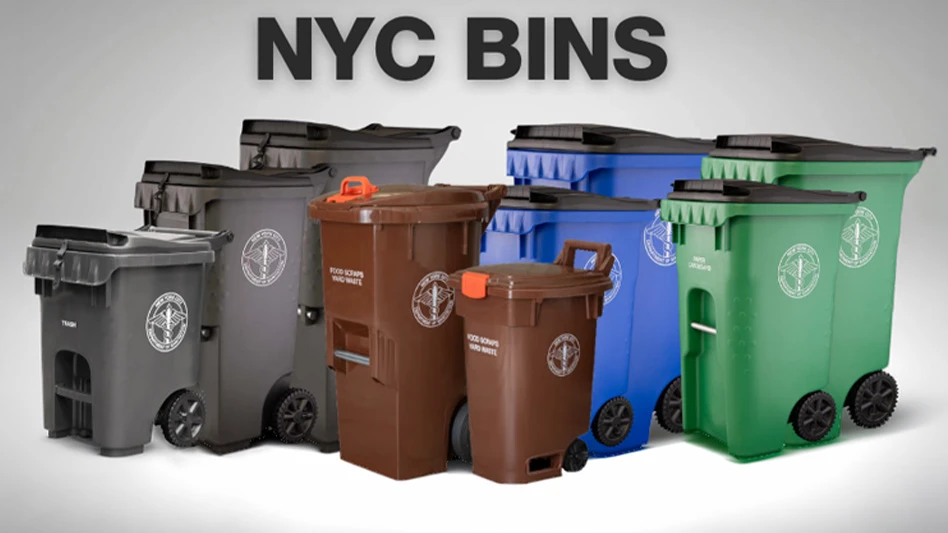
In an effort to reverse the declining participation, the county began a pilot program to compare blue-bag with two-bin curbside recycling collection systems in August of 2006. The pilot is also looking at whether enhancing communications to residents has a favorable effect on participation rates.
“What is happening in
Like many communities,
Under the pilot, a portion of Meadow Pointe, a suburban
“The data secured from this pilot will not only be useful to
The three-month pilot concludes in mid-October, and data will be collected in November. Public results are expected in December.
The Aluminum Association and the Can Manufacturers Institute joined forces as the Aluminum Can Council to form the Curbside Value Partnership (CVP). According to the Aluminum Can Council, the CVP was created to increase residential participation in local curbside recycling programs and to make curbside programs more profitable and sustainable.
Current CVP partner communities include
More information is available at www.RecycleCurbside.org.
Latest from Recycling Today
- Greenwave raises revenue but loses money in Q2 2025
- Recycled steel prices hold steady
- EY says India’s need for scrap imports will continue
- Coming full circle
- Amcor, DCM introduce fertilizer packaging with 35 percent recycled content
- Comstock Metals gets closer to commissioning commercial-scale solar panel recycling facility
- Washington selects Circular Action Alliance as PRO
- Smurfit Westrock expands in Latin America