Photo courtesy of Accredo Packaging
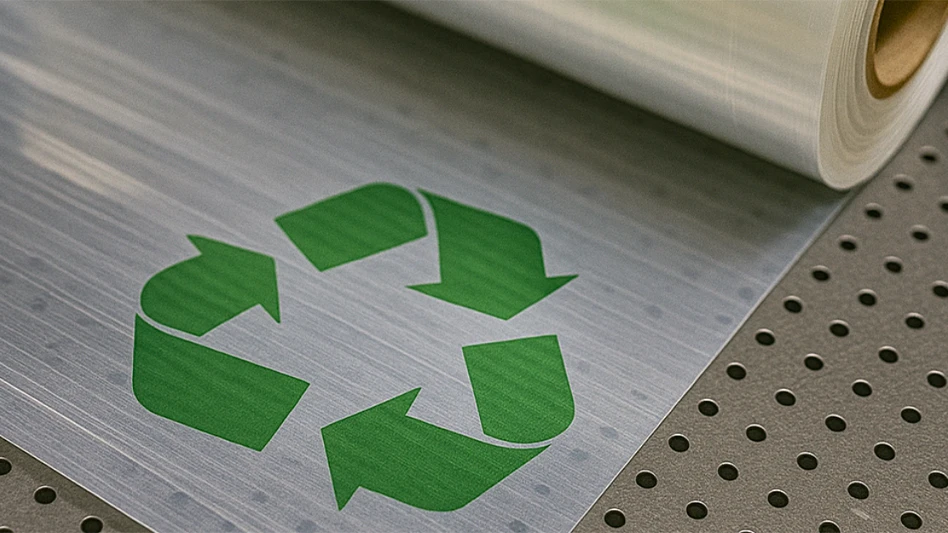
Increasingly sophisticated, new-generation flexible packaging films have greatly advanced in recyclability.

New breakthroughs in material science and process engineering have advanced recyclability to make them a packaging option with enhanced recyclability and renewable content. This helps reduce permanent waste and strengthen closed-loop recycling systems.
However, with the abundance of films available, it’s important to take a closer look at a product’s entire lifecycle to ensure the packaging material helps improve recycling rates and strengthens the recycling ecosystem.
The material lifecycle: From sourcing to end-of-life management
As the accumulation of plastic pollution continues to drive demand for packaging with specific environmental attributes, such as biobased content and recyclability, quality material combined with technical innovation are essential factors to consider.
To boost the recycling ecosystem, it’s important to understand a product’s entire lifecycle from sourcing and design to end-of-life management.
Material sourcing: Consider biobased and postconsumer recycled content
To move away from traditional polyethylene (PE), which relies on fossil fuels, biobased plastic films quickly have become a favorable option with enhanced renewable content. Made from raw plant materials, including sugarcane, corn and potatoes, they have similar properties to traditional plastics, making them easy to incorporate.
Carbohydrate-based plants often are ideal because they are extremely renewable and cost-effective as opposed to finite fossil fuels. Replacing petroleum feedstocks with renewable options like sugarcane also directly cuts packaging’s carbon footprint at the material level.
Braskem’s published LCAs show its sugarcane-based PE delivers a net negative carbon footprint due to biogenic carbon uptake. The study found that its biobased high-density polyethylene (HDPE) provides a net benefit of -5 kg CO2e per kg, EVA provides –4.5 kg CO2e per kg and PE WAX provides –4.7 kg CO2e per kg compared with fossil-based alternatives. Packaging products that contain more than 25 percent biobased content also can use the U.S. Department of Agriculture-certified biobased logo.
Packaging sourced from postconsumer recycled (PCR) content is also a consideration with improved recyclability and closed-loop potential. Sometimes, these are sourced from ocean bound plastic (OBP) to minimize material that would end up in a waterway and eventually in the ocean. OBP is abandoned plastic located within 50 kilometers from ocean shores where waste management is insufficient or unavailable. This process still helps lower a company’s carbon footprint and can be combined with biobased resins.
Design approach: Consider monomaterial packaging for recycling ease
To significantly improve recycling rates, packaging must be designed with recyclability in mind, and the key is to work with current recycling infrastructures.
Historically, all films, not just biobased, were laminated to achieve performance, and biobased PE is relatively new to the market. Traditional PE products often had a weak protective barrier and were difficult to recycle due to the different materials. Mixed materials require a complicated separation system which often is too expensive or difficult for recycling centers to handle.
Furthermore, if materials remain mixed, they contaminate each other easily, lowering both the quality and value of the recycled material and often rendering it unusable. In turn, a significant amount of mixed-material packaging can end up in landfills, defeating the purpose of a closed-loop packaging solution.
To solve recycling contamination issues, monomaterial films became a breakthrough in material innovation for food pouches in 2016. Monomaterial is a product composed of only one type of resin, eliminating the need for a complicated sorting and separation process. Recycling monomaterial biobased films not only is efficient but also boasts an extraordinarily low carbon footprint. This leads to higher quality and recycling rates while significantly reducing the chances of products ending up in a landfill.
End-of-Life Management
Lastly, understanding how to handle flexible packaging after its primary use is essential to truly close the loop and create a stronger recycling ecosystem.
If packaging cannot be properly recycled or reused, it will add to the world’s pollution problem. PE films typically are collected through store drop-offs since they are processed differently than curbside collected materials. Look for the How2Recycle label for guidance. It communicates preparation instructions along with location details and material components to make the process user friendly. Store drop-off enables films to be collected and sent to specific recycling facilities that specialize in processing flexible plastic films. Once received, they are cleaned, melted and turned into plastic resin pellets that are then used to manufacture roll stock in order to create new products.
Characteristics of new-generation store drop-off recyclable films
When looking to upgrade to a packaging option with enhanced recyclability and renewable content, opt for the latest material innovation advancements.
Pioneers in the biobased and recycled-content resin packaging industry like Sugar Land, Texas-based Accredo Packaging are leading the movement to help foster a stronger recycling ecosystem.
New, high-performing monomaterial flexible films are designed from the inside out, using optimized layer balance and compatibilizer placement to ensure the structure offers improved recyclability and biobased content without sacrificing performance or quality. Designs that encompass this material innovation integrate a barrier layer as a standard feature with a compatibilizer that enables the barrier film to remain processable with mainstream PE recycling streams. This chemistry improves polymer flow, dispersion and stability, resulting in increased toughness, clarity and runnability compared with other monomaterial films on the market.
When evaluating recycling capabilities, verify the product meets the Washington-based Association of Plastic Recyclers (APR) design guidance. This ensures it meets the industry-accepted criteria that aligns with North American recycling systems and also helps avoid contamination from mixed materials and integrates seamlessly into existing recycling infrastructures.
Partner with an environmentally focused packaging provider
Upgrading flexible packaging films doesn’t have to be an expensive process. Partner with a provider that can run new products efficiently on existing form-fill-seal and pouch-making lines. This enables brands to adopt packaging with closed-loop potential without new capital investment or slower line speeds.
Beyond material innovation, opt for a provider that operates their own processes with environmental responsibility in mind. Leaders in the industry analyze, assess and optimize all processes, from the procurement of materials to energy usage and waste management, to reduce their own environmental impact. As a result, the entire packaging process has a greatly reduced carbon footprint, even when manufactured to the same specifications as conventional plants.
New-generation flexible packaging films have a unique combination of barrier performance, durability and easy scalability to help strengthen the broader recycling ecosystem. This advancement in material innovation is paving the way for a stronger, cleaner and truly closed-loop recycling ecosystem.
Treijon Johnson is the director of sustainability at Sugar Land, Texas-based Accredo Packaging. He leads climate strategy, packaging innovation and circularity initiatives across North America and Asia. Recognized as a Circularity Emerging Leader, Johnson advocates for equitable, science-based solutions that drive measurable progress toward a low-carbon, waste-free future. For more information, visit Accredo's website.
Latest from Recycling Today
- Fleetio launches AI capability to accelerate fleet maintenance approvals
- The Metals Agency receives approval for export credit insurance
- Recycle Ann Arbor extends drop-off station operating hours
- Sybilion seeks to help manufacturers confidently address volatility
- Rio Tinto, Prysmian partner on low-carbon aluminum solutions for data centers
- Unilever criticized for plastics approach
- USTR to study additional steel, aluminum tariffs
- Electrified Materials adds processing capacity