Sandris Veveris | stock.adobe.com
The Flexible Film Recycling Alliance (FFRA), funded by the Washington-based Plastics Industry Association (Plastics), has released its “2025 Impact Report,” its first, outlining the group’s collaborative effort to scale flexible film collection and recycling systems across U.S.
FFRA was formed in late 2024 to improve the recycling of flexible film products by working to accelerate recycling rates, access and education. It brings together industry representatives from across the flexible film supply chain—including Dow, Reynolds Consumer Products, Nestle, Aldi, Ridwell, Novolex and Greenblue—to develop solutions to address the challenges surrounding the recycling of flexible films and bags.
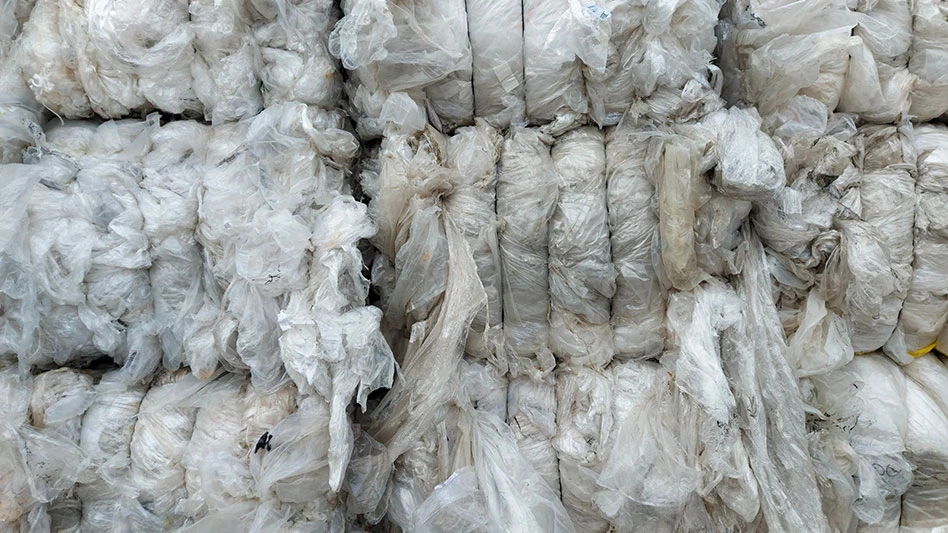
According to the report, an estimated 5.3 million tons of flexible films and packaging in the U.S. could be recycled using existing technologies and systems, but only 0.5 million tons are.
“FFRA’s first impact report shows what’s possible when manufacturers, retailers, recyclers and policymakers work together toward a shared goal,” says Patrick Krieger, Plastics senior vice president of sustainability & policy. “In 2025, FFRA made meaningful headway from expanding access to film recycling nationwide to shaping policy outcomes that better reflect how recycling systems actually work. This progress reinforces that collaboration, data and practical solutions are the path forward for scaling film recycling in the U.S.”
The "2025 Impact Report" offers a number of highlights from the last year:
- the January 2025 launch and rapid growth of the Plastic Film Recycling Directory, which has surpassed 170,000 unique users, with more than 20,000 drop-off locations across 60-plus retail partners, covering all 50 states and Puerto Rico;
- targeted advocacy efforts in California for alternative collection systems to be included as a collection modality through partnership and coalition building; and
- substantial progress toward a verification program scheduled to launch in the second quarter of 2026 designed to ensure recycling data and outcomes are credible, traceable and transparent.
According to the report, the verification program is designed to confirm the accuracy of reported volumes of film and film packaging consumers drop off at collection locations—helping to differentiate between front of the house and back of the house volumes; understand depot practices regarding film recycling (i.e., what percentage is sent to bale versus landfilled; how clean are drop-off bins; etc.); confirm collected materials are sent to recycling to be processed into new, credible products; and offer direction on contamination monitoring, consistent reporting mechanisms, options for taking corrective actions and chain-of custody integrity.
The project’s advisory board is made up of industry stakeholders from across the value chain and will provide insights into current practices, identify pain points, inform data flows and help refine the overall program design, the report notes.
The FFRA plans to launch pilot testing by the second quarter of this year to assess the standard and adjust program details as needed, as well as develop auditor training resources. “Our goal is to have all these steps—final guidance, audit structure, advisory input, pilot testing and auditor training—fully implemented by mid- to late 2026.”
“FFRA’s progress shows what’s possible when industry aligns around a shared goal and speaks with a harmonized voice,” says Kurt Kurzawa, Plastics senior director of sustainability & packaging. “We’re proud of the momentum we’ve built from expanding access to film recycling to strengthening trust through verification, and in the year ahead, we’re focused on taking that next step by further advancing verification to ensure credibility and accountability across the system.”
Latest from Recycling Today
- ReMA provides economic impact report, industry update
- Collective Waste Solutions acquires Alcop Resource Recycling transfer station
- Volatility continues in nonferrous metals
- Neste chemical recycling plant is ready to scale up
- Indonesia’s nickel pig iron spigot reopens
- Ecore says study backs crumb rubber use on sports surfaces
- Fleetio launches AI capability to accelerate fleet maintenance approvals
- The Metals Agency receives approval for export credit insurance