Photo courtesy of Fleetio
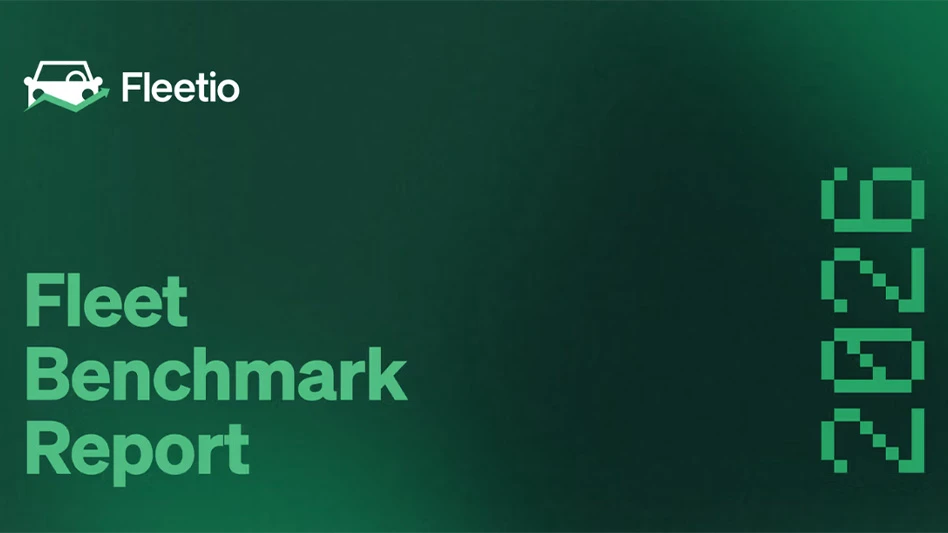
Fleetio, a fleet maintenance and optimization company headquartered in Birmingham, Alabama, has published its 2026 Fleet Benchmark Report & State of Fleet Management review. In the report, 53.3 percent of respondents said they were researching or piloting artificial intelligence (AI) capabilities in their operations.
Now in its third iteration, the benchmark report combines aggregated, anonymized data from 1.2 million vehicles spanning 17.5 billion miles, totaling $7 billion in service spend and encompassing 9 million work orders, Fleetio says. The findings are supplemented by feedback from more than 600 fleet professionals across multiple industries.
When asked about the top concerns in fleet management, respondents pointed to a mix of cost increases and constraints, including rising costs (54.4 percent), regulations and emissions mandates (46.1 percent), electric vehicle transition and infrastructure (35.1 percent), technician shortages (32.5 percent) and parts and vehicle availability (28.9 percent).
The report also found that AI adoption is still primarily in an exploratory phase. While 53.3 percent of respondents said they were researching or piloting AI capabilities, only 5.6 percent reported using AI broadly. Half of all respondents cited accuracy and reliability issues as their main hesitation to adopt AI.
The report also found that:
- Older vehicles consume a disproportionate share of maintenance spend. Vehicles more than 10 years old represent approximately 12.1 percent of miles but approximately 33.5 percent of total service spend. The estimated service cost per mile increases with age ($0.20/mile for 0–5 years versus $1.10/mile for more than 10 years).
- Top reasons maintenance falls behind are coordination and capacity. Respondents cited communication gaps (31.5 percent), technician availability (27.4 percent) and unscheduled service volume (25.2 percent) as the most common barriers to on-time maintenance.
- Time-to-start varies widely, with delayed jobs driving downtime. Fleetio data highlighted a 31-minute median time to start work orders and a 6.7-day average.
- Fleets see room for more consistent on-time maintenance. While 44.3 percent of fleets said they perform maintenance on time reasonably well, most saw clear room to improve, and only 9.7 percent report true consistency as a strength.
Fleetio will host a webinar panel with survey respondents on March 5, 2026, to review additional findings and outline next steps for fleet optimization using the data. Registration is open on Fleetio’s website.
Latest from Recycling Today
- Circ announces new Fiber Club partners
- Resources by EWS, Entro Industries launch HSS L65T Landfill Tipper
- NWRA announces 2026 award winners
- K-Cup pods now recyclable in Ontario
- Lindner to feature new shredders at IFAT
- Sims blames Unimetals woes, derivatives contracts for half-year loss
- Tire recycling facility ramps up in the Netherlands
- Metallus loses money in Q4