Andrey | stock.adobe.com
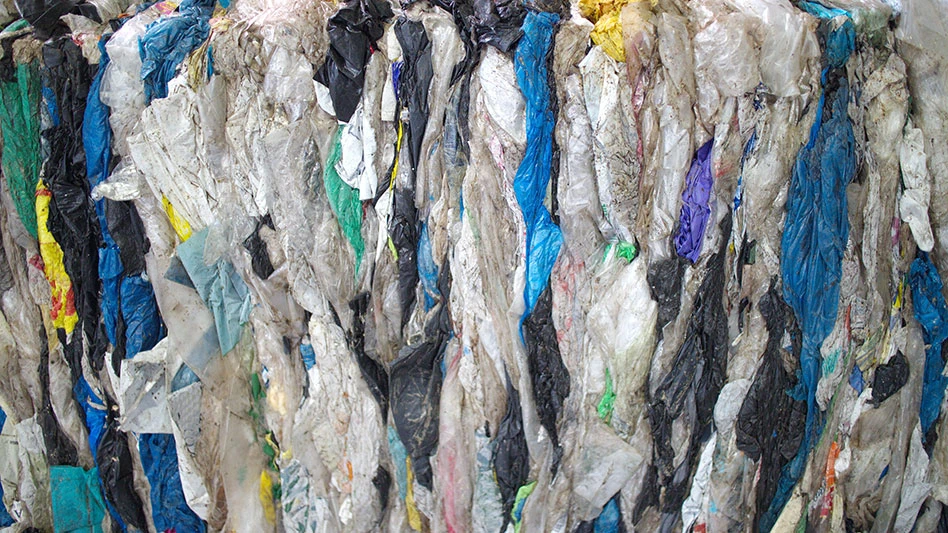
European Plastic Films (EuPF), a Brussels-based industry trade group, is welcoming the European Commission’s confirmation, made during a recent meeting with stakeholders, of a full exemption for pallet wrapping films and straps from a pending regulatory system.
The exemptions relate to obligations tied to 100 percent reuse targets set under Articles 29(2) and (3) of the Packaging and Packaging Waste Regulation (PPWR) adopted in the European Union.
“We welcome the commission’s pragmatic recognition of economic realities under Articles 29(2) and (3),” says Thomas De Meester, head of EuPF, and reffering to another aspect of that regulation, adds that “scientific and economic evidence clearly shows that an exemption under Article 29(1) is equally warranted.
“From an environmental standpoint, the logic is clear: as transport distances increase, so do emissions, making reuse even less favorable for cross-border logistics and therefore strengthening the case for an exemption under Article 29(1). From an economic and practical perspective, requiring companies to operate parallel palletization systems for EU and export markets would entail a complete transformation of logistics operations, undermining competitiveness without delivering any environmental benefit.”
The benefits of the newly verified unconditional exemption was identified in a Deloitte feasibility study. That study highlighted significant investment, logistics and operational costs, including dual end-of-line systems, and found that switching to reusable pallet wrapping would also increase transport emissions.
Article 29(1), which sets 40 percent reuse by 2030 and 70 percent by 2040 for cross-border transport packaging, still needs to be addressed, according to EuPF.
The organization says, however, the European Commission has indicated it is planning a “pragmatic and realistic” approach to define the methodology for calculating the reuse targets as a possible precursor to another exemption.
Latest from Recycling Today
- Fleetio launches AI capability to accelerate fleet maintenance approvals
- The Metals Agency receives approval for export credit insurance
- Recycle Ann Arbor extends drop-off station operating hours
- Sybilion seeks to help manufacturers confidently address volatility
- Rio Tinto, Prysmian partner on low-carbon aluminum solutions for data centers
- Unilever criticized for plastics approach
- USTR to study additional steel, aluminum tariffs
- Electrified Materials adds processing capacity