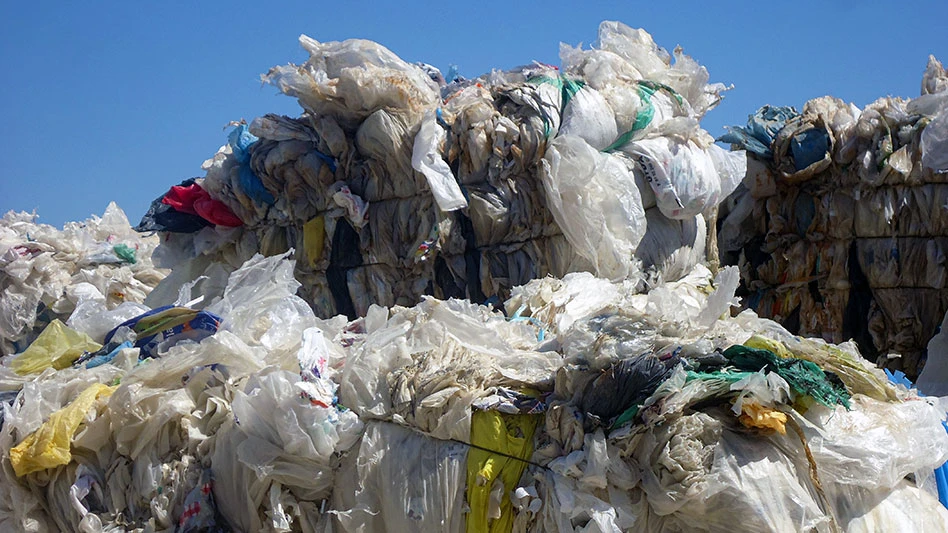
A bitter row has broken out in the UK over new EU regulations regarding the recycling of packaging. Local authorities believe that industry should pay for the necessary upgrade of facilities, while packaging companies believe that the government should pick up the bill.
The dispute comes after the European parliament confirmed that the minimum recycling target for packaging waste would be raised from 25 to 55 percent by 2008 to cut the amount of discarded packaging that pollutes the environment. These new targets will oblige manufacturers and packaging companies to recycle materials discarded by households, instead of relying solely on waste from industrial and commercial premises.
The agreement, reached by the European Parliament and Council Conciliation Committee, has been welcomed by the EC.
However, local authorities have made it clear that they are reluctant to collect used packaging on industry's behalf, unless they receive extra payments. They argue that taxpayers should not have to make up the shortfall in costs.
But some sectors of the packaging industry however are worried that the extra costs involved will eat into already tight margins. Producers of glass and aluminum products are especially concerned that the EU ruling will put them under extreme financial pressure unless they receive state help.
Incpen, the industry council for packaging and the environment, believes that the latest set of recycling targets are too demanding. The association believes that it is inappropriate for rural areas, which would use extra energy to collect materials for recycling, to have the same targets as cities.
“Packaging manufacturers and users are already responsible for ensuring that packaging is safe in use and that it can be treated and handled safely in any efficient waste management system at the end of its useful life,” the association said in a statement. “Unlike larger items, such as cars and white goods, there is very little used packaging that can be re-used and it has a low scrap value. Imposing further responsibility on industry for taking back used packaging has little or no effect on choice and design of packaging.”
Opponents of the targets also point out that the recycling of lightweight packaging materials such as plastic and aluminum will make little contribution to meeting local authority's own recycling targets as these are weight-based. There are fears that local authorities will meet their targets simple through the recycling of paper and green waste alone.
The ongoing dispute over responsibility will make it harder for the UK to meet the EU 2008 targets. According to Association of European Producers of Steel Packaging (APEAL) figures, just 42 percent of steel packaging in the UK was recycled in 2002, well below the European average of 60 percent. Belgium (93 percent), Germany (79 percent), and the Netherlands (78 percent) topped the table. According to Friends of the Earth, the UK recycles less steel than Australia (43 percent), Korea (47 percent), the US (59 percent), South Africa (63 percent) and Japan (86 percent).
But some Member States have even worse recycling records - Finland has a rate of 39 percent. Portugal, at 28 percent, remains at the 2001 level, but has already exceeded the minimum recycling rate of 15 percent that it had to reach under law by the end of 2005. Nonetheless, APEAL believes that Europe stands out favorably in an international context - only Japan and South Africa, with 86 percent and 63 percent respectively, exceed the European average in terms of steel recycling.
Latest from Recycling Today
- Danieli to supply shredder to Australian company
- Equipment from the former Alton Steel to be auctioned
- Novelis resumes operations in Greensboro, Georgia
- Interchange 360 to operate alternative collection program under Washington’s RRA
- Waste Pro files brief supporting pause of FMCSA CDL eligibility rule
- Kuraray America receives APR design recognition for EVOH barrier resin
- Tire Industry Project publishes end-of-life tire management guide
- Des Moines project utilizes recycled wind turbine blades