The European Union is experiencing a debate that will sound familiar to North American ears: Whether it is best to increase recycling rates by collecting commingled materials.
At a session entitled “The Future of Collection” at the 2008 European Paper Recycling Conference, executives from two different recycling firms offered their views on several key topics.
Ian Wakelin, the CEO of Greenstar UK, said that recyclers in Europe are “spending a lot of time and energy debating” how to collect material when the overall goal is to meet EU-mandated recycling targets.
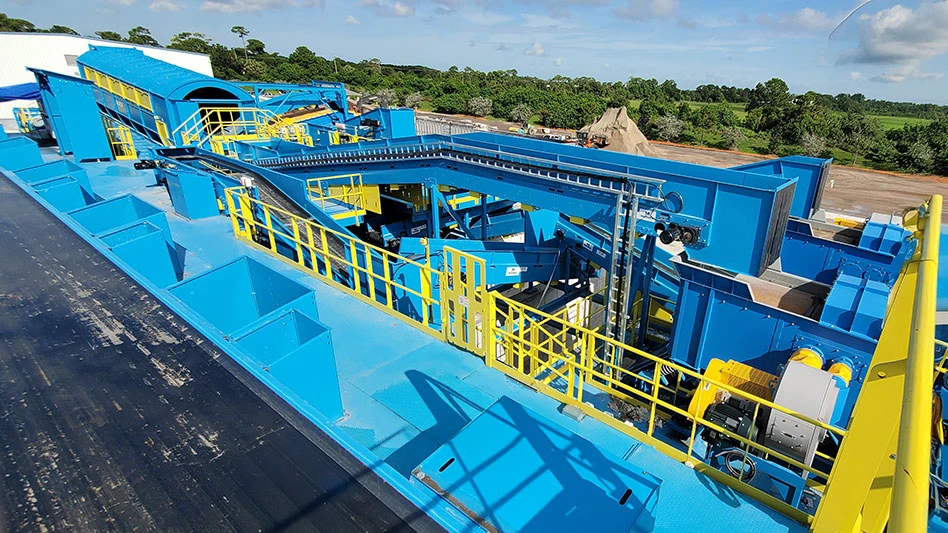
Greenstar has cast its vote in favor of collecting and sorting co-mingled materials, most notably with the construction of large material recovery facilities (MRFs) in the U.K. that collect mixed materials from cities and towns throughout that nation. Wakelin listed these advantages to commingled collection and processing:
-More tonnage collected while using less truck fuel
-More material collected overall from residents and businesses
-Automated collection decreases worker injuries from lifting bins.
Wakelin acknowledged, though, that a perception of poor quality plagues the reputation of commodities produced at co-mingled MRFs. “Not are all MRFs are the same,” said Wakelin, who then spelled out how increased investment and improved technology are addressing quality concerns. “Commingling will and must remain a collection option if targets [are] to be hit,” he concluded.
But in Germany, Interseroh Managing Director for Europe Eric Bernhard said separate collection “is the key to Germany’s high collection rate of recovered paper.” The collection, drop-off and commercial service infrastructure there yields a 73 percent collection rate of predominantly clean, separate fiber grades, said Bernhard.
An issue facing German recyclers is ensuring that the EU Waste Framework Directive is revised in such a way that collected and processed recovered fiber is no longer classified as waste.
Additionally, Interseroh favors a greater recycling presence for private companies and less direct government involvement. “Market mechanisms should replace [the] public care paradigm,” said Bernhard.
Session moderator Bill Moore of Moore & Associates, Atlanta, noted that “collection is the first and most important step in the recycling chain,” in part because it can be the most costly and determine whether or not a material is worth recovering.
The 2008 European Paper Recycling Conference, hosted by the Recycling Today Media Group, took place at the Marriott Amsterdam Oct. 6-7.
Latest from Recycling Today
- Greenwave raises revenue but loses money in Q2 2025
- Recycled steel prices hold steady
- EY says India’s need for scrap imports will continue
- Coming full circle
- Amcor, DCM introduce fertilizer packaging with 35 percent recycled content
- Comstock Metals gets closer to commissioning commercial-scale solar panel recycling facility
- Washington selects Circular Action Alliance as PRO
- Smurfit Westrock expands in Latin America