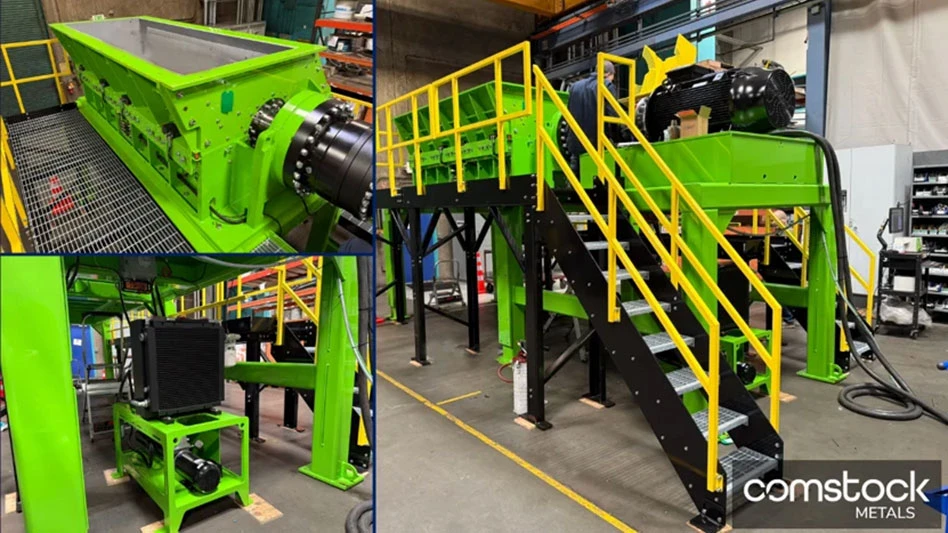
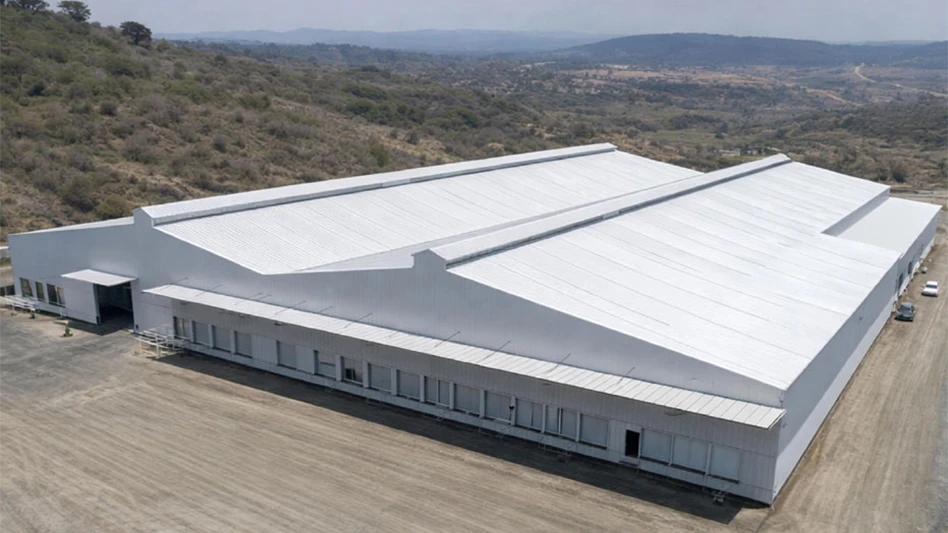
The U.S. Environmental Protection Agency, along with a host of officials, unveiled a pilot technology that can turn dredged material into a substance that can be used to make construction-grade cement.
The technology, called "Cement-Lock," was demonstrated at a four-story free-standing kiln facility in Bayonne, NJ. The EPA and the New Jersey Department of Transportation each contributed $20 million to develop this and other innovative technologies to decontaminate dredged materials in the port of New York and New Jersey, and to construct the kiln, which was installed earlier this year.
EPA expects Cement-Lock to be used to treat dredged sediments from a variety of sites in the New York/New Jersey harbor, with an ultimate goal of creating a self-sustaining industry that uses treated dredged sediments as building material.
The Cement Lock technology was developed by the Illinois-based Gas Technology Institute, and was designed to destroy certain contaminants in dredged material, "lock up"or immobilize metals and ultimately, produce a product similar to portland cement.
While several successful smaller scale tests have been conducted at the kiln, this is the first full-scale test of the Cement-Lock technology. Over the course of several weeks in late November and December, about 400 cubic yards of dredged material taken from upper Newark Bay will be treated at the kiln. EPA expects this project to create 150 tons of Ecomelt, which, after testing, will hopefully be used in a NJDOT construction project.
After the full-scale test is completed and evaluated, EPA and NJDOT will work with GTI to develop a commercial-scale rotary kiln that can treat up to 500,000 cubic yards of dredged material a year.
Latest from Recycling Today
- Kuraray America receives APR design recognition for EVOH barrier resin
- Tire Industry Project publishes end-of-life tire management guide
- Des Moines project utilizes recycled wind turbine blades
- Charter Next Generation joins US Flexible Film Initiative
- Vecoplan to present modular solutions at IFAT 2026
- Terex Ecotec appoints Bradley Equipment as Texas distributor
- Greenwave raises revenue but loses money in Q2 2025
- Recycled steel prices hold steady