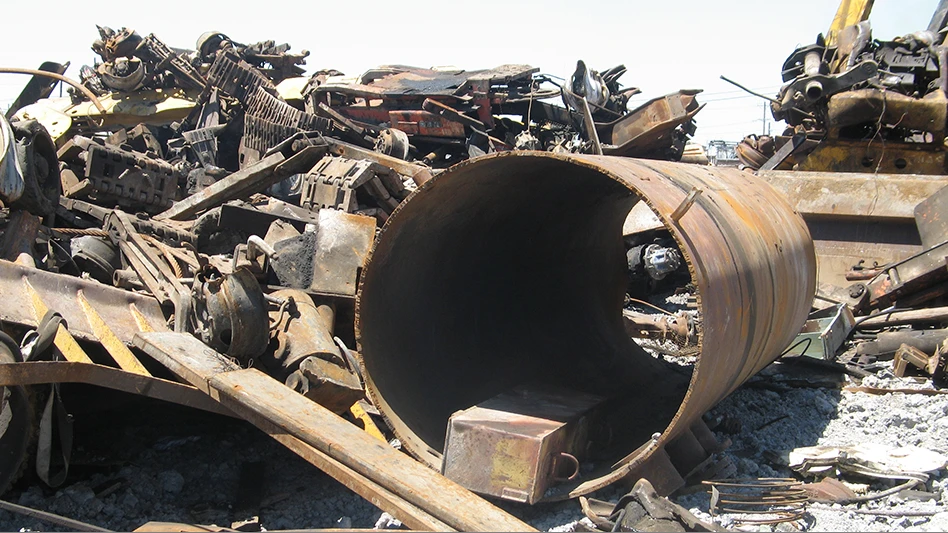
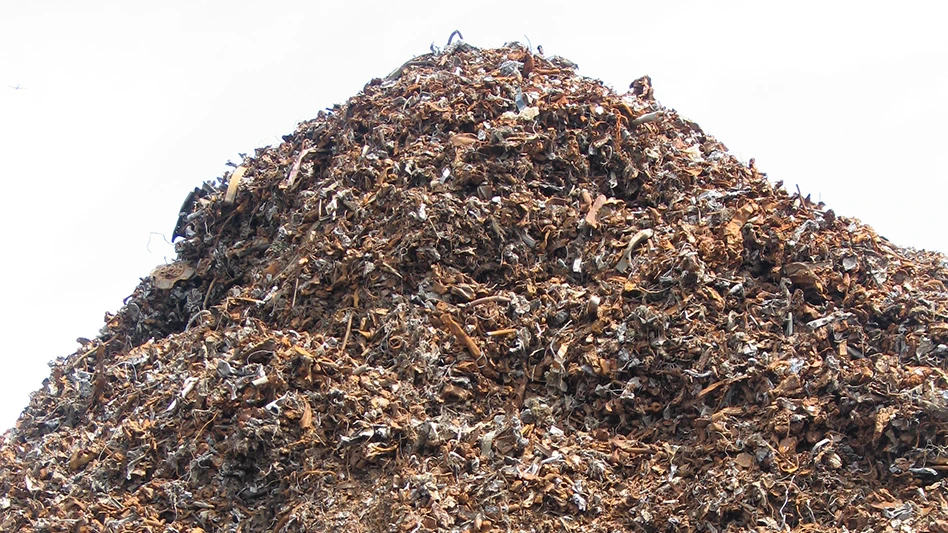
A coalition of U.S. steel manufacturers and consumers said it may ask the Bush administration to limit U.S. steel scrap exports because of Chinese purchases that have pushed prices sharply higher.
"We need help and we need it now," Robert Stevens, president of the newly formed Emergency Steel Scrap Coalition, said in a statement. "According to law, the U.S. government may prohibit or curtail the export of scrap, if conditions warrant. It is clear all the criteria are met in this case." (To view a copy of Stevens' testimony in front of the House Small Business Committee click here)
Stevens noted that there already is legislation on the books that would allow a restriction to be imposed.
A request would put the Bush administration in position of considering whether to restrict steel scrap exports just a few months after lifting its controversial tariffs on imported steel. At a Senate Finance Committee hearing, U.S. Trade Representative Robert Zoellick seemed to downplay chances the administration would approve export restrictions.
"It would in some ways be an oddity if for a couple of years we put barriers on (imported) steel ... and then we put barriers on what we exported," Zoellick said.
But he noted strong Chinese demand for scrap had put pressure on U.S. steel "mini-mills" like Nucor that use scrap to make their steel products.
The situation is less of a problem for integrated steel producers that make steel from raw material, he said.
U.S. scrap exports have doubled from 6.3 million tons in 2000 to about 12 million tons in 2003. The biggest rise in sales was to China, followed by South Korea.
The increased demand has pushed U.S. scrap prices from $77 a ton in early 2001 to more than $300 in February, the Emergency Steel Scrap Coalition said.
Stevens, who also is head of Impact Forge, a steel forger based in Columbus, Indiana, said the high scrap prices were a new threat facing the U.S. manufacturing sector, which already has lost millions of jobs in recent years.
In a House of Representatives Small Business Committee on March 10th, testimony was given by parties, both in favor and opposed to restrictions..
Tim Brightbill, a spokesman for the Emergency Steel Scrap Coalition, said the diverse group included construction companies, parts makers, forgers and foundries as well as the Steel Manufacturers Association, the steel industry group representing Nucor and other mini-mills.
One of the key groups in opposition to imposing any type of restriction on the export of ferrous scrap is the Institute of Scrap Recycling Industries.
Another group that is more likely to fall along the side of opposing a restriction of exports are integrated steel companies, which typically use far less ferrous scrap as a raw material.
Nucor was a driving force behind President George W. Bush's decision to impose tariffs on imported steel in March 2002 and bitterly opposed Bush's decision in December to lift them. Reuters
Latest from Recycling Today
- Ocean freight interruptions poised to continue
- Danieli to supply shredder to Australian company
- Equipment from the former Alton Steel to be auctioned
- Novelis resumes operations in Greensboro, Georgia
- Interchange 360 to operate alternative collection program under Washington’s RRA
- Waste Pro files brief supporting pause of FMCSA CDL eligibility rule
- Kuraray America receives APR design recognition for EVOH barrier resin
- Tire Industry Project publishes end-of-life tire management guide