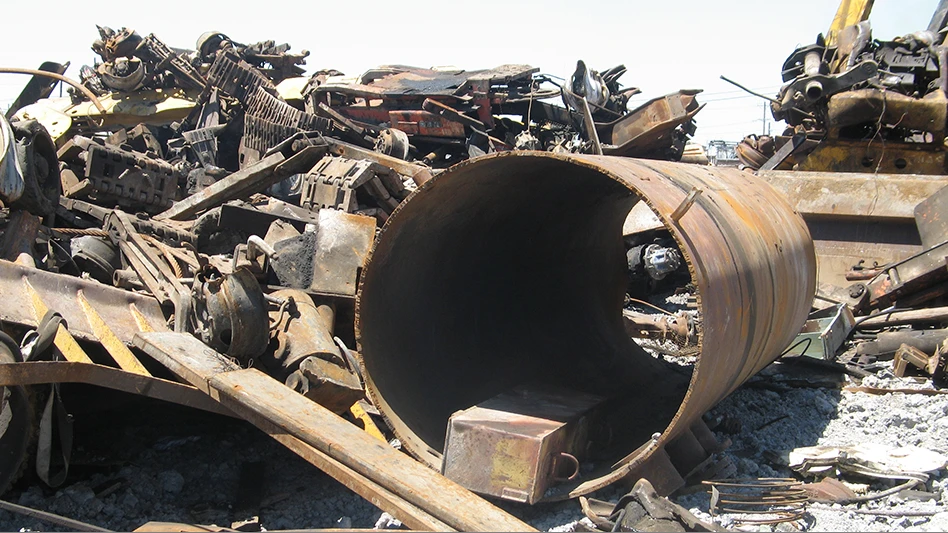
The European Commission formally requested that France, Belgium, Luxembourg, Italy, United Kingdom, Ireland, Greece, Spain, Portugal and Finland adopt national laws concerning end-of-life vehicles.
The Member States cited failed to meet the agreed April 2002 deadline for transposing an EU waste law into their national legislation. The EC's request takes the form of Reasoned Opinions, the second step in the legal procedure under Article 226 of the Treaty.
The EC has also sent Reasoned Opinions to France and Finland for non-compliance with EU legislation on waste oils. The regeneration of waste oils has not been given adequate priority in either Member State. Also, the Netherlands is to be referred to the European Court of Justice for shortcomings in its implementation of EU packaging waste legislation, and Austria for shortcomings in its legislation on sewage sludge used in agriculture. Italy has been requested to comply with a February 2002 Court ruling on polychlorinated biphenyls and polychlorinated terphenyls (PCB/PCT). The Commission is concerned that, by not implementing these laws correctly and in time, Member States will face problems such as rising mountains of waste and inadequately controlled waste disposal and recovery activities, thereby creating risks to human health and the environment.
"It was a major advance when, in 2000, EU countries agreed to significantly strengthen rules on the waste generated by end-of-life motor vehicles. Member States must now live up to their responsibilities and translate their political will into action and finalize the national legislation needed to make these new rules effective. This Directive as well as our other legislation in the waste area are designed to protect both citizens, and the environment in which we all live. I therefore urge Member States to correctly implement these directives rapidly," said Margot Wallstrom, environment commissioner.
The End-of-Life Vehicles Directive lays down measures with a dual aim: to prevent waste from motor vehicles and vehicle components that have reached the end of their life-cycle and to promote vehicle reuse, recycling and other forms of recovery.
The Waste Oil Directive is designed to create a harmonized system for the collection, treatment, storage and disposal of waste oils, such as lubricant oils for vehicles, oils for various types of engines, gearbox oils etc.
The Packaging Waste Directive aims to reduce the environmental impact of packaging and its waste on the environment. It sets percentage targets for the recovery and recycling of packaging waste and requires Member States to set up collection, recycling and recovery schemes for this waste stream.Latest from Recycling Today
- Equipment from the former Alton Steel to be auctioned
- Novelis resumes operations in Greensboro, Georgia
- Interchange 360 to operate alternative collection program under Washington’s RRA
- Waste Pro files brief supporting pause of FMCSA CDL eligibility rule
- Kuraray America receives APR design recognition for EVOH barrier resin
- Tire Industry Project publishes end-of-life tire management guide
- Des Moines project utilizes recycled wind turbine blades
- Charter Next Generation joins US Flexible Film Initiative