Fans of allowing the market decide the fate of electronics recycling have probably been pleased with the lack of legislative activity addressing the issue so far this year.
A review of electronics recycling-related government action in the U.S. given at the E-Scrap 2003 Conference in Orlando showed a largely quite legislative scene.
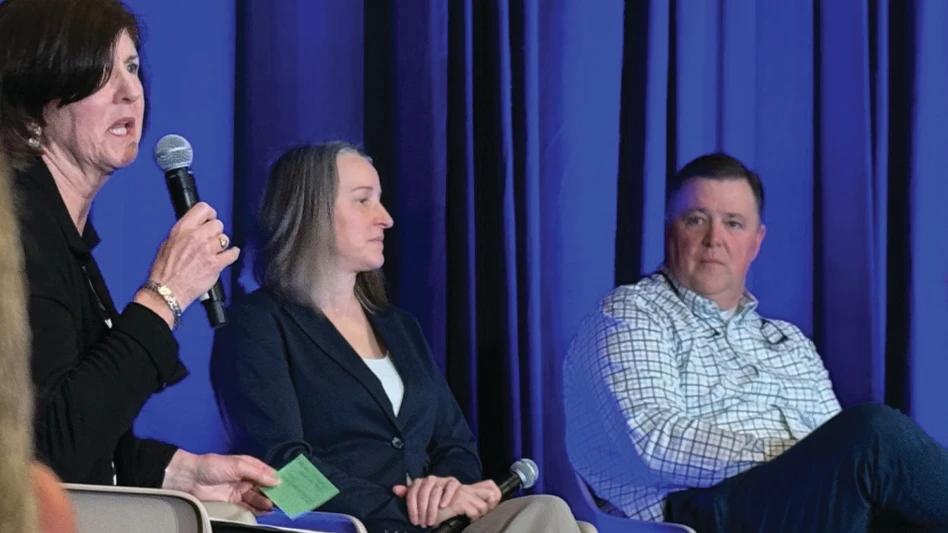
A summary of legislative action given by Wayne Rifer of Rifer Environmental, Portland, Ore., noted that although 53 electronics recycling related measures have been introduced in 29 different states in 2003, “progress was rare and success was rarer.”
Rifer remarked that there was “something about the political climate out there” that probably prevented most of the 10 producer responsibility laws and 10 consumer fee systems proposed from making much headway.
Lively action has been seen in California, where SB 20 would have imposed a $6 to $10 recycling fee with the purchase of some electronic items. The bill, which also outlawed prison labor for electronics recycling and restricted some exports, was vetoed by then-Governor Grey Davis.
Rifer noted that, among the laws that did pass, many simply established advisory committees instructed to monitor the National Electronic Product Stewardship Initiative (NEPSI) and make recommendations based on NEPSI’s policy statement.
Later at the conference, NEPSI program director Cat Wilt gave an overview of where NEPSI is at in its process. She remarked that while it is possible that a meeting this December could result in an agreement, the corporate and government stakeholders that make up NEPSI have not yet finalized an agreed-upon system.
Jim Frey of Resource Recycling Systems Inc., Ann Arbor, Mich., gave four potential scenarios of where electronics recycling could be headed in the U.S., commenting that a combination of market-driven and landfill diversion-driven factors could drive the market. “Market forces . . . are going to show how this will play out,” he remarked.
Frey also noted that some manufacturers are contemplating the effects of the European Union’s WEEE (Waste Electrical and Electronics Equipment) regulations, which are not yet finalized.
If the manufacturers ultimately find take-back and recycling systems mandated in Europe to be manageable (or in fact helpful in procuring secondary raw materials), it could greatly lower their resistance to putting identical systems in place throughout the world.
Latest from Recycling Today
- Vecoplan to present modular solutions at IFAT 2026
- Terex Ecotec appoints Bradley Equipment as Texas distributor
- Greenwave raises revenue but loses money in Q2 2025
- Recycled steel prices hold steady
- EY says India’s need for scrap imports will continue
- Coming full circle
- Amcor, DCM introduce fertilizer packaging with 35 percent recycled content
- Comstock Metals gets closer to commissioning commercial-scale solar panel recycling facility