Mulderphoto | stock.adobe.com
America is in danger of repeating a costly mistake. A mistake that could leave us dependent on China for yet another material critical to our economic and national security: aluminum.
Aluminum is a metal used in everyday consumer products like beverage cans and cars but also strategic goods like satellites, fighter jets and the electric grid.
Demand for aluminum globally is projected to grow 80 percent by 2050, and China knows it. The United States is poised to capture a large chunk of that growth. But only if we don’t cede the field to the Chinese state, which already has proven that it will not play by the rules when a promising global market is in the crosshairs.
Two decades ago, China methodically built up its dominance in new (or primary) aluminum, flooding world markets with metal priced below its own production cost.
RELATED: The US has enough recycled aluminum
It did so through enormous state investment; cheap, subsidized coal power; and a long-term industrial strategy designed to hollow out Western smelters. Today, Beijing controls more than half of global primary aluminum output, while the United States has lost more than 80 percent of its smelters.
Now China is turning its sights on the next frontier: aluminum recycling, the process of turning used beverage cans, construction debris and other scrap into new metal. This is a segment of the market where American aluminum has grown, investing north of $11 billion in U.S. operations that rely on scrap in recent years.
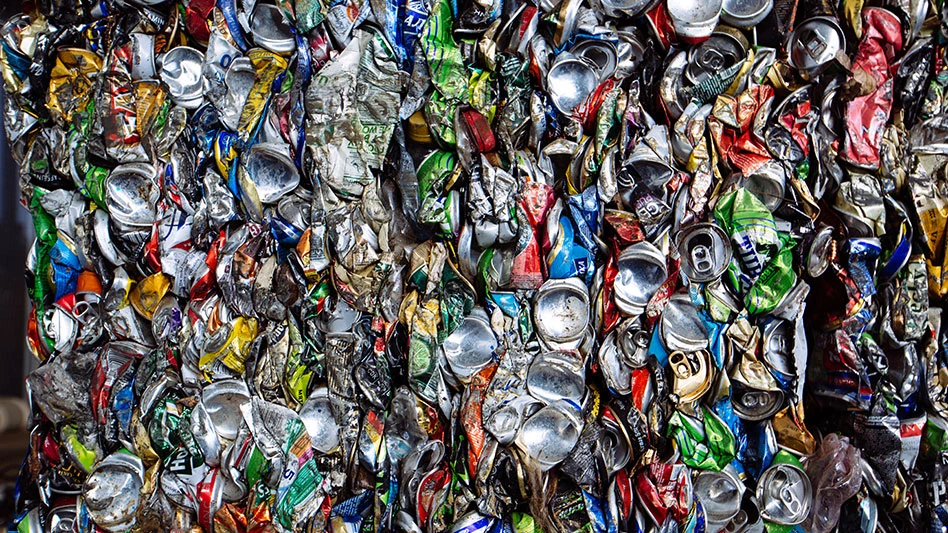
Without a fight, the United States risks repeating the mistakes of the past. Key first steps are to strengthen scrap export controls, starting with a ban on used beverage can (UBC) exports and to tighten controls on other high-grade aluminum scrap.
The good news? The Trump administration understands this dynamic and is ready to respond.
Every year, the United States ships some 2 million metric tons of aluminum scrap overseas—much of which ultimately ends up in Chinese mills either directly or through third-country transshipment. To put that in perspective, the United States consumes in total around 10 million metric tons of aluminum total each year.
While most scrap exports consist of lower-quality mixed alloys from auto shredders, even high-value, high-quality scrap often leaves U.S. shores. Meanwhile, our mills struggle to source enough recycled aluminum to meet growing demand.
What’s more, using scrap to make aluminum consumes just 5 percent of the energy required to make new aluminum. In fact, recycling all the scrap aluminum we currently export could save enough energy to power 3 million American homes. During a time of unprecedented energy demand, we are literally exporting away a key strategic advantage.
And China knows it.
Communist Party leadership recently capped annual primary aluminum production at around 45 million metric tons, while demand keeps rising. Its solution is to control the global aluminum recycling market. This is no secret. It’s explicitly laid out in China’s 14th five-year plan. And late last year, China changed its rules to make it easier to bring in foreign scrap, leading to a surge in imports.
According to recent analysis in CRU Aluminum Market Update, Chinese mills now can pay nearly the same price for UBCs as American buyers, even after factoring in freight costs. Once China’s domestic market adjusts—with higher prices and new capacity—their buying power will only grow.
The same approach that allowed China to dominate primary aluminum production over the past two decades could soon corner global recycling. America can either act decisively now or spend the coming years buying back our own metal from China.
Other countries are getting the message. In fact, just last month, the European Commission announced plans to restrict exports of aluminum scrap from Europe as soon as next spring.
Some critics argue that banning UBC exports won’t fix America’s recycling challenges. They’re right, in part. We also need to make recycling easier for consumers—investing in infrastructure to process more aluminum scrap and growing recycling rates for aluminum beverage cans that remain stuck in the mid-40 percent range. But that’s no reason to sit on our hands while China moves aggressively to secure long-term control over this critical feedstock.
We can’t win the future of manufacturing if we keep shipping away the building blocks. China recognizes that recycled metal is the new oil. A finite global resource that will define industrial power for decades to come.
President Trump was early to understand how the Chinese government operates and led a revolution in strong, active trade policy to combat the threat. Scrap export controls are a logical next step to successfully compete with a relentless Chinese industrial machine.
China played the long game once before, and it worked. This time, we know the playbook.
America should lead the coming aluminum manufacturing renaissance—not export it away to the highest bidder.
Latest from Recycling Today
- England's Environment Agency extension provides stability for metal shredding operators
- Schupan names new chief financial officer
- NAW looks ahead to July hearing in Oregon
- Recycle Coach partners with Bartec Municipal Technologies
- EPA proposes abandoned tire cleanup plan with focus on energy recovery
- BIR welcomes new policy officer for trade & environment
- Global Recycling Foundation recognizes Recycling Heroes
- Recycling Today Media Group launches Paper and Plastics Recycling Conference webinar series