Time will tell whether the auto dismantling market is ready for a competitor who puts the emphasis on hitting the highest possible recycling rate.
Aadco Automotive, Brampton, Ontario, Canada, was created with “the goal in mind that nothing goes to the landfill,” Aadco chairman Michael Russill, told attendees of a session at the Canadian Solid Waste Expo in Toronto last week.
Russill, who spoke at a session sponsored by the Canadian Association of Recycling Industries (CARI), acknowledged that the effort has “been a challenge and a journey.”
The company has gone through several stages of development, including a 1999 and 2000 stint as Aadco-online.com, with an emphasis on Internet-based auto parts activity.
At times the company has had as many as three facilities in operation, but currently it operates from what Russill calls the company’s “model” facility in Brampton, near Toronto.
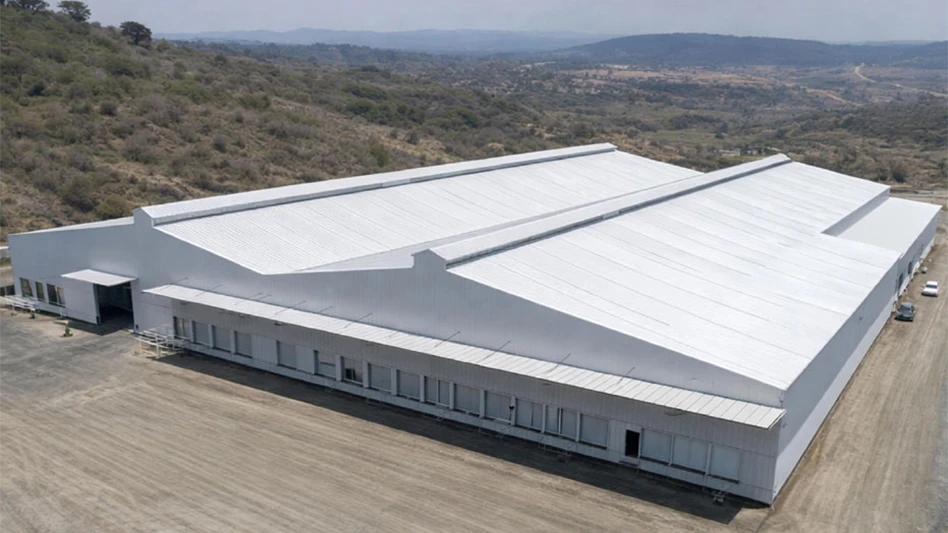
The 103,000 sq. ft. facility allows the company to do some things differently from its competitors, according to Russill. “We’ve never had an automotive storage yard,” he remarked. “All autos, parts and materials are stored indoors. If you drive by our plant, you wouldn’t know whether we are Hershey or Microsoft or just what we are. The only things outside are our employees’ cars.”
The light industrial or warehouse appearance of the facility allows Aadco to avoid the zoning battles that a traditional auto dismantler might face, Russill noted.
And Russill indicated this means not only all parts and materials that are in demand by the auto parts market, but also components that have no existing end recycling market.
Vehicles acquired by Aadco are completely disassembled, with even seats being dismantled to separate foam and fabric from metallic components. Interior and exterior parts are similarly separated and sorted for storage.
The dismantling creates an opportunity for Aadco on the metals side of the equation. Nonferrous components that are not re-sellable as parts can be sold for higher scrap value, while the ferrous portions are baled by the company and sold directly as a clean steel grade to the Dofasco mill in Hamilton, Ontario.
On the plastic side, Aadco’s technique allows it to assure investors that it is not contributing to the auto shredder residue or “fluff” portion of shredder output that goes to landfills, since the company does not send hulks to shredder yards.
The downside is that the company is often in the position of warehousing considerable volumes of plastic components that have extremely restricted recycling markets.
When asked if the company would be forced to eventually change its zero-landfill policy if it proves too costly, Russill acknowledged, “We do have that pressure. What I say is, the first rule of business is to stay in business. But we have going in as our premise that our mission is that nothing goes to the landfill.”
The company has secured private placement financing in 2001 and 2002 to help it overcome its current 10-cents per share price on the Toronto Stock Exchange. The company lost $3.4 million (Canadian) in the fiscal year ending June 30, 2002.
Latest from Recycling Today
- Kuraray America receives APR design recognition for EVOH barrier resin
- Tire Industry Project publishes end-of-life tire management guide
- Des Moines project utilizes recycled wind turbine blades
- Charter Next Generation joins US Flexible Film Initiative
- Vecoplan to present modular solutions at IFAT 2026
- Terex Ecotec appoints Bradley Equipment as Texas distributor
- Greenwave raises revenue but loses money in Q2 2025
- Recycled steel prices hold steady