Photo courtesy of DEScycle
DEScycle, a London-based developer of proprietary technology that can selectively dissolve metals at room temperature and atmospheric pressure, has been selected to participate in the SPRIND Tech Metal Transformation Challenge, a program organized by Germany’s Federal Agency for Disruptive Innovation.
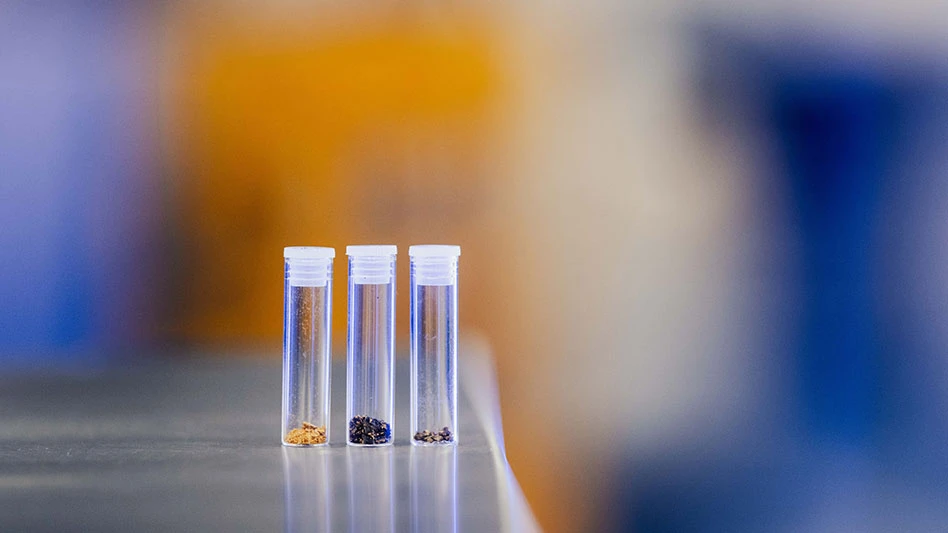
DEScycle’s proprietary technology enables recovery of high-value and critical metals from complex secondary feedstocks by selectively dissolving metals at room temperature and atmospheric pressure.
By shortening value chains and enabling decentralized, onshore metals recovery, DEScycle says it aims to support more resilient and secure industrial supply systems.
DEScycle will collaborate with Seloxium and the University of Nottingham in the U.S. and Esy Labs in Germany as part of the SPRIND Tech Metal Transformation Challenge, which has backed a small cohort of technologies with the potential to reshape how critical and precious metals are recovered, refined and supplied at industrial scale.
Participation in the program recognizes DEScycle’s differentiated process and its relevance to Europe’s strategic objectives around industrial resilience, critical raw materials and circular supply chains, according to the company.
The SPRIND Tech Metal Transformation Challenge is structured as a staged, multiyear initiative, beginning with an initial 1.5 million euros ($1.75 million) award and offering the potential for up to 6 million euros (nearly $7 million) in total funding based on technical and commercial progress. SPRIND’s model is focused on accelerating technologies through scale-up and deployment milestones, rather than supporting incremental research.

“SPRIND backs technologies that are uncomfortable, ambitious and capable of changing how entire industries operate,” says Rob Harris, chief technology officer of DEScycle. “Their decision to support DEScycle is a strong validation that our approach to circular metals recovery can move beyond incremental gains and deliver a step-change in how critical metals are supplied at industrial scale.”
DEScycle says the SPRIND program will support the company as it advances from demonstration into deeper industrial validation, working toward commercial deployment with partners across Europe and internationally.
In mid-2025, Mitsubishi Corp. agreed to acquire shares in DEScycle Ltd., with the two companies saying they would enter into a strategic business partnership to "foster collaboration."
The companies anticipate the technology will be able to recover metals with significantly lower energy consumption and environmental impact compared with conventional smelting methods.
Latest from Recycling Today
- Ocean Legacy Foundation expands plastic testing laboratory services
- CMI, HCPA publish aerosol recycling guide for MRFs
- 2026 Plastics Recycling Conference: A look at PCR contracts
- Remade Institute hosts Circular Economy Tech Summit & Conference in March
- Befesa sees record performance in 2025
- North Carolina county receives FRC foam recycling grant
- Cascades tissue business falls short in Q4
- GFL renews share repurchase programs