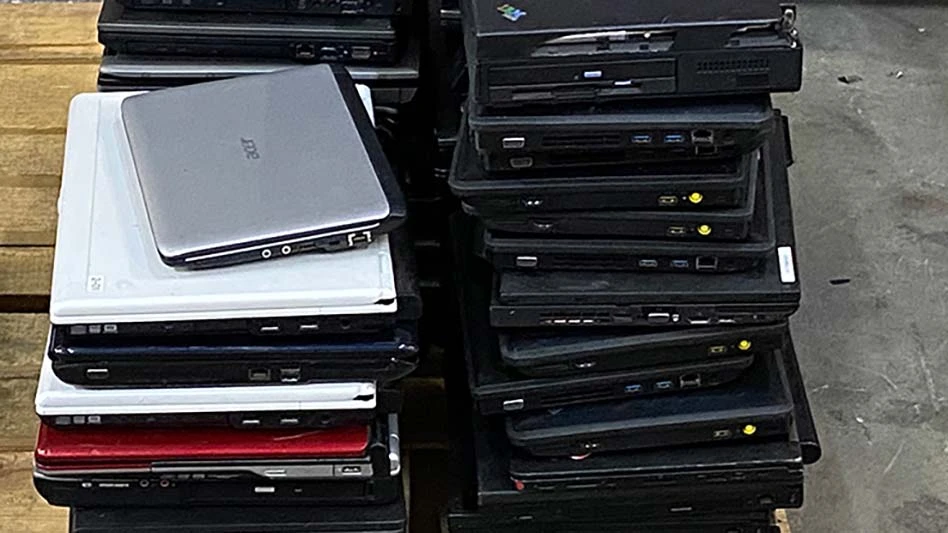
Under the program, consumers will be able to recycle obsolete computers and televisions that contain lead and other toxic heavy metals. Retailers and manufacturers will finance the program through a fee on every covered electronic device sold. Fee levels will be set based on the actual cost of recycling. Initial fees starting July 1, 2004, will be $6 to $10 per device.
"This law is an easy, cost-effective way to protect Californians from toxic e-waste," Victoria Rome, a legislative associate with NRDC (Natural Resources Defense Council), says.
"This is one of the most important environmental bills of the year," Mark Murray, executive director of Californians Against Waste, says. "This measure will provide the public with a safe, reliable and convenient option for recycling their obsolete electronics. In the process, this measure will help put an end to the illegal dumping of toxic e-waste both here and abroad.
"The Governor's support of these efforts and his signature today is one reason why Californians Against Waste named him our 'Recycling Leader of the Year' and it's why we are proud to stand with him as he signs this historic legislation that may well pave the way to a global solution to the e-waste crisis," Murray adds.
In addition to financing a “free and convenient” recycling system, SB 20 contains provisions to reduce the use of toxic material in electronic devices.
"The producer responsibility provisions of this measure include a 2007 ban on the use of some of the most toxic materials in electronic devices sold in California," Rico Mastrodonato, executive director of the California League of Conservation Voters, says. "Additionally, manufacturers will be required to report on efforts to reduce the use of toxic materials and design their devices for recycling."
SB 20 will also implement a restriction on the export of toxic electronic waste.
"Under the law's provisions, recyclers would be prohibited from exporting e-waste to the developing world except under the most rigorous of conditions, thus putting California 'sham' recyclers out of business" Fred Keeley, executive director of the Planning and Conservation League, says. "SB 20 will help ensure that the developing world does not become a dumping ground for California's toxic e-waste."
SB 20 is supported by a broad coalition of environmental organizations, local governments, private and non-profit recyclers, and electronics producers.
"With the life cycle of computers and other consumer electronics getting shorter and shorter, consumers are getting stuck with the growing and increasingly toxic problem of what to do with them," Bill Magavern of Sierra Club California, says. "This measure represents an important first step in the effort to get manufacturers to take responsibility for the environmental impacts of their products."
However, some environmental groups, such as Basel Action Network and the Computer Take Back Campaign (a coalition of local, state and national organizations that promotes producer responsibility), do not think the portion of the legislation addressing export of e-waste is as tough as it should be. They have denounced the legislation, claiming that it will actually make export of e-waste more profitable.
"There are about six million of these obsolete TVs and computers stockpiled in people's homes because their hazardous material makes it illegal to take them to a landfill," Sher says. "We have worked for three years to create a recycling process that will be easy and inexpensive for consumers to avail themselves of, and at long last, we now have such a law. Once again, California is leading the way as the first state in the nation to propose a solution to the e-waste crisis. I believe many other states will follow suit."
Latest from Recycling Today
- LyondellBasell scales back recycling target
- Former Liberty UK mills eyed by 3 suitors
- Stadler retrofits sorting plant in Germany
- Essity to begin production at UK paper recycling facility
- Georgia-Pacific develops retiree staffing program
- Nova commercializes new rPE grades for packaging
- Indorama Ventures, AMB Spa introduce recyclable PET multilayer tray
- Circ announces new Fiber Club partners