Photo provided by iStock
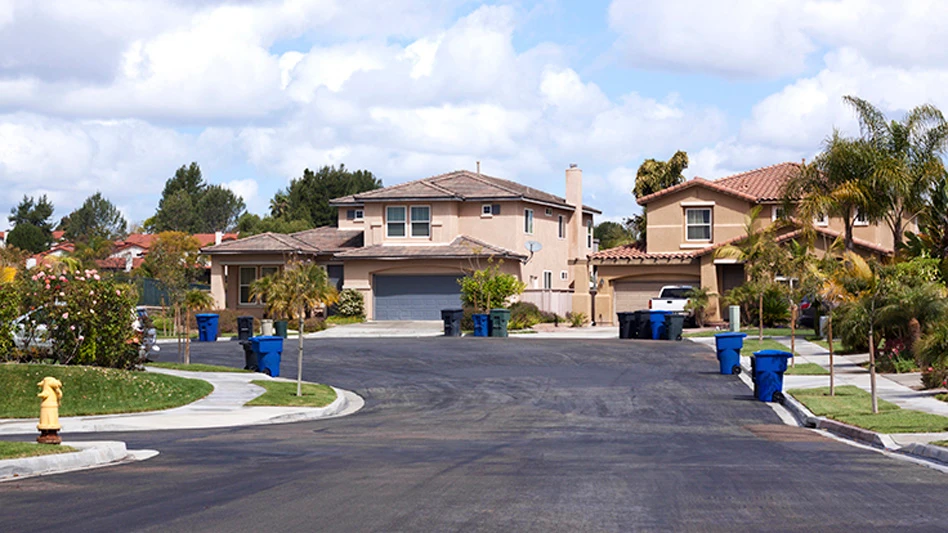
A recently completed analysis of curbside recycling in the United States concluded that the greenhouse gas (GHG) emissions-reduction benefit from recycling compares well or better than other citizen sustainability-based actions, including government use of electric vehicles (EVs) and some “green power” purchases.
That is the finding of two Florida-based university researchers who have had their study published by the United Kingdom-based academic journal Nature. The report, released May 22, is titled “The hidden economic and environmental costs of eliminating kerb-side recycling.”
The report’s co-authors are Malak Anshassi of Florida Polytechnic University and Timothy G. Townsend of the University of Florida. The pair previously has been involved in construction and demolition (C&D) materials recycling research, including co-authoring a recent book on the topic.
In their look at curbside recycling, Anshassi and Townsend write, “Many U.S. communities are shrinking or eliminating [curbside] recycling,” and they note collection costs as the major driver.
The pair says their dive into statistics found that “when recycling commodity markets were most lucrative in 2011, net U.S. recycling costs were as little as $3 per household annually, and when markets reached a minimum (from 2018 to 2020), the annual recycling program costs ranged from $34 to $42 per household.”
From an environmental viewpoint, Anshassi and Townsend say the investment offsets the GHG emissions from nonrecycled household waste buried in landfills.
As far as controlling costs and getting obtaining GHG-cutting benefits, the researchers say, “If local governments restructure recycling programs to target higher value and embodied carbon-intensive materials, recycling can pay for itself and reduce greenhouse gas emissions.”
“Our analysis highlights that curbside recycling provides communities a return on investment similar to or better than climate change mitigation strategies such as voluntary green power purchases and transitioning to EVs," the authors say. "Eliminating recycling squanders one of the easiest opportunities for communities and citizens to mitigate climate change and reduce natural resources demands.”
The pair estimates the collected, recycled, landfilled and combusted mass flows of 19 products (four paper products, three plastic products, two metal products, glass, food waste, yard trash and seven other products) in the municipal solid waste and recycling stream as part of their research. They then set up different models based on which materials were collected separately for recycling.
The full version of “The hidden economic and environmental costs of eliminating kerb-side recycling” report can be found here.
Latest from Recycling Today
- Tire Industry Project publishes end-of-life tire management guide
- Des Moines project utilizes recycled wind turbine blades
- Charter Next Generation joins US Flexible Film Initiative
- Vecoplan to present modular solutions at IFAT 2026
- Terex Ecotec appoints Bradley Equipment as Texas distributor
- Greenwave raises revenue but loses money in Q2 2025
- Recycled steel prices hold steady
- EY says India’s need for scrap imports will continue