Recycling Today archives
For nearly four decades, John E. Gross has been releasing new issues of “The Copper Journal,” containing his analysis of the red metals industry, including factors contributing to its supply, demand and value.
Late last year, the New York-based analyst questioned whether consistently lofty copper prices had introduced elements of a bubble to the red metals market.
In the first quarter of this year, Gross writes he has seen little to discourage him from raising the same types of questions regarding the value global traders are placing on copper.
“Just about everywhere we look, a heightened level of volatility is becoming an everyday occurrence, writes Gross in a late February edition of The Copper Journal.
He points to the rising and then falling value of cryptocurrency Bitcoin and “near record high prices for silver and gold, along with daily trading ranges never seen before” as examples.
In the copper market, Gross comments, “We see the price of copper and inventories of copper both racing higher, as if we are watching a science fiction movie.” Historically, when copper supplies rise, the price adjusts downward in reaction.
Investors who are bullish on copper’s rising value have their reasons, says Gross. “Yes, the artificial intelligence (AI) buildout will consume more metal, and yes, Project Vault, the [United States government] plan to create a national stockpile of critical minerals, will divert metal into storage, but have expectations now exceeded reality?”
As can happen with historical bubbles in the value of items ranging from tulip bulbs to Beanie Babies (not mentioned by the analyst), Gross for several years has questioned whether the rising price of copper can continue if there is no genuine shortage of supply.
As copper prices have trended higher this decade, Gross consistently has noted that in China—where more copper is smelted and refined than anywhere else—there seems to have been no shortage of the metal as the nation built out its electric vehicle infrastructure.
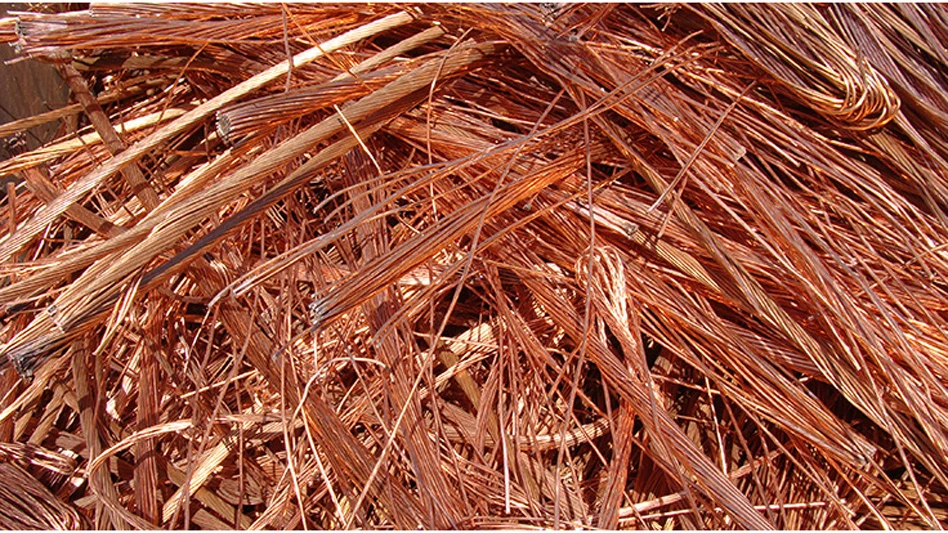
As of the first trading day in March, copper is valued at $6.05 per pound based on the London Metal Exchange (LME) three-month contract.
At the same time, writes Gross in The Copper Journal, “Inventories held in exchange warehouses rose by a record high 258,756 metric tons during February,” to nearly 1.2 million metric tons.
That volume, says Gross, “is just 75,000 metric tons shy of the record high 1.265 million metric tons held 24 years ago in May 2002.”
Volumes rose in February at warehouses connected to all three of the world’s largest metal exchanges, he notes: the U.S.-based Comex inventory rose by more than 21,600 metric to 545,709 metric tons; at LME warehouses, the copper inventory volume rose by 78,600 metric tons to 253,600; and on the Shanghai Futures Exchange (SHEF), the copper inventory level rose by more than 158,500 metric tons to 391,500 metric tons.
According to Gross, total inventory levels at warehouses connected to the three exchanges have nearly doubled in one year, from about 615,000 metric tons in February of 2025 to the nearly 1.2 million metric tons stocked at the end of last month.
Latest from Recycling Today
- Stainless steel output rises in 2025
- 7 Steel seeks policy support
- DOWA: Center of catalytic converter recycling
- Ocean Legacy Foundation expands plastic testing laboratory services
- CMI, HCPA publish aerosol recycling guide for MRFs
- 2026 Plastics Recycling Conference: A look at PCR contracts
- Remade Institute hosts Circular Economy Tech Summit & Conference in March
- Befesa sees record performance in 2025