gemphotography | stock.adobe.com
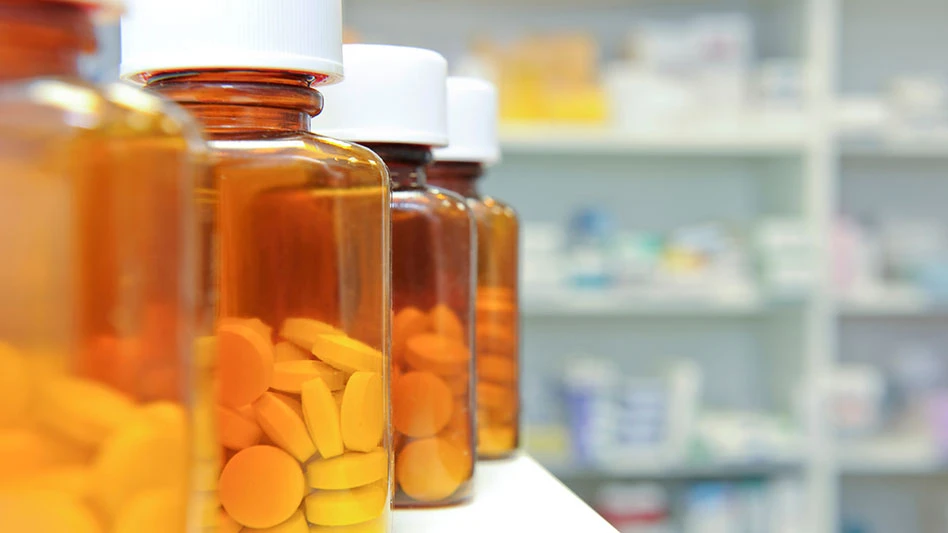
Closed Loop Partners’ Center for the Circular Economy has released a report on recovery pathways for prescription pill bottles in the U.S. with the goal of identifying practical opportunities to divert this packaging from landfill and combustion while also managing operational, regulatory and economic realities. Noting that pill bottles sit at the intersection of two systems that are often analyzed separately—health care plastics and consumer packaging— the report, titled "Delivering Care, Reducing Plastic Healthcare Waste: Advancing Recycling of Prescription Pill Bottles in the U.S.," says their dual nature influences how they are handled, communicated about and recovered.
Additionally, prescription pill bottles come in a range of formats, including back-of-house bulk packer bottles and consumer-facing unit-of-use prescription bottles, which affects how they move through the supply chain, their material composition, physical characteristics and relative volumes. While pill bottles are among the most widely handled health care packaging formats in the U.S. and made of high-density polyethylene and polypropylene––resins with established recycling markets and end-market demand––most pill bottles end up landfilled with a smaller volume of them being combusted at end-of-life.
The Closed Loop Center estimates that between 8,000 and 17,000 tons of packer bottles and caps and between 43,000 and 61,000 tons of unit-of-use bottles are discarded annually in the U.S. As is the case with other health care plastics, pill bottles are subject to regulatory, safety, compliance and secure handling standards that do not apply to most consumer packaging, the report notes. At the same time, pill bottles do not stay exclusively within clinical or health care facilities. Once dispensed to patients, they function like small-format consumer packaging, which historically has a low recycling rate in the U.S.
Matt Pundmann, senior project director at the Closed Loop Center, tells Recycling Today Media Group that bulk packer bottles and the smaller bottles dispensed to patients move through the system in materially different ways, shaping feasible recovery pathways.
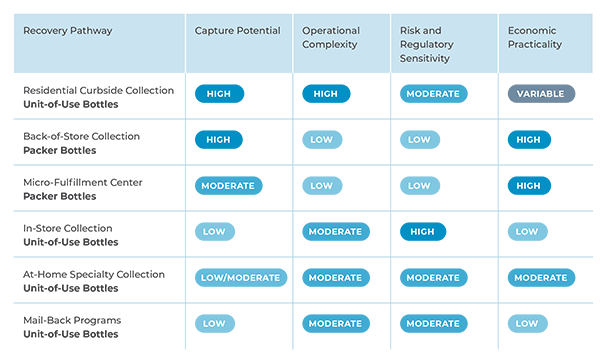
“Packer bottles (i.e., back-of-house bulk packaging) offer near-term opportunities for recycling if the requisite training, sortation and collection contracts are put in place,” he says. “These bottles typically remain in controlled environments and do not carry patient-specific information.”
Unit-of-use bottles, or the ones consumers get, face significantly more recovery challenges, Pundmann says, as they are dispensed directly to patients, contain personal health information on their labels and are managed in the home. “Constraints include privacy considerations, potential contamination from remaining medications, variable consumer participation and local recycling limitations.”
The report identifies near-term and longer-term opportunities to improve circularity for bulk packer bottles and consumer-facing prescription pill bottles, building on the Closed Loop Center’s recent findings on recovery pathways for small-format packaging in the U.S. The report also navigates the landscape and complexities of the pill bottle recovery value chain, breaking down several considerations for advancing recovery:
- collection, aggregation, recycling and disposal pathways for bulk packer bottles and consumer-facing pill bottles;
- opportunities and constraints to collecting bulk packer bottles within pharmacies and health care settings;
- consumer behavior and participation in prescription bottle take-back programs;
- considerations for consumer-facing pill bottles within broader small-format packaging recovery; and
- health, safety and privacy considerations for prescription pill bottles.
These insights aim to help stakeholders navigate the structural, regulatory and operational realities that shape pill bottle recovery today, the Closed Loop Center says, serving as a practical guide for retail pharmacies and pharmaceutical companies, distributors, brands, health care systems, technology and infrastructure partners and stewardship organizations and recyclers.
“Due to the unique sensitivity and regulated nature of this product category, pill bottle recovery requires distinct safeguards and tailored approaches,” Pundmann says. “For packer bottles, opportunities are more immediate. These may include improving separation and collection practices in pharmacies, health care settings and distribution environments and aligning recovered material with appropriate recycling and end-market channels. For consumer-facing unit-of-use bottles, opportunities should be evaluated in light of consumer behavior, health care-related safeguards and the broader constraints of small-format packaging recovery.
He adds that a portfolio of coordinated interventions that operate across different parts of the system will be needed to enable pill bottle recovery at scale.
“In the near term, stakeholders can focus on lower-risk opportunities, like recycling packer bottles within controlled environments where separation and collection are more feasible,” Pundmann says. “Longer term, stakeholders can collaborate to try to scale systems-level recovery solutions, like curbside recycling of small-format packaging.”
While he says many states have active extended producer responsibility (EPR) and product stewardship programs designed to take back unused, expired or unwanted medications, “EPR laws for packaging typically exclude health- and medication-related packaging, even as similar formats of consumer packaging face increasing scrutiny.”
Pundmann notes that California’s S.B. 54, the Plastic Pollution Prevention and Packaging Producer Responsibility Act, classifies small-format plastic packaging, per the Association of Plastic Recyclers’ definition, as nonrecyclable.
“Our groundbreaking fieldwork on small-format packaging recovery uncovered a major opportunity: Significant volumes of small materials, including valuable plastics like pill bottles, are currently ending up in landfills. With the right equipment and reconfiguration, more small-format packaging, including tens of thousands of tons of pill bottles, could be recovered annually at materials recovery facilities and glass recycling plants,” he says. “However, there are specific considerations for prescription pill bottles that are not true for other small-format packaging, including privacy concerns and potential contamination challenges. As a result, there is an opportunity to recover prescription pill bottles, but brands should take extra precautions, including managing concerns about remaining medication, medication residue and patient health information on labels, to avoid creating risks that could limit broader acceptance of small-format packaging in recycling systems.”
According to the prescription pill bottle recovery report, packer bottle recovery represents meaningful diversion potential, though it presents operational and logistical challenges that require disciplined implementation, infrastructure alignment and sustained employee participation. While pharmacies are a logical starting point, hospitals, long-term care facilities and other centralized settings also could present opportunities for expansion.
For unit-of-use bottles, the report notes the feasibility of various options that include curbside collection, at-home collection through services such as Ridwell and WM’s At Your Door program, public or in-store collection and mail-back collection programs.
“Advancing pill bottle recovery represents a significant opportunity for circularity within a much larger plastic waste challenge, if we take into account the nuances of this packaging type and its real-world constraints,” says Kate Daly, CEO of the Closed Loop Center for the Circular Economy. “Recovering more of these valuable materials will require alignment across collection systems, regulatory safeguards and end market demand and coordinated action by retail pharmacies, manufacturers and recyclers.
She adds, “No single lever will unlock pill bottle recovery. It’s through both short- and long-term innovation, paired with cross-industry partnerships, that we can meaningfully reduce the volume of prescription pill containers sent to landfill or incineration and then adapt what we learn to address waste challenges for other health care plastics.”
Latest from Recycling Today
- McNeilus introduces AI material contamination detection technology
- Organics Recycling Conference 2026: Q&A with keynote speaker Andy McNeill
- CMRA selects Vietnam for 2026 event
- Steel Dynamics foresees profitable Q1
- AF&PA joins NAW lawsuit in Oregon
- California’s ‘Truth in Labeling’ law faces federal suit
- Fayetteville, Arkansas, adopts new cart-based recycling program
- Google purchases carbon removal credits generated by Amp’s organic waste processing