The Close Loop Fund has announced that its application process for municipalities and private firms in the United States seeking loans to start or expand recycling efforts is open. Under its charter, the Closed Loop Fund is looking to invest $100 million over the next five years to support the development of recycling infrastructure and services through the issuance of zero- or low-interest loans.
Municipalities can apply for zero-interest loans to build the recycling infrastructure for their communities. The loans are repaid from either landfill diversion savings or revenue generated from the sale of the recyclables. Companies that service municipalities also may apply, and interest rates will be below market, according to the fund.
The founding members of the Closed Loop Fund include Coca-Cola, Colgate-Palmolive, Johnson & Johnson family of consumer companies, Keurig Green Mountain Inc., PepsiCo, Procter & Gamble, Unilever and Wal-Mart as well as Goldman Sachs.
According to the Closed Loop Fund, the success of the fund will benefit both the public and private sector. Municipalities will be able to divert recyclables from landfills and into the recycling stream, which will reduce disposal costs, generate revenue, increase local jobs in the recycling sector and reduce greenhouse gas emissions.
Additionally, companies will be able to incorporate more recycled content into their manufacturing supply chain, improving the environmental sustainability of products and preserving the nation’s natural resources, according to the Closed Loop Fund.
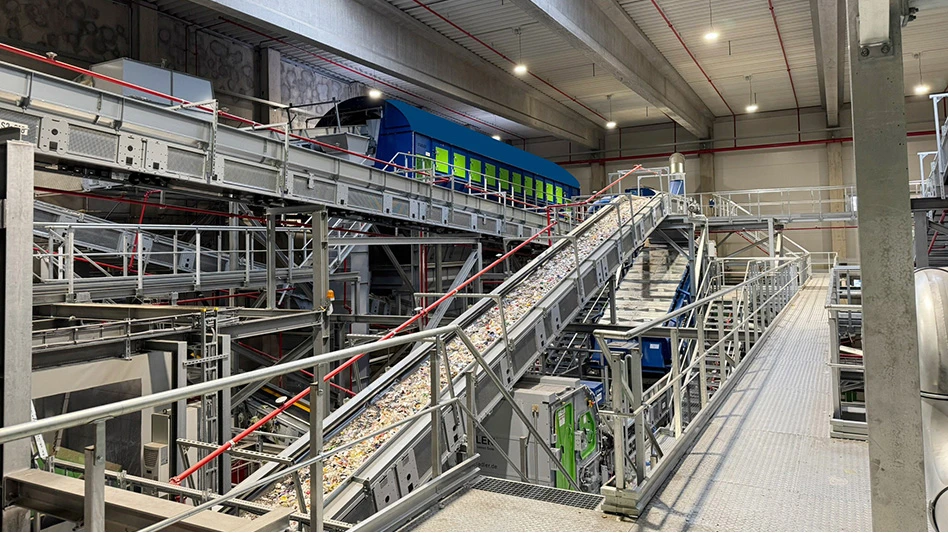
With money from the Closed Loop Fund, recipients can purchase carts for curbside recycle programs or for handling organics, build material recovery facilities (MRFs) or anaerobic digesters or upgrade existing recycling facilities. The fund adds that other recycling ventures also can qualify under the program.
“There is a great disparity in recycling infrastructure and access across the country. A significant percentage of U.S. households don’t have access to adequate curbside recycling programs. There is tremendous economic value that can be unlocked by building this infrastructure and providing these solutions,” says Ron Gonen, co-founder of the Closed Loop Fund. “Both the public and private sectors should have a natural vested interest in increasing recycling rates, and by using the Closed Loop Fund, we can catalyze the benefits of recycling for both across the country.”
The Closed Loop Fund offers these loan structures:
Municipalities can apply for zero-interest loans to build the recycling infrastructure for their communities. The loans are repaid from either landfill diversion savings or revenue generated from the sale of the recyclables. Companies that service municipalities also may apply, and interest rates will be below market, according to the fund.
The founding members of the Closed Loop Fund include Coca-Cola, Colgate-Palmolive, Johnson & Johnson family of consumer companies, Keurig Green Mountain Inc., PepsiCo, Procter & Gamble, Unilever and Wal-Mart as well as Goldman Sachs.
According to the Closed Loop Fund, the success of the fund will benefit both the public and private sector. Municipalities will be able to divert recyclables from landfills and into the recycling stream, which will reduce disposal costs, generate revenue, increase local jobs in the recycling sector and reduce greenhouse gas emissions.
Additionally, companies will be able to incorporate more recycled content into their manufacturing supply chain, improving the environmental sustainability of products and preserving the nation’s natural resources, according to the Closed Loop Fund.
With money from the Closed Loop Fund, recipients can purchase carts for curbside recycle programs or for handling organics, build material recovery facilities (MRFs) or anaerobic digesters or upgrade existing recycling facilities. The fund adds that other recycling ventures also can qualify under the program.
“There is a great disparity in recycling infrastructure and access across the country. A significant percentage of U.S. households don’t have access to adequate curbside recycling programs. There is tremendous economic value that can be unlocked by building this infrastructure and providing these solutions,” says Ron Gonen, co-founder of the Closed Loop Fund. “Both the public and private sectors should have a natural vested interest in increasing recycling rates, and by using the Closed Loop Fund, we can catalyze the benefits of recycling for both across the country.”
The Closed Loop Fund offers these loan structures:
- The term of the loan can range from one to 10 years. The interest rate for municipalities is 0 percent, while the interest rate for private companies is determined on a project-by-project basis.
- Loan project types can include the purchase of carts, whether for collecting recyclables or organics; trucks for collecting recyclables or organics; and on-the-go receptacles or public space recycling receptacles.
- Loans area avaliable to processing facilities for either building recycling plants or upgrading existing MRFs; to secondary processing facilities, such as glass processing plants, and to organics processing facilities, such as anaerobic digesters and/or composters; and to emerging technologies within the recycling industry.
Loans will range from $250,000 to $5 million, though the fund notes that larger loans can be made where appropriate.
To obtain an application, visit the website www.closedloopfund.com or email admin@closedloopfund.com.
The Closed Loop Fund and its partners will review applications on a quarterly basis beginning Oct. 29, 2014, and funding will be granted in 2015.
Latest from Recycling Today
- U.S. Aluminum Co. explores aluminum fabrication plant in Oklahoma
- Sonoco completes portfolio transformation
- Eriez Shred1 data demonstrates scalable copper control
- RCI selects CurbWaste as exclusive operational management platform
- Updated: Supreme Court strikes down IEEPA tariffs
- Recycling Today Media Group launches Scrap Expo Lunch & Learn Webinar Series
- LyondellBasell scales back recycling target
- Former Liberty UK mills eyed by 3 suitors