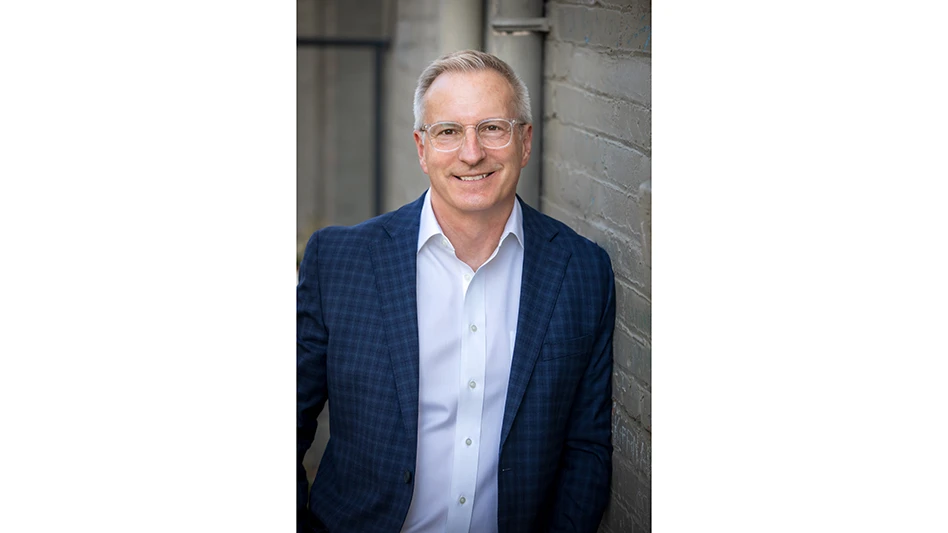
Great leadership isn’t one-size-fits-all; it’s flexible, situational and about inspiring people toward a shared purpose. At the 2026 CDRA Conference & Tradeshow (Jan. 27-30, 2026, in Tampa, Florida), attendees will explore the dynamics of effective leadership with Dave Mitchell, founder and president of The Leadership Difference Inc.
During the Opening Keynote: The Power of Understanding People (Jan. 28, 2026, from 8-9:15 a.m. ET), Mitchell will equip attendees with actionable tools and techniques to support their individual communication and leadership styles. He’ll also unveil the cornerstone of high performance and share practical strategies for enhancing communication, teamwork, employee engagement, customer service excellence and influence.
Construction & Demolition Recycling spoke with Mitchell about his keynote and what attendees can expect to learn from this engaging and interactive session.
Construction & Demolition Recycling (C&DR): Tell us about your background and how you became the founder and president of The Leadership Difference.
Dave Mitchell (DM): From the moment I stepped in front of a group of new employees and oriented them to the company, I knew I wanted to be an educator. I enjoy transferring knowledge and helping people see things in new ways through new resources and perspectives.
My first job in training and development was at Marshall Field’s in Chicago. I was there for about five years, working my way up to director of leadership development.
After dealing with enough cold winters, my family and I packed up and headed to Orlando, where I took a job with Buena Vista Hospitality Group, a strategic partner of Walt Disney World. I eventually became vice president of human resources and quality. I was very fortunate to have operational responsibilities in addition to a traditional HR role.
In that job, I was responsible for ensuring we hired the right people, trained them correctly and coaxed the highest levels of performance through best practices and leadership.
In 1995, I decided to roll the dice and start my own company. I’ve been doing this for 30 years now and have forged a lot of great relationships with people and organizations along the way. I’m tickled to death to be speaking at the CDRA Conference & Tradeshow in January 2026.
C&DR: What advice would you give to someone who may be interested in taking that leap to start their own business like you did?
DM: It’s almost the same advice I give to large corporations trying to improve their performance. First, figure out what you’re good at and what your purpose is. Second, plan your transition to being your own boss. Suddenly stopping what you’re currently doing and trying to start up your business is tough. Third, put yourself in situations where you can be lucky.
I landed Allstate Insurance Co. as a huge client early on out of luck. I cold called the training center for the Orlando Magic to try to convince them they should consider offering leadership development in addition to sports training and performance improvement. My pitch was marginally received—the gentleman I spoke with listened to me, shook my hand, took my business card and said he would call me if anyone needed leadership development. He clearly was not inspired by my pitch. I left with my hat in my hand, but a week later, Allstate called and said the training center had referred them to me. I got the gig and went around the country for several years doing events for Allstate.
My point is, you have to be good at what you do and you have to get lucky. Finally, I think a little fear can be a powerful motivator. For me, I use that fear of failure to drive my performance every day. Good, lucky, scared, probably not the title of my next book.
C&DR: You’ve spent your career helping leaders in various industries improve performance through better communication and self-awareness. Tell us a little bit about that.
DM: This goes hand in hand with understanding your purpose. People often have a hard time separating job tasks from the purpose of their work. Great leaders understand their purpose and can effectively communicate that to others. But sometimes leaders don’t make that connection or assume everyone already knows their purpose.
Sometimes we get too focused on things outside of our purpose, and that’s where things start to go wrong. That’s why I wrote “The Power of Understanding People: The Key to Strengthening Relationships, Increasing Sales, and Enhancing Organizational Performance.” I wanted to help people understand what drives others, which may be different than what drives them. The follow-up book, “The Power of Understanding Yourself: The Key to Self-Discovery, Personal Development, and Being the Best You,” focuses on metacognition, a fancy term in cognitive psychology that means “thinking about thinking.” It’s about understanding how you process information, which is a skill many people aren’t familiar with.
A lot of people say they want to find a job they’re passionate about, but even the perfect job includes tasks that are exhausting or uninspiring. Any purposeful work involves a lot of minutiae that has to get done. While you may not love every task, you should love the impact of the work you do. That connection to purpose and feeling strongly about yourself is what will keep you engaged.
C&DR: You’re known for combining behavioral science with humor in your keynotes. How does that mix help leaders connect with your message?
DM: While earning my master’s degree in global human resources development, I was fascinated by the content but frustrated by the delivery. I’m a simple man with a sense of humor who likes to understand things in a way that makes sense for the world I live in. Since I couldn’t be a professional baseball player due to a tragic lack of talent, I decided to use my humor and passion for educating to create a career for myself.
People remember their favorite jokes their whole life, so if you can deliver important information with a little humor, I think that has a much greater probability of sticking in someone’s psyche.
C&DR: Your upcoming keynote at the CDRA Conference & Tradeshow focuses on the Power of Understanding People. Tell us a little bit about that and some of the topics you’ll cover.
DM: In the 1970s, a band called Wild Cherry had one iconic hit, “Play That Funky Music,” that played long past the disco era. Sometimes I feel like The Power of Understanding People is my Play That Funky Music because it’s such a powerful, popular program that helped me grow my brand and [continues to resonate with people year after year.]
Through this keynote, I give people insight into what makes each of us different, hence my company name, The Leadership Difference. Every leader has people on their team they love working with and others they find more challenging. The same goes for customers. Leadership, like sales and customer service, is about influence. How do you communicate with people in a way that connects? How do you inspire peak performance? How do you establish better rapport and stronger relationships?
This program is designed to help leaders broaden the number of people they easily connect with and understand the value of those they may have more difficulty connecting with.
C&DR: Employee engagement continues to be a challenge across industries, including the construction and demolition recycling industry. What are some practical techniques leaders can use to build stronger, more motivated teams?
DM: One of the things we’ll talk about in January is the concept of intrinsic needs and rewards. When you start to identify a person’s communication style, what you’re really doing is uncovering a cognitive schema—their preference for making sense of the world and communicating with others. Knowing what that is opens up a battery of other useful things about them.
For example, an individual who’s highly emotional and sensitive experiences feelings very deeply and is very aware of them in their environment. That person will manifest a whole battery of behavioral cues that we’ll talk about in the keynote, but it also will indicate they’re likely self-sacrificing and willing to do things other people may not because they want the team to be happy. They’re willing to do things others may grumble about in exchange for their intrinsic need being met, which is feeling appreciated. A leader who effectively appreciates their work inspires them to perform at their highest level.
On the other hand, there's another group of people for whom appreciation is just not their currency. They don't need it, and they likely don't give it. They thrive when given independence. “No news is good news” describes their desired relationship with their boss. So, one thrives when appreciated, the other when they are left alone. The irony is that those two often marry each other, but that’s a different seminar.
C&DR: What do you think makes a great leader?
DM: Leadership is situational. What I mean by that is I’ve seen tremendous leadership by individuals who, in a different setting, weren’t as effective. There’s a “read the room” element to leadership as well as a set of skills and traits, such as being empathetic and understanding others’ points of view. At the end of the day, leadership is the ability to influence people in pursuit of a common purpose.
That effectiveness is contingent on a lot of things, such as the people involved and the purpose. It’s hard for anyone to be an effective leader in every situation. There’s a lot of pressure to manifest certain leadership characteristics, and I don’t deny those, but I think that’s too easy. If that were true, good leaders would be good leaders in every situation, and that’s just not the case.
C&DR: What do you hope attendees walk away with after your keynote session?
DM: I hope attendees walk away with better appreciation that people have different approaches to communication, and that's a good thing. As leaders, some people will be easy for us to communicate with, while others will be more difficult. Our role as leaders is to learn how to adjust to those who are more challenging so we can achieve higher levels of performance and develop a greater capacity to influence others.
In learning how to do that, we'll explore things like intrinsic needs, interactive styles, behavioral cues and cognitive schemas. But the result will be that we all have a better ability to connect with more people. That's the point.
Latest from Recycling Today
- Interchange 360 to operate alternative collection program under Washington’s RRA
- Waste Pro files brief supporting pause of FMCSA CDL eligibility rule
- Kuraray America receives APR design recognition for EVOH barrier resin
- Tire Industry Project publishes end-of-life tire management guide
- Des Moines project utilizes recycled wind turbine blades
- Charter Next Generation joins US Flexible Film Initiative
- Vecoplan to present modular solutions at IFAT 2026
- Terex Ecotec appoints Bradley Equipment as Texas distributor