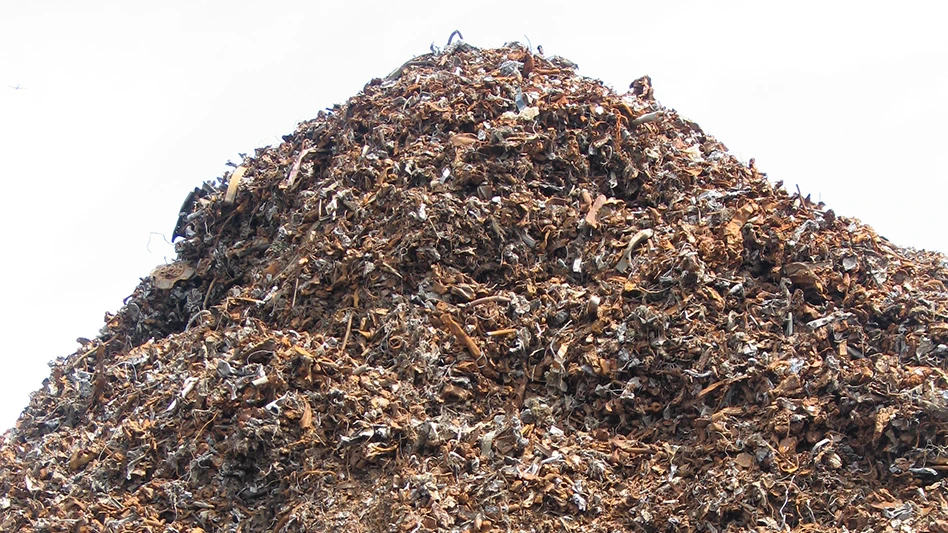
Environment Canada has gone to court to try to stop two Winnipeg companies from turning shredded automobile residue into curbs and fence posts, alleging the products contain unacceptable levels of PCBs.
The federal department is seeking an injunction against General Scrap's automobile shredder and metal recycling business and XPotential Products Inc., which uses the auto shredder residue and recycled plastic to make curbs and landscaping ties.
Environment Canada alleges some of the auto shredder residue at the two plants has polychlorinated biphenyl levels exceeding the allowable 50 parts per million. Materials exceeding 50 ppm are classified as PCB materials, and must be stored in accordance with federal regulations.
The Canadian government banned PCBs in 1977 and regulated their storage and disposal because of health and environmental concerns.
"There is an overwhelming amount of evidence that none of our materials here are PCB-contaminated," said Jack Lazareck, president of XPotential Products.
Lazareck said the company is licensed by the province, and all raw materials are thoroughly checked.
If the federal court rules in the government's favor, it would put a stop to the recycling of shredded auto residue.
"They won't be able to use it for anything," said Duncan Fraser, the Justice Department lawyer prosecuting General Scrap and XPotential.
Fraser said the PCBs are found in old electrical transformers and capacitors which were used in dashboard radios, for instance.
There is a way of removing the PCB-laden parts before shredding, but so far the two companies have not, he alleged.
Closing arguments in the case are scheduled for June 23-24 in Federal Court in Winnipeg. Winnipeg Free Press
Latest from Recycling Today
- Equipment from the former Alton Steel to be auctioned
- Novelis resumes operations in Greensboro, Georgia
- Interchange 360 to operate alternative collection program under Washington’s RRA
- Waste Pro files brief supporting pause of FMCSA CDL eligibility rule
- Kuraray America receives APR design recognition for EVOH barrier resin
- Tire Industry Project publishes end-of-life tire management guide
- Des Moines project utilizes recycled wind turbine blades
- Charter Next Generation joins US Flexible Film Initiative