Sodel Vladyslav | stock.adobe.com
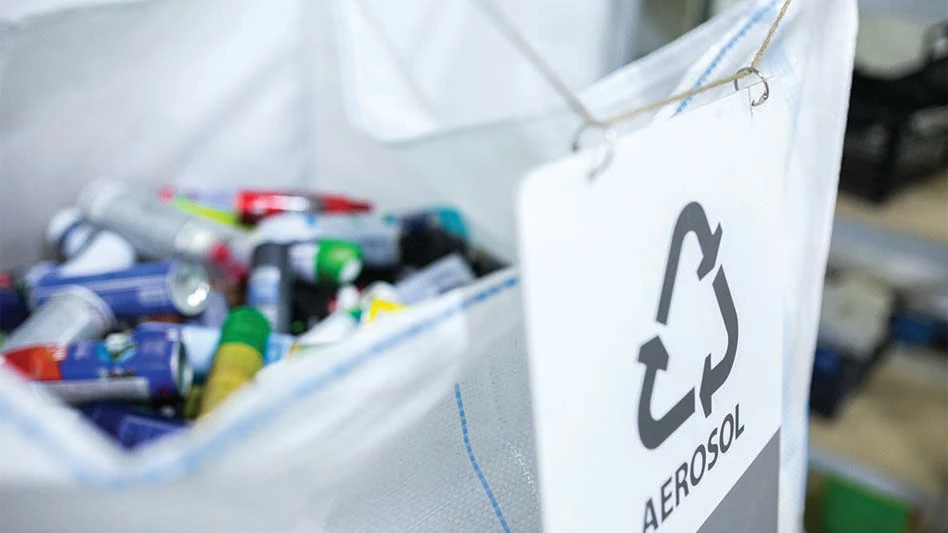
The Can Manufacturers Institute (CMI) and the Household & Commercial Products Association (HCPA) have published “Yes We Can! A Practical Guide to Aerosol Recycling at MRFs.”
Developed by RTI Innovation Advisors, Washington-based CMI says the guide is designed to help MRFs (material recovery facilities) navigate the risks and concerns associated with aerosol can acceptance by supporting informed internal evaluations and collaboration across the recycling supply chain.
CMI notes that although empty aerosol cans are recyclable, acceptance at MRFs in the United States is not universal and inconsistent. The organization says the guide provides “credible, operations-focused information” grounded in real-world case studies of material flows and infrastructure to enable MRF operators to evaluate aerosol acceptance within their local, unique systems.
“This supports the goal of achieving at least an 85 percent recycling access rate for all aerosol cans by 2030 as part of CMI and HCPA’s joint Aerosol Recycling Initiative,” CMI claims.
North Carolina-based RTI conducted interviews with 13 MRFs in 11 states, representing a mix of public and privately-owned facilities across geographic regions, including facilities that explicitly accept aerosol cans, don’t accept them or accept them without publicly advertising it. In parallel, CMI says RTI spoke with nine city and state officials to better understand how government perspectives and policy considerations influence aerosol acceptance at MRFs.
CMI says the guide addresses the concerns and challenges associated with aerosol acceptance by identifying “key MRF personas,” outlining benefits and risks and providing recommendations and road maps to make aerosol recycling a reality across the U.S.
“We developed the MRF playbook to provide a practical road map for navigating the operational realities of aerosol acceptance and a shared language to support productive conversations among MRFs, local governments and other stakeholders,” says Sami Ki, senior manager, Sustainability & Product Stewardship, at Washington-based HCPA. “By grounding these discussions in real-world experience, we can make steady progress toward broader recycling access nationwide.”
CMI Director of Sustainability Roxanne Sharif says expanding aerosol recycling requires practical guidance and tools that will drive innovation and deepen collaboration in the future.
“We are excited about this playbook because it equips MRF operators with resources, including from their peers, to confidently assess and advance their operations while helping create meaningful, industrywide impact.”
Latest from Recycling Today
- Ocean Legacy Foundation expands plastic testing laboratory services
- 2026 Plastics Recycling Conference: A look at PCR contracts
- Remade Institute hosts Circular Economy Tech Summit & Conference in March
- Befesa sees record performance in 2025
- North Carolina county receives FRC foam recycling grant
- Cascades tissue business falls short in Q4
- GFL renews share repurchase programs
- MP Materials selects suburban Dallas site for factory