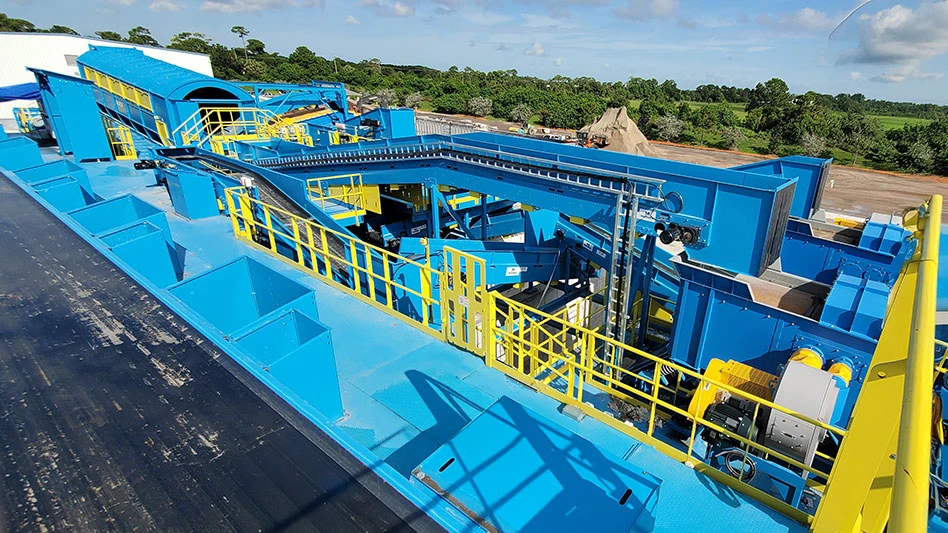
There are many opportunities for recyclers of mixed C&D debris, but the cultivation of markets for end products is needed for continued success, according to Terry Gillis of Recovery 1 Inc., Tacoma, Wash., who spoke about mixed C&D issues and answers at the C&D World Exhibition & Conference held recently in San Antonio.
Recovery 1 grew from a wood recycling business to handle a variety of materials from the mixed C&D stream, according to Gillis. Wood fuel still represents the largest market the company serves.
But grinding wood debris for fuel isn’t the only market C&D recyclers have access to, according to Gillis. High prices for scrap metal have changed the way many C&D recyclers handle their material, driving more businesses to attempt to salvage scrap from their material stream. “Metal has some of the highest value extract from co-mingled debris,” said Gillis. Magnetic separation equipment provides a means to extract metal without incurring high labor costs, and is employed at Recovery 1 and other mixed C&D operations, he said.
Construction and demolition debris streams each come with their own set of challenges, said Gillis. For instance, demolition debris faces heavy scrutiny because of potential harm from contaminants like asbestos. He recalled an instance where a contractor brought in what he thought were lengths of concrete pipe for processing. The material turned out to be piping made from nearly 90 percent asbestos. For this reason, Gillis said the processor cannot rely exclusively on the supplier of material and must have trained personnel on hand to conduct and review inspections of material.
Co-mingled construction debris is also difficult to process, he said. The sheer variety of materials, including appliances and packaging, makes sorting complicated. Site workers oftentimes bring in outside debris as well, which complicates the process, said Gillis.
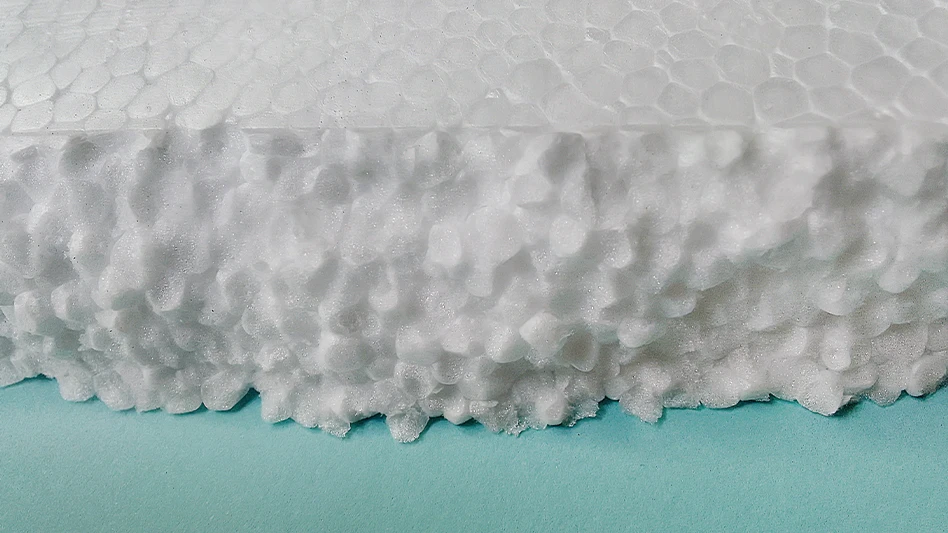
Gillis emphasized that having markets for end products is key for mixed C&D recyclers. Among the precuts Recovery 1 makes are mulch, alternative daily cover (ADC) and also baled carpet, polyurethane foam, old corrugated containers (OCC) and plastic for sale. “If you’re just building up a pile, you’re a landfill,” said Gillis. “You must have a product to market.”
Certain regulatory issues are complicating the market situation in the Northeast, according to Greg Wirsen of Green Seal Environmental Inc., Sandwich, Mass. Chief among these is the Massachusetts Waste Ban, which banned C&D material from disposal in the state as of July 1, 2006. While in theory, this regulation is meant to encourage recycling, in practice, it can hamper diversionary outlets for C&D materials like using C&D fines for alternative daily cover (ADC) at landfills.
The ADC market in New England is also facing legislative challenges. In 2004, Wirsen said New Hampshire instituted a ban on using ADC at active landfills. Central Landfill in Rhode Island followed suit by banning all C&D fines aside from RecoverMat in 2006. Wirsen said concerns over the generation of H2S gas from the gypsum content in C&D fines is a primary driver behind such regulations. Wirsen discussed current studies being conducted at the University of New Hampshire to determine exactly what conditions lead to the formation of the problematic H2S gas. The university and fellow partners, including the CMRA, EPA, Massachusetts DEP and several representatives from the private sector, are putting together demonstration projects meant to prove that C&D material can be stored without generating H2S gas. Wirsen said the project’s intent is to document how to successfully use C&D fines in a landfill environment and to set best management practices for landfill operating conditions.
Wirsen said he anticipates the state will approve the demonstration project. However, he added that Massachusetts is still in a crisis as far as C&D markets are concerned. The lack of diversionary outlets and landfill projects that use C&D are problematic, he said. He said he predicts markets will allow C&D recycling companies to survive in 2007 and 2008, but he expects profits and growth will be stagnant.
C&D World was held Jan. 14-16, 2007, in San Antonio. More information is available at www.cdworld.com.
Latest from Recycling Today
- Greenwave raises revenue but loses money in Q2 2025
- Recycled steel prices hold steady
- EY says India’s need for scrap imports will continue
- Coming full circle
- Amcor, DCM introduce fertilizer packaging with 35 percent recycled content
- Comstock Metals gets closer to commissioning commercial-scale solar panel recycling facility
- Washington selects Circular Action Alliance as PRO
- Smurfit Westrock expands in Latin America