Photo: Sutterstock
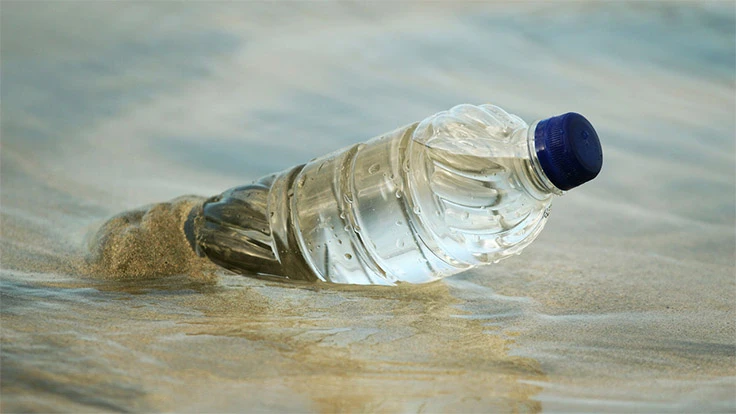
The Container Recycling Institute (CRI), Culver City, California, says a new Australian beverage container recycling program in the state of New South Wales is the largest example to date of the increasing focus on such programs to address marine debris concerns. CRI says that, according to the data, recycling programs of this type can reduce beverage container litter by 50 percent or more, providing significant benefits to our ocean ecosystems.
“We’ve long known that beverage container deposit systems help mitigate litter and the volume of materials dumped in landfills, but this new program indicates a growing recognition among policymakers that container deposit returns are one of the few proven methods to reduce plastic ocean debris,” CRI President Susan V. Collins says.
She references data from Washington-based Ocean Conservancy, which she says shows that a container deposit law in Hawaii cut the beverage container component of litter in half.
“We now have so much more research, knowledge and awareness of marine debris that governments can connect the dots, see how harmful these littered beverage containers can be, and take action,” Collins says.
With this in mind, CRI says, an Australian Senate committee report issued in April 2016 recommends that the government encourage its states and territories to implement container deposit programs to address marine plastic pollution.
Such pollution, besides spoiling shorelines, can kill seabirds and marine life, which mistake plastic items for food, CRI says. For ocean species not killed by these materials, the toxins in plastic they ingest make their way up the food chain, creating a risk for human seafood consumption. The Australian Senate committee says it is “concerned that there may be a looming health crisis associated with seafood consumption.”
If the problem remains unchecked, oceans may contain more plastics than fish by weight by 2050, according to a report produced by the World Economic Forum, Switzerland, and the Ellen MacArthur Foundation, London. (CRI’s Collins was among the individuals consulted for the report.)
New South Wales plans to launch its beverage container recycling program in 2017, giving a 10-cent refund to consumers who return eligible beverage containers—a key element of the state’s goal to reduce litter volume by 40 percent by 2020, CRI says. New South Wales Premier Mike Baird said, “We are moving ahead with a container deposit scheme that will get bottles and cans off our streets and beaches and out of our waterways.”
The New South Wales program will cover the state’s 7.5 million residents and is expected to double its beverage container recycling rate to roughly 80 percent, CRI says. A container deposit plan in the works in Queensland, Australia, would reach an additional 4.8 million people, the state’s current population.
CRI says the initiative, once implemented, will help beverage container recycling programs reach two key international milestones:
- The number of people with access to container deposit systems internationally will top 300 million for the first time.
- The number reached by new programs since 2000 will increase to more than 100 million.
Countries with bottle deposit programs include the United States, Canada, Australia, Germany, Switzerland, Austria, Croatia and Lithuania. In the United States alone, 90 million people have access to beverage container deposit recycling programs, CRI says, representing 28 percent of the nation’s population. Moreover, that 28 percent of the population accounts for 46 percent of the nation’s beverage container recycling, the organization says.
In addition to the possibility of reducing litter, marine debris and landfill expansion, CRI says bottle deposit programs can create recycling industry jobs, enable charitable groups and schools to raise money by collecting and returning containers and improve greenhouse gas emissions reductions associated with greater levels of high-value recycling.
Latest from Recycling Today
- Interchange 360 to operate alternative collection program under Washington’s RRA
- Waste Pro files brief supporting pause of FMCSA CDL eligibility rule
- Kuraray America receives APR design recognition for EVOH barrier resin
- Tire Industry Project publishes end-of-life tire management guide
- Des Moines project utilizes recycled wind turbine blades
- Charter Next Generation joins US Flexible Film Initiative
- Vecoplan to present modular solutions at IFAT 2026
- Terex Ecotec appoints Bradley Equipment as Texas distributor