ako-photography | stock.adobe.com
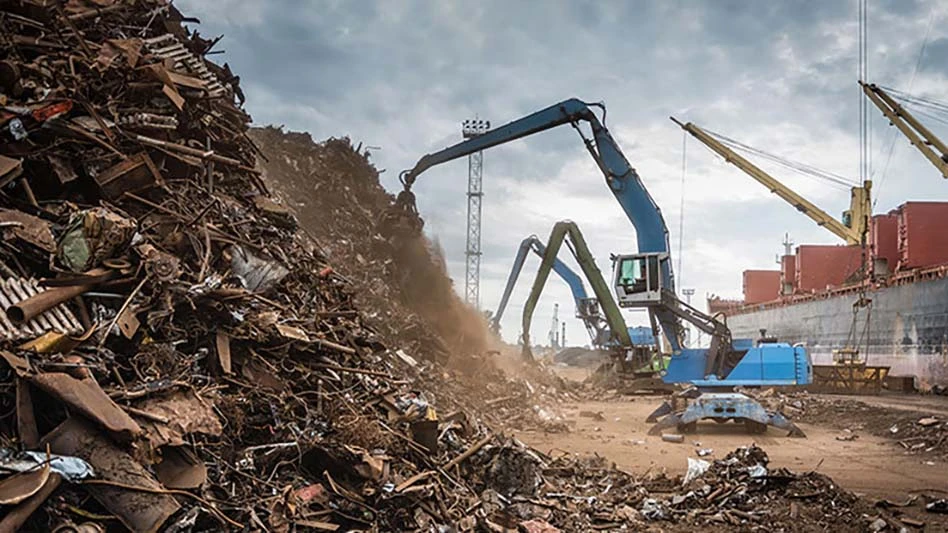
The Bureau of International Recycling (BIR), based in Brussels, notes that the European Commission has proposed a new regulation aimed at protecting the EU steel industry from the impacts of global overcapacity.
According to the explanatory memorandum of the proposed legislation, the EU steel industry is facing serious trade-related challenges, including "a significant and sustained import pressure, both in volumes and prices, resulting from unsustainable levels of global overcapacity, which are negatively impacting the EU steelmaking industry’s economic performance: EU production has shrunk, and its current capacity utilization is well-below profitable levels, undermining EU steelmakers’ ability to invest and as such, jeopardizing the Union’s decarbonization objectives."
The memorandum notes that several EU steelmakers have halted investments in green steel projects that are needed to remain competitive and decarbonize production as part of the EU’s green agenda. Among those that have done so are Luxembourg-based steelmaker ArcelorMittal, which has halted previously announced plans to install direct-reduced iron and electric arc furnace production capacity in Bremen and Eisenhüttenstadt, Germany, saying a lack of certainty makes it "impossible" to move forward with these plans.
"These critical trade-related challenges are taking place in an overall difficult context, as the steel sector is facing a lack of a level playing field, as well as higher energy and manufacturing costs. This situation also poses risks related to the EU’s strategic autonomy. The combination of challenges is having a heavy impact on jobs. In fact, the EU steel industry has been seriously decimated, losing nearly 100,000 direct jobs since 2008 (around 25 percent of its workforce) and closing or reducing installed capacity in numerous factories across many Union member states. The current situation is very fragile and risks to seriously worsen if the challenges are not effectively addressed."
The proposal, dated Oct. 7, introduces several measures, including limiting tariff-free import volumes to 18.3 million metric tons per year (a 47 percent reduction compared with 2024), doubling the level of out-of-quota duty to 50 percent and introducing a melt and pour traceability requirement to prevent circumvention. If adopted, this regulation would replace the EU’s current safeguard on steel, which expires in June 2026.
RELATED: BIR calls for fair standards, circular solutions in defining ‘green steel’
While the proposal does not, at this stage, impose export restrictions on scrap metal, the BIR says, it introduces a new monitoring regime that could lay the groundwork for future trade limitations. BIR warns that any move toward restricting exports of secondary raw materials would risk undermining the recycling industry’s competitiveness and Europe’s circular economy objectives.
“Recycled materials are vital to decarbonizing the metals industry and should be recognized as strategic resources in the circular economy,” says BIR Environment and Trade Director Alev Somer. “Empowering recyclers with free trade—not constraining them—is key to delivering both climate goals and industrial competitiveness.”
BIR emphasizes that the EU should focus on stimulating demand for recycled steel through mechanisms such as recycled-content targets, green public procurement and incentives rather than relying on trade barriers.
Latest from Recycling Today
- U.S. Aluminum Co. explores aluminum fabrication plant in Oklahoma
- Sonoco completes portfolio transformation
- Eriez Shred1 data demonstrates scalable copper control
- RCI selects CurbWaste as exclusive operational management platform
- Updated: Supreme Court strikes down IEEPA tariffs
- Recycling Today Media Group launches Scrap Expo Lunch & Learn Webinar Series
- LyondellBasell scales back recycling target
- Former Liberty UK mills eyed by 3 suitors