‘We have been environmentalists since before the word was invented,’ declared International Environment Council Chairman Alvaro Rodriguez Martinez at the Bureau of International Recycling’s recently concluded meeting. ‘We are defending the environment but there are a lot of examples of where commercial barriers are being hidden behind the environment.’
Luis Del Molino Garcia of Repacar, a Spanish organization, proposed that resources be channeled into an evaluation of the environmental benefits of paper recycling. The recycling industry deserved greater recognition but instead was coming under pressure to divulge sensitive business information, including its raw material sources.
Rodriguez Martinez gave an example of his own to underline the benefits of recycling, including that making aluminum from scrap required only 10 percent of the energy used in primary production.
In his review of latest international developments, BIR’s Environmental & Technical Director Ross Bartley highlighted a decision that was currently going through the Basel Convention to encourage more countries to provide extra information on the non-hazardous substances that they wanted to import. Also approved during the week of the BIR convention were Technical Guidelines on the environmentally sound recycling/reclamation of metals and metal compounds. At the European Union level, meanwhile, a Council compromise had been reached in connection with the revision of Waste Shipment Regulations. BIR was ‘comfortable’ with this compromise that should be approved next year, he added.
Reporting on activities within the Institute of Scrap Recycling Industries, the Bob Garino related a recent board of directors’ decision to initiate the formation of a coalition of industry associations to ‘explore options and suggest recommendations concerning radioactive scrap’. ISRI was also continuing to commit resources to issues including mercury removal, PCBs and ‘a certification program that would set exacting guidelines for scrap processors with respect to quality, safety and environmental standards’.
In the first of two complementary guest presentations, Andrew Slaney of UK refrigerator recycler M. Baker Recycling Ltd said that more than 10 processors were now operating in his domestic market with a combined capacity of more than 3 million units per year.
Noting that the supply of refrigerators containing ozone-depleting substances would dry up shortly, Slaney said most plants would look to handle other waste electrical and electronic equipment. Pascal Leroy, government affairs manager at appliance manufacturing body CECED, predicted that CFC-containing refrigerators would become the minority in around three years from now. Given the low global warming potential of refrigerators containing hydrocarbons, he argued that it would be disproportionately expensive and would make no environmental sense to extract and treat these substances. ‘There may even be increased global warming resulting from pre-treatment operations and transportation of the extracted hydrocarbon gases,’ he added.
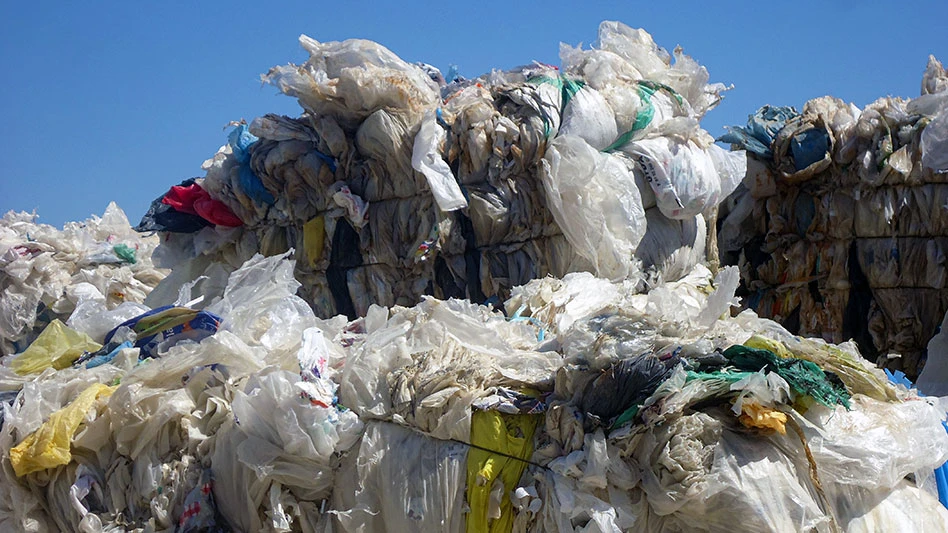
In BIR’s plastics session, speakers agreed that Chinese buyers remain a dominant force.
Meanwhile, significant progress towards improving the UK’s bottle recycling performance was highlighted by the guest speaker at the BIR Plastics Roundtable.
According to Lee Clayton, General Manager of Delleve Plastics Ltd of St Helens, his company has invested £4 million ($7.4 million) in a bottle recycling plant in association with the UK government-backed Waste & Resources Action Programme.
Currently the only plant in the UK equipped to process mixed bottles, it has a capacity of 20,000 metric tons per year and uses infra red technology to sort the different plastics.
In addition to producing industrial feedstock, the plant also manufactures ‘added value’ goods, including 7000 metric tons of drainage pipe each year.
The meeting heard that one of the main problems encountered by Delleve Plastics had been high contamination levels, with waste content in bottle collections running at around 37 percent.
Clayton commented: ‘We can’t afford for 37 percent of what we pay for to be waste - this situation could finish a business like ours.’ He went on to describe as ‘embarrassing’ the UK’s plastic bottle collection rate of around 5 percent, adding that there was no collection agency within 100 miles of his company’s plant.
According to Plastics Roundtable Chairman Peter Daalder of Daly Plastics BV in The Netherlands, the guest presentation highlighted the substantial volumes of plastics being dispatched to Asia. Container hold-ups in China earlier in the year had underlined the potential risks associated with export business, he added. ‘We have to take care of international markets but also of our local reprocessors,’ he observed. In his own market report, Daalder suggested that Western Europe’s plastics recycling industry was in reasonably good condition and was able to make money, although material availability remained a problem.
According to Jacques Musa of Soulier in France, Chinese buyers represented a dominant force and prices had risen every month since the previous BIR convention in May. Noting that competition was very strong and that demand was outstripping supply, he warned: “It will be difficult for some of the smaller and medium-size recycling companies to keep their heads above water in the current market conditions.”
The report submitted by Marc Figueras of Peninplastic SL in Spain also contended that domestic recyclers were ‘not always able to follow the price increases at the same pace as the Asian markets’.
Surendra Kumar Borad of the Belgium-based Gemini Corporation noted that, in response to inflationary prices, the Indian government had reduced the import duty on plastic scrap from 20 percent to 15 percent.
Before closing the meeting, Daalder reiterated the need to create a single, authoritative list of plastic scrap specifications to avoid any confusion when trading around the world. Such a list would help in drawing up contracts, solving legal disputes and dealing with customs procedures. Daalder hoped that it would be possible to bring together key parties to address this issue jointly.
Latest from Recycling Today
- Ocean freight interruptions poised to continue
- Danieli to supply shredder to Australian company
- Equipment from the former Alton Steel to be auctioned
- Novelis resumes operations in Greensboro, Georgia
- Interchange 360 to operate alternative collection program under Washington’s RRA
- Waste Pro files brief supporting pause of FMCSA CDL eligibility rule
- Kuraray America receives APR design recognition for EVOH barrier resin
- Tire Industry Project publishes end-of-life tire management guide