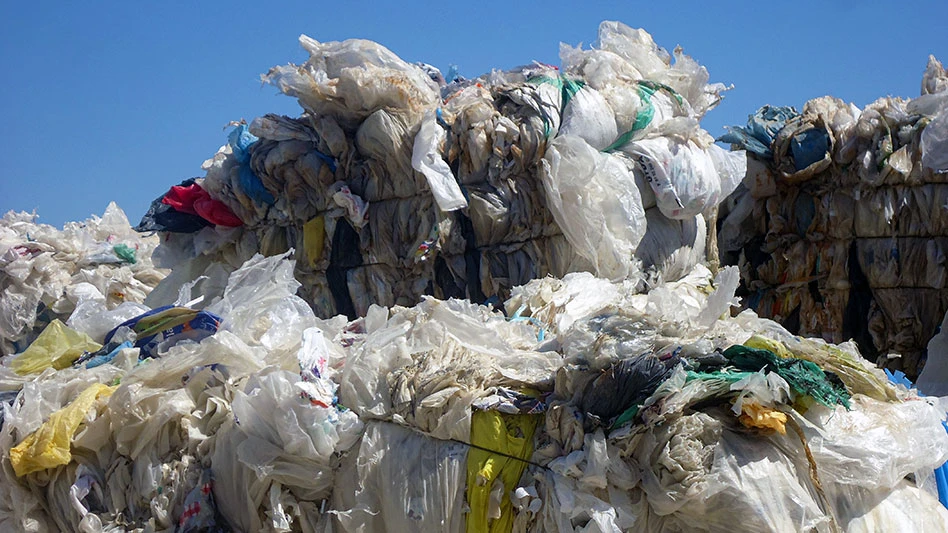
The market for recovered fiber seems to be holding up fairly well in many regions of Europe. A combination of steady export orders has allowed for better movement. One concern, however, has been the decline in generation. The following are excerpts on a country-by-country basis:
Asia – Demand, especially from China, are positive through the first half of this year. At the same time, freight rates have climbed, with the BIR reporting an increase of $400 per 40-foot container between March and June.
The hike in container rates resulted in softening in prices. “Overall, prices began to decline from mid-May and the same month also heralded the start of a drop in orders from Asian mills.”
Another factor creating a change in buying patterns has been the strengthening Euro in relation to the U.S. dollar.
Baltic Countries – Markets for recovered fiber remain strong. Consumption is increasing, although prices have slipped. New tissue capacity in Estonia; and new board making capacity in Latvia and Lithuania are adding to the overall capacity.
The Czech Republic – Paper stock prices have slumped during the second quarter. According to the World Mirror, prices for all bulk grades have dropped by some 30-40 percent, with board products experiencing the sharpest falls.
Finland – Domestic paper stock markets are stable. Supply and demand appear to be in balance. One exception is office paper, which is in short supply. The reason has been an increase in capacity in Scandinavia.
Waste management firms are increasing their handling capacities in the recycling industry, putting pressure on traditional paper stock dealers.
France – Markets appear to be on a modest downward trend, “although several paper makers for corrugated products are worried about possible competition with Asian buyers.”
Stocks are the deinking mills increased only slightly during May. Certain French mills are experiencing sustained activity levels in contrast to the situation in most of the rest of Europe.
Germany – In March and April, Germany’s recovered paper consumers adapted to the lower export prices applying mainly to lower grades. Higher grades fared better due to higher demand. In the light of an uncertain global political climate a fair amount of inventory building took place. However, the war in Iraq has had little impact on recovered paper exports. Shipments have fallen since May.
With more German recovered fiber remaining in the country prices have dropped, with limited improvements expected in the near term.
Italy – A decline in exports of recovered fiber to the Far East has resulted in softer markets for paper stock in Italy. There is concern that liner producers in the country are in a situation similar to what happened in the 1970s when many Italian mills were forced to close. Without an economic upturn a similar event could happen.
Spain – Markets remain stable. Stocks remain low at both processing plants and end consumers. Collections have increased by 3.5 percent last year, while imports climbed 11.5 percent.
Paper and board recovered is unable to meet mill requirements, while at the moment the country’s recovered paper industry has the capacity to process an additional 1 million metric tons of paper each year.
Sweden – Domestic mill’s consumption of recovered paper increased by 0.6 percent to 481,000 metric tons during the first quarter of the year. Recovered fiber collection increased by 6.5 percent during the same time. Imports declined by 0.5 percent, while exports jumped by 21 percent.
The domestic paper stock market had been strong, although some weak order books by newsprint mills will have a negative impact on those grades. OCC markets are expected to be in balance, as should be office grades.
Switzerland – Markets remain somewhat stable, although there is some modest weaknesses in higher grades of recovered fiber.
United Kingdom – The change in the British pound versus the Euro has resulted in a swing in movement, with European mills now offering large quantities of board and the UK market and undercutting domestic prices.
Prices have softened for many grades, although the report finds that demand for newsprint remains strong.
The second quarter of the year also ended with the collapse of a board mill in northern England that had been using around 125,000 metric tons of recovered fiber a year.
The following report is from the quarterly BIR World Mirror.
Latest from Recycling Today
- Ocean freight interruptions poised to continue
- Danieli to supply shredder to Australian company
- Equipment from the former Alton Steel to be auctioned
- Novelis resumes operations in Greensboro, Georgia
- Interchange 360 to operate alternative collection program under Washington’s RRA
- Waste Pro files brief supporting pause of FMCSA CDL eligibility rule
- Kuraray America receives APR design recognition for EVOH barrier resin
- Tire Industry Project publishes end-of-life tire management guide