There are a number of serious issues causing rough weather for scrap processors and traders, but an underlying demand for secondary commodities remains a strong ray of sunshine.
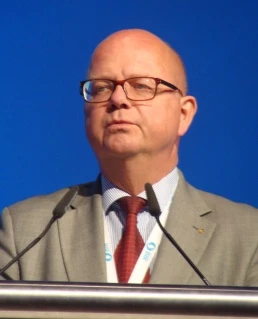
In his address to Bureau of International Recycling (BIR) 2012 World Recycling Convention delegates, BIR President Björn Grufman of Sweden-based Metallvärden AB called 2011 “the year in which the world realized that you cannot keep borrowing money forever - someday, you must pay it back.”
The resulting austerity measures in Europe and other parts of the world have kept economic growth in check, but nonetheless “recycling markets showed positive trends” in 2011, Grufman remarked. In his General Assembly speech in late May in Rome, Grufman pointed to several other recycling industry success stories over the past 12 months.
“After decades of lobbying by the European BIR daughter associations EFR (European Ferrous Recovery and Recycling Federation) and Eurometrec, we were finally given the possibility within Europe of extracting our end products from the waste regime,” he explained. “End-of-waste criteria have already been introduced for iron, steel and aluminum scrap, and the industry’s efforts to secure a similar result for copper and recovered paper are well under way.”
Grufman also declared that the global recycling industry “must be allowed the scope to develop - and with a healthy measure of profitability - in order to continue to make its important contribution to the sustainable society of our future.”
He called the 2012 Rome convention highly successful, saying it attracted more than 1,300 delegates from more than 60 countries. The BIR is growing, he added, having welcomed 93 companies and two additional national associations into membership since the 2011 Spring Convention in Singapore.
Also at the 2012 General Assembly meeting, Ranjit Baxi of J & H Sales International, London, was officially installed as BIR’s treasurer after having served in an interim role for several months.
The BIR 2012 World Recycling Convention Keynote Session presentation was made by John Authers, Senior Investment Analyst at The Financial Times, London.
Authers pointed to Spain as a “pivotal country” in the current Euro-zone crisis, suggesting that it is “too big to be allowed to leave the Euro [zone]” and potentially “too big for current rescue funds” to cover all of its debts.
Authers said that while a Greek exit from the Euro zone is not guaranteed, he would not be surprised to see it come to pass in 2013.
As the BIR Convention was taking place, the euro was losing value against the dollar, and Authers remarked that in his view this would be a positive trend if it continued. While a return to greater parity between the dollar and the euro might adversely affect the United States and some emerging markets, the alternative - a disorderly collapse of the Euro - would hit most economies (and especially Europe’s) even harder.
Even with a stronger dollar, Authers says he is “tentatively optimistic” about the economy of the United States. While China’s economic growth is slowing, Authers said striving for a soft landing for its economy “makes eminent sense for China.”
The 2012 BIR World Recycling Convention was May 30-June 1 at the Rome Cavalieri Hotel in Italy.